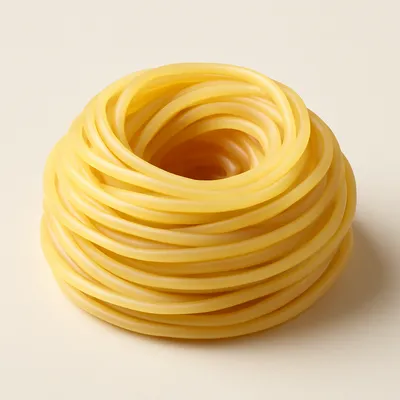
Gioia Tauro's dark, porous wholemeal pasta—made from durum semolina blended with bran—historically sold semi-clandestinely because it originated from milling floor sweepings; today legally produced and dressed ammollicata with dissolved anchovies, garlic, Calabrian chili, black olives, and toasted breadcrumb.





Struncatura is tied to the plain of Gioia Tauro on Calabria's Tyrrhenian coast in the province of Reggio Calabria. Amalfi merchants found an important commercial outlet in the port of Gioia Tauro in the early 19th century and set up food emporia and pasta workshops there, though a dark pasta made from milling residue was already known locally by the late 18th century. The pasta was made from bran and flour residues swept from mill floors—originally destined as animal feed—and sold at minimal cost to the poorest families. Because of its unhygienic production, authorities banned its sale toward the end of the 19th century, and it circulated almost like contraband in a few local shops. Modern artisan producers use whole-grain integral flour blends; the pasta was chosen, through the town of Palmi, to represent Calabrian gastronomy at the RAI pavilion of Expo 2015.
The pasta's rough, porous surface grips the anchovy-laced oil so every strand arrives fully coated; dissolved anchovies deliver a deep savoury wave, the chili adds sustained heat, and the toasted breadcrumbs bring a gritty crunch that contrasts with the chewy, bran-forward pasta.
The bran-flecked surface of struncatura creates a high-contact-area microstructure that mechanically traps fat-in-water emulsions more effectively than smooth semolina pasta. Anchovies dissolve in olive oil at 120–140°C because their thin connective tissue breaks down rapidly; released inosinate synergizes with glutamate to amplify umami approximately eightfold. Breadcrumbs toasted to deep gold undergo Maillard browning at 140–165°C, generating pyrazines and furans that produce nutty, roasted aromas; residual crumb starch lightly gelatinizes on contact with pasta cooking water, helping the crumbs adhere to the oil-coated strands.
Variations
Some cooks add capers or sun-dried tomatoes; a Christmas Eve vegetarian version omits anchovies for a pure garlic-chili-oil style; inland Calabrian cooks sometimes substitute aged grated pecorino for the breadcrumb topping.
On the Palate
Where Struncatura sits in the Italian flavor cloud
Ingredients
Serves 4

How it's made
8 steps · 30 min
- 18 min
Tear stale bread into rough chunks and pulse in a food processor to coarse crumbs; toast in a dry skillet over medium heat, stirring constantly, until deep golden brown; set aside
Watch outStir the crumbs constantly and pull them at deep gold — they tip from toasted to burnt-bitter in seconds off the heat you can't see.
- 210 min
Bring a large pot of generously salted water to a rolling boil
- 35 min
Warm olive oil in a wide pan over low heat; add sliced garlic and dried chili flakes and cook, stirring, until fragrant but not coloured
- 43 min
Add anchovy fillets; press with the back of a wooden spoon until they completely dissolve into the oil
Watch outPress the anchovies with the spoon until they melt completely into the oil — no visible fillet left, just a savoury base with no fishy bite.
- 52 min
Add pitted black olives; stir to combine and keep warm on the lowest heat
- 612 min
Cook struncatura in the boiling water, stirring frequently, until al dente; reserve a cupful of cooking water
- 73 min
Drain pasta and transfer to the anchovy pan; toss over medium heat, adding pasta water in small amounts until each strand is evenly coated
Watch outAdd the pasta water a splash at a time as you toss so the oil clings to every strand — pour it all in at once and the sauce just slides off.
- 82 min
Remove from heat; scatter toasted breadcrumbs generously over the top and serve immediately