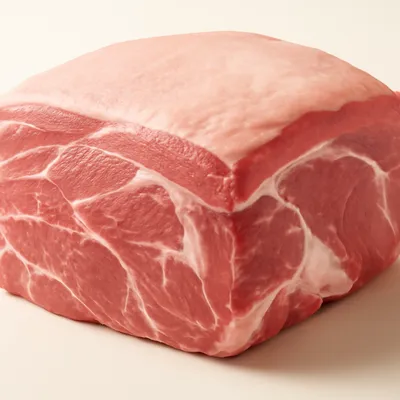
A PDO-protected whole-muscle salume produced across all of Calabria from the upper neck and cervical muscles of the pig. The trimmed cut is dry-salted, massaged, washed with wine vinegar, pressed, coated in Calabrian chili and black pepper, cased in natural gut, and aged for a minimum of 100 days. The result slices to a deep rose-red with uniform fat marbling, delivering the sweet savoriness of long-aged pork balanced by the slow-building heat of peperoncino Calabrese.



The norcina tradition of pork curing in Calabria traces back to the Greek colonization of the Ionian coast in the 8th century BC, when settlers at Locri, Kroton, and Sybaris brought salt-preservation methods that merged with local butchering practices over subsequent centuries. A document trail of pork curing in Calabrian mountain villages runs at least to the 17th century. The DOP designation was formalized under EU Regulation 134/98, covering the entire regional territory, and the Consorzio di Tutela dei Salumi di Calabria was established in 2007 to enforce compliance with production specifications.
Firm but yielding under the knife; the salty-sweet richness of aged pork muscle unfolds first on the palate, followed by the slow-building back heat of Calabrian chili; a thread of wine-vinegar acidity runs through the aftertaste, and the fat veins melt cleanly at body temperature, leaving a long, savory finish.
Salt applied to the raw muscle draws moisture through osmosis, lowering water activity and creating a hostile environment for spoilage bacteria. The wine vinegar wash lowers the surface pH further, providing an additional antimicrobial barrier while depositing acetic acid flavors into the outer layer. Over the 100-plus day aging period, native muscle proteases — cathepsins and calpains — hydrolyze myofibrillar proteins into free amino acids and short peptides, generating deep umami. Intramuscular fat oxidizes gradually under controlled humidity, producing the characteristic aromatic volatiles of long-aged charcuterie. Capsaicin from the Calabrian chili coating contributes both antimicrobial activity and the product's defining heat.
Variations
A 'dolce' version uses only sweet red pepper with no chili heat; the standard version amplifies the peperoncino for full Calabrian intensity. The Calabrian DOP product is distinct from Coppa Piacentina DOP (northern Italy, wine-brined, softer texture) and Capocollo di Martina Franca IGP (Apulia, smoked over oak and fig wood), which produce markedly different flavor profiles.
On the Palate
Where Capocollo di Calabria sits in the Italian flavor cloud
Ingredients
Serves 10
How it's made
8 steps · 30 min
- 115 min
Trim the pork neck section to an even thickness of about 3 cm, removing irregular fat deposits; weigh the trimmed piece to calculate salt quantities.
- 220 min
Rub the meat generously on all sides with coarse sea salt; massage thoroughly for 5 minutes to drive salt into the muscle fibers; refrigerate at 2–4°C for 4 to 8 days, turning daily.
Watch outMassage the salt in for a full five minutes so it works into the fibers — an even cure depends on it; patchy salting risks spoilage deep inside.
- 315 min
Remove from the refrigerator; rinse under cold water to remove excess salt crystals; wash the entire surface with wine vinegar, rubbing firmly to lower surface pH.
- 415 min
Press the meat between two heavy wooden boards weighted with stones for 24 hours to expel residual moisture and firm the shape into a compact cylinder.
- 510 min
Coat the exterior evenly with a blend of ground Calabrian chili (equal parts sweet and hot) and freshly ground black pepper; press the spice mixture firmly into all surfaces.
- 620 min
Wrap the spiced meat tightly in natural pig throat casing; tie with butcher's twine at 2 cm intervals to create a compact, even cylinder.
- 75 min
Hang in a well-ventilated aging room at 12–14°C and 70–80% relative humidity for a minimum of 100 days; inspect weekly for irregular surface conditions.
Watch outCheck weekly during aging and watch for even surface drying — a hard dried shell means it's case-hardening and the inside can't dry, so trapped moisture spoils.
- 810 min
When fully aged, remove the casing; slice thinly across the grain and serve at room temperature alongside olives, crispbread, or rustic country bread.


