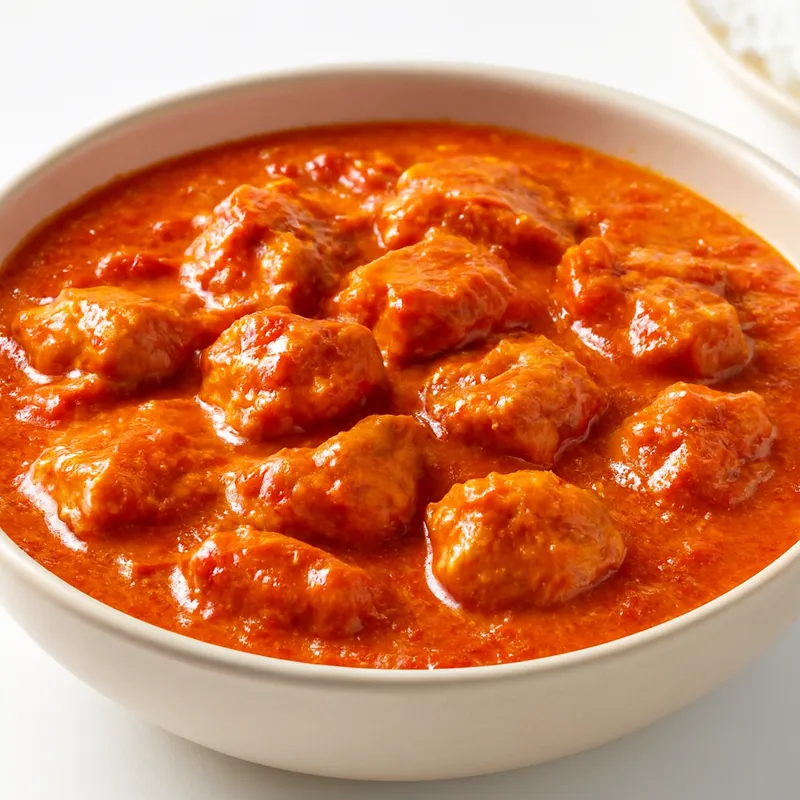
An elongated cylinder of khoya kneaded with flour and semolina, slow-fried to an almost-black crust, and soaked for hours in cardamom-rose syrup until fully saturated — the emblematic sweet of Shaktigarh on the Grand Trunk Road in Bardhaman district.


Langcha is said to be over two centuries old, with two competing oral traditions. One credits a confectioner named Lyangcha Dutta of Shaktigarh — 'langcha' meaning one who limps in Bengali — who was renowned in the Bardhaman area for this sweet and lent it his name. A second tradition, documented by Bengali writer Narayan Sanyal in his work Roopmanjari, holds that the sweet originated in Krishnanagar, Nadia district, home to Bengal's most celebrated confectionery school; a sweet-maker from Krishnanagar was invited to settle in Bardhaman following a royal matrimonial alliance between the Krishnanagar and Bardhaman royal households, eventually establishing his shop along Badshahi Road in Shaktigarh. Shaktigarh became so thoroughly identified with the sweet that the West Bengal government has sought Geographical Indication recognition to protect its regional identity.
The very dark, almost-caramelized exterior gives way to a dense, yielding interior soaked through with sweet syrup; the khoya base delivers a fudge-like richness that is sweeter and heavier than chhena-based pantua.
Langcha's khoya base differs fundamentally from pantua's chhena: khoya is evaporated whole milk with most water removed, leaving a fat-and-protein-rich solid. Kneaded with flour and semolina, it forms a dense dough that holds a cylindrical shape during frying. Prolonged frying at around 160 °C for 20–25 minutes pushes both the Maillard reaction and caramelization to an extreme, producing the near-black crust and intense toffee-like flavor. The high fat content of khoya keeps the interior moist and fudgy despite the long fry. Extended syrup soaking of 2–4 hours is essential: the dense khoya matrix hydrates slowly, the syrup penetrating from the crust's micro-fissures inward until the entire cylinder is uniformly saturated.
Variations
Shaktigarh langcha are notably larger and darker than versions made elsewhere in Bengal; some shops produce a banana-shaped variant. Krishnanagar in Nadia district makes a smaller, lighter-fried version under the same name, and claims to be the sweet's birthplace. Winter batches soaked in nolen gur (date-palm jaggery) syrup are a seasonal favorite.
On the Palate
Where Langcha sits in the Indian flavor cloud
Ingredients
Serves 4
How it's made
7 steps · 20 min
- 110 min
Crumble 200 g khoya (mawa) into a bowl; add 3 tbsp all-purpose flour, 1 tbsp fine semolina, and a small pinch of baking soda, then mix until a dough forms.
- 210 min
Knead the khoya dough for 5–6 minutes until smooth and pliable; cover and rest for 10 minutes.
- 35 min
Divide into 12 equal portions; roll each into a smooth cylinder about 5–6 cm long, tapering the ends very slightly.
- 425 min
Heat oil or ghee in a kadai to 155–160 °C; lower the langchas in gently and fry over medium-low heat for 20–25 minutes, turning frequently, until uniformly very dark brown, almost black.
Watch outFry low and slow, turning often, until the langchas are uniformly very dark — almost black; this deep fry is the signature, but pull them before they scorch past bitter.
- 510 min
Dissolve 350 g sugar in 400 ml water, add 4 cardamom pods and 1 tsp rose water, bring to a boil, then reduce to a light syrup; keep warm.
- 62 min
Lift the langchas from the oil and slide them directly into the warm syrup; they will expand slightly and begin absorbing liquid.
- 7120 min
Soak, covered, for at least 2 hours (preferably 3–4) at room temperature before serving; the langchas should feel plump and fully saturated throughout.
Watch outSoak at least two hours, ideally three to four — the dense khoya needs long soaking to drink the syrup right to the core; a short soak leaves the center dry.
Archive tool suggestions — not reviewed
These legacy suggestions have not been evidence-reviewed and are not presented as required tools.