A delicate Lucknowi sweet of paper-thin sheets of set malai (milk skin) folded into a paan-like triangle and filled with mishri (crystallized sugar) and finely chopped dry fruits. It dissolves on the tongue almost instantly, and the look of a betel leaf is the point of the form. A 19th-century Nawabi invention of Lucknow, now most associated with the Ram Asrey sweet shop.
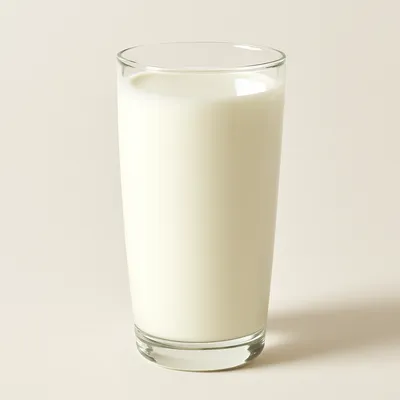
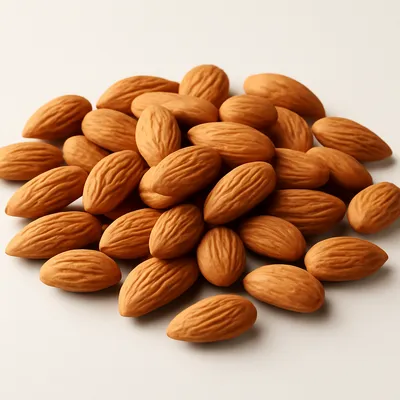
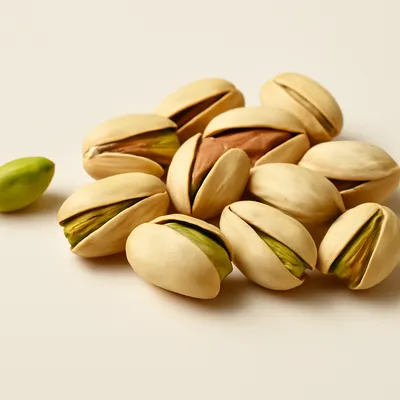
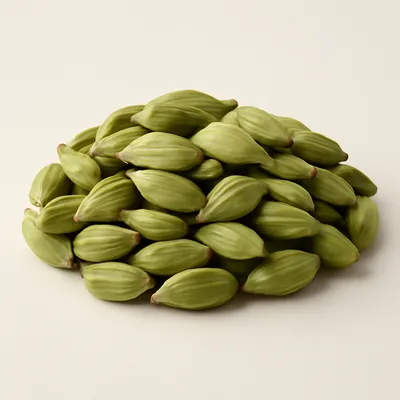
Malai gilori (lakhnawi malai paan, balai ki gilouri) is a delicate sweet of Lucknow, the capital of Awadh, named for its form: gilori is the Awadhi word for the fold of a betel leaf, and the sweet is shaped to imitate a paan. It is built from sheets of malai — the thick skin of cream that forms on slowly boiled milk — gathered while still warm and pliable, stretched into paper-thin sheets, cut into squares, and folded around a filling of mishri (rock candy) and finely chopped dry fruits. The sweet is held to have originated in 19th-century Lucknow during the era of the Nawabs of Awadh, with a popular account linking it to Nawab Wajid Ali Shah and claiming it was devised as an elegant substitute for paan after the betel leaf was, for a time, restricted at court; that story is local lore rather than documented record. What is certain is the dish's home: it is a Lakhnawi specialty, and the Ram Asrey sweet shop, founded in the old city, is the name most closely tied to its traditional making. The skill lies entirely in handling the malai sheets, which tear easily and must be worked while warm.
A whisper-thin, milky film that vanishes on the tongue in a cool burst of cream, leaving a gritty crunch of mishri and the warm sweetness of chopped nuts.
The malai sheet is the engineering of the dish. As milk boils slowly, its fat rises and its casein proteins denature at the surface into a skin; gathered repeatedly and laid flat, these skins form a continuous, elastic film held together by its fat and protein — a texture no flour or starch could replicate. Worked while warm, the film is pliable enough to stretch and fold; cooled, it would crack. The mishri filling is large-crystal sugar that does not dissolve fully into the malai, so it retains its gritty crunch even as the surrounding cream melts — the contrast of dissolving film and resisting crystal is the point of the bite. Because the malai is almost pure fat and protein with very little water, the sweet dissolves rapidly on the warm tongue into a rich, milky slick, which is why it is eaten fresh and not stored.
Variations
A mawa (khoya) variant uses reduced milk solids for a richer, sturdier filling; some versions add a thread of saffron or a drop of kewra to the malai, and the dry-fruit mix varies by season.
On the Palate
Where Malai Gilori sits in the Indian flavor cloud
Ingredients
Serves 6How it's made
6 steps · 40 min
- 125 min
Boil full-cream milk slowly in a wide pan, and each time a thick malai skin forms on the surface, lift it off carefully and lay it flat on a greased surface.
Watch outLift each malai skin off the moment it forms and lay it flat — leave it and it thickens unevenly and tears when you fold it.
- 210 min
Continue boiling and collecting malai sheets until enough are gathered.
- 35 min
While the sheets are still warm, cut them into even squares.
Watch outCut and shape the sheets while still warm and pliable — cooled malai turns brittle and cracks the instant you fold it.
- 45 min
Mix finely chopped dry fruits with crushed mishri for the filling.
- 510 min
Place a small portion of filling on each square and fold it into a paan-like triangle.
- 65 min
Serve at once, while the malai is still soft enough to dissolve on the tongue.
Archive tool suggestions — not reviewed
These legacy suggestions have not been evidence-reviewed and are not presented as required tools.



