An ancient Parsi baked cake with Persian roots, made from whole-wheat and semolina, softened with yogurt, scented with saffron and cardamom, and studded with almonds. Dense, moist, and simply delicious, it is one of the traditional Zoroastrian bakes, made for Navroz and auspicious occasions — and one of the oldest baked sweets in the community's repertoire.



Kumas (kummas) is a traditional Parsi baked cake with acknowledged Persian roots, made for Navroz and auspicious occasions and counted among the traditional Zoroastrian bakes. Food historians of the community trace it to an ancient Irani wheat-semolina cake tradition carried east by the Zoroastrian migration; its use of whole-wheat flour (in older forms, solely; today blended with semolina and sometimes maida), yogurt for moistness and a slight tang, almonds, and the freshly ground saffron of the day of baking, marks it as older than the colonial-era baked goods that later entered Indian baking. The cake is dense and moist rather than light and fluffy — its leavening is minimal, often just eggs and a little baking powder, and its character is closer to a rich, textured pound cake than to a modern sponge. It belongs to a small family of traditional Parsi bakes — kumas, ravo, bhakra — that mark the community's festive tables, and it is one of the clearest edible records of the Persian root of Parsi cooking.
Dense, moist, and warmly aromatic, with the golden perfume of saffron, the soft crunch of almonds, and a faint, pleasant yogurt tang through a rich, sweet crumb.
The cake's dense, moist character comes from its composition and minimal leavening. Whole-wheat flour and semolina together carry more starch and protein (and less air-trapping capacity) than a refined cake flour, so the crumb is denser; the semolina's coarse granules also hold their structure slightly, giving a textured mouthfeel. The yogurt, beyond its flavor, is the key to moisture: its water hydrates the starches fully during baking, and its fat and proteins keep the crumb tender and extend its keeping quality (the lactic acid slows staling). The eggs provide the main leavening — their proteins set around trapped air and steam during baking, giving a slight rise — and a small amount of baking powder supplements them. Saffron, ground fresh and dispersed in a little warm milk, releases its water-soluble crocin for the golden color and its aromatics through the cake's fat phase; the almonds, folded in or strewn on top, toast during baking to release their oils and Maillard-browning flavors.
Variations
A richer form adds condensed milk; some use almond flour in place of ground almonds, and the saffron is always freshly ground on the day of baking.
On the Palate
Where Kumas sits in the Indian flavor cloud
Ingredients
Serves 8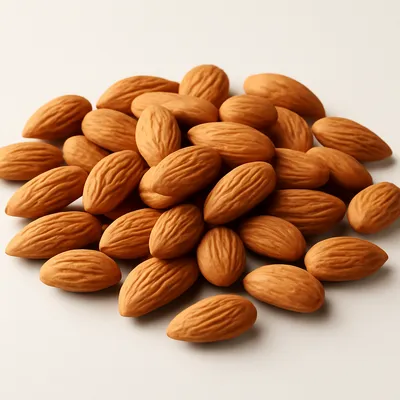

How it's made
6 steps · 20 min
- 14 min
Grind saffron fresh in a little warm milk; set aside to steep.
- 23 min
Melt butter or ghee and let it cool slightly.
- 38 min
Beat eggs and sugar until light, then beat in the melted butter, yogurt, and saffron milk.
Watch outBeat the eggs and sugar until pale and light before adding the rest — this air is the cake's main lift, and a flat batter bakes leaden.
- 45 min
Fold in whole-wheat flour, semolina, ground almonds, cardamom, and a little baking powder until just combined.
- 525 min
Pour into a greased baking tin, top with sliced almonds, and bake at moderate heat until set, golden, and a skewer comes out clean.
Watch outPull it when a skewer comes out clean and the top's golden — this dense, yogurt-rich crumb turns gummy if you take it out underbaked.
- 63 min
Cool briefly, cut into squares, and serve warm or at room temperature.
Archive tool suggestions — not reviewed
These legacy suggestions have not been evidence-reviewed and are not presented as required tools.


