
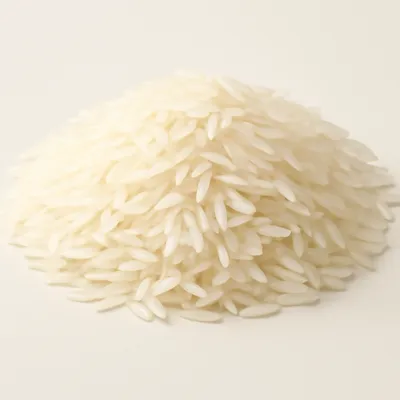
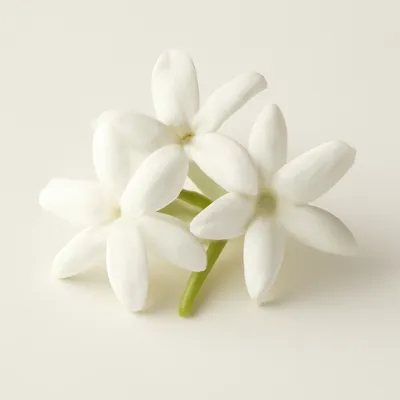

Hengxian County in southern Guangxi grows over 60% of the world's jasmine and more than 80% of China's, mostly for the tea industry — the climate of the Yujiang River basin keeps blossoms opening in waves from May to October. Local families have long thrown a handful of fresh buds into the rice cooker during peak flowering season. This is regular long-grain rice perfumed at home, distinct from Thai jasmine rice (which is a separately bred aromatic varietal).
Hengxian County grows over 60% of the world's jasmine, mostly for tea. This is regular long-grain perfumed at home with a handful of fresh buds — completely different lineage from Thai jasmine rice, which is a bred aromatic varietal.
The rice arrives white, no visible petals, no green tinge. Lean over the bowl and the smell is unmistakable jasmine — cool, almost like green tea, never perfumey or soapy. Each grain tastes faintly floral, more on the exhale than the chew. Served alongside salty stir-fries or steamed fish; if the rice tastes of nothing it means the flowers were past their prime or steamed in too long.
Jasmine's signature aroma comes from benzyl acetate and linalool — both volatile, water-soluble, and released by gentle steam, not direct heat. Adding flowers at the start of the steam cycle lets the rising vapor carry the oils through the rice without scorching the petals. Stir them into the water and they cook into something muddy and bitter; lay them on top and you get clean perfume.
Variations
Hengxian fresh-bud method only works May-October during bloom; Guangzhou tea-shops use dried jasmine flowers year-round; Thai hom mali is a bred Oryza varietal with no flower added; Indian basmati's aroma comes from 2-acetyl-1-pyrroline, not jasmonate.
On the Palate
Where Hengxian Jasmine Rice sits in the Chinese flavor cloud
Ingredients
Serves 4How it's made
5 steps · 10 min
- 110 min
Rinse 300g long-grain rice three times until the water runs clear. Drain in a sieve for 5 minutes.
- 23 min
Pick 30g fresh jasmine buds (just-opening, not fully blown). Rinse very gently in cold water; do not bruise the petals.
- 31 min
Place rice in a rice cooker pot with 360ml water. Scatter 20g of the jasmine on top of the rice — do not stir in.
Watch outLay the jasmine loose on top of the rice, never stir it in — steam carries the scent up cleanly, but flowers cooked in the water turn muddy and bitter.
- 425 min
Cover and cook on standard rice setting (about 20 minutes). When the cooker switches to keep-warm, let it rest sealed another 5 minutes — the steam carries the floral oils into the grains.
Watch outKeep the lid sealed through the extra rest — that trapped steam is what drives the floral oil into the grains; lift it early and the perfume escapes.
- 52 min
Open the lid, lift out the spent flowers with chopsticks (they will look brown), then fluff the rice with a wooden paddle. Garnish with the remaining 10g of fresh jasmine just before serving.
Archive tool suggestions — not reviewed
These legacy suggestions have not been evidence-reviewed and are not presented as required tools.


