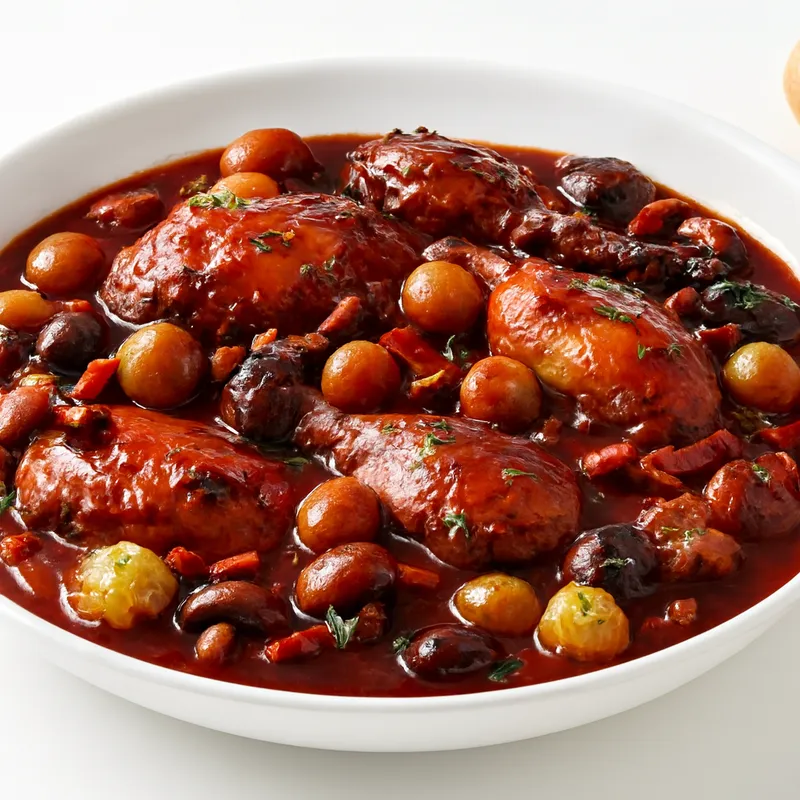

Cotriade is the Breton fisherman's catch-of-the-day stew, made aboard returning sardine and tuna boats in the 18th-19th centuries with whatever unsold or damaged fish remained. Standard at home in coastal villages from Quiberon to Roscoff. The vinegar is a working-port detail — it cut the oiliness of mackerel and conger and helped the dish last another day in pre-refrigeration. Distinguished from southern bouillabaisse by butter (not olive oil), no tomato, no saffron, no rouille. The two-course bread-then-fish service is a remnant of feeding a hungry crew with limited fish.
18th-19th century catch-of-the-day stew made on returning Breton sardine and tuna boats from unsold fish. Butter not olive oil, no tomato, no saffron, no rouille — that's the line that separates it from bouillabaisse.
First course is bread sodden with hot fish-sweet broth, the garlic rub bleeding into it. Second course is the platter — chunks of mild white fish, soft potatoes, sweet onion, all glistening with butter. The flavour is clean and oceanic, not red-tinted like bouillabaisse — there is no tomato, no saffron, no rouille. The vinegar splash brightens the closing note. Cotriade made without the vinegar tastes flat; that's the regional signature.
Mixed-fish poaching is the load-bearing technique — different species need different cook windows so they go in by sequence. Firm white fish (gurnard, conger) first; flaky and oily fish (mackerel, hake) last. The vinegar at the end serves three jobs: it brightens the broth, denatures any remaining surface fish protein for a cleaner texture, and balances the butter. Adding it during the cook (not after) drives off the volatile acetic compounds and dulls the brightness — off-heat, stirred in last, is non-negotiable.
Variations
Quiberon-Roscoff coastal version (mackerel + conger); Belle-Île variant adds langoustine; Saint-Malo cooks sometimes drop in butter-poached cabbage; the Provençal bouillabaisse is the warm-water cousin everyone compares it against.
On the Palate
Where Cotriade sits in the French flavor cloud
Ingredients
Serves 6


How it's made
5 steps · 40 min active + 20 min waiting
- 111 min
Sweat 3 sliced onions and 2 sliced leeks (white parts) in 60g butter in a wide heavy pot, low heat, 10 minutes — soft, not browned. Add 4 minced garlic cloves, cook 1 minute.
- 214 min
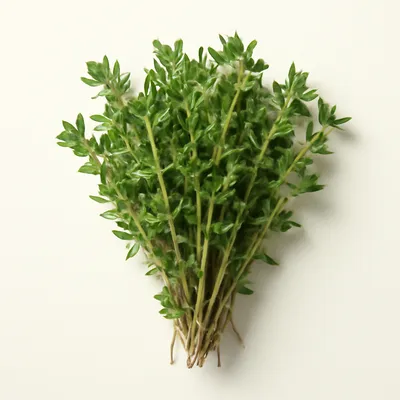
Add 1.2kg waxy potatoes in 2cm chunks, a bouquet garni (thyme, parsley stems, bay), 1.5L water or fish stock. Salt lightly. Bring to a simmer, cook 12 minutes — potatoes nearly tender.
Watch outEnsure the potatoes are nearly tender before adding the fish to avoid overcooking.
- 32 min
Lay 1.5kg mixed white sea-fish on top — gurnard, conger eel, hake, mackerel, whiting, in 4cm chunks (oily fish like mackerel go in last). Don't stir — gentle layered poach is the point.
Watch outLay the fish on top in order and don't stir — firm white fish in first, oily mackerel last — so nothing overcooks; a gentle layered poach keeps the pieces whole.
- 410 min
Cover, simmer 8-10 minutes — fish is just opaque and flakes at a fork's nudge. Off heat. Stir in 1 tbsp white wine vinegar and 30g cold butter — the splash of vinegar is the Breton signature.
Watch outFish is done the moment it turns opaque and flakes at a fork's nudge — then take it off the heat before stirring in the vinegar, or the sharp brightness cooks straight off.
- 53 min
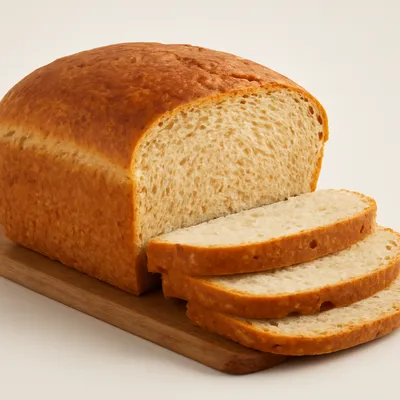
Rub thick slices of country bread with a raw garlic clove, lay in soup bowls. Ladle broth over the bread first. Serve fish and potatoes on a separate platter alongside — diners build their own bowls.
Archive tool suggestions — not reviewed
These legacy suggestions have not been evidence-reviewed and are not presented as required tools.