
Whole milk-fed kid goat (28-40 days old), butterflied, salted, and roasted upright on a vertical iron stake (estaca) over mesquite coals for 3 hours — the defining dish of Monterrey, Nuevo León.


Cabrito al pastor is the defining dish of Monterrey, Nuevo León, traceable to Sephardic Jewish settlers who arrived in the 16th-17th century fleeing the Spanish Inquisition. They were goat herders by occupation — pork was forbidden, beef was Spanish-controlled — and the high desert of Nuevo León supported only goats. The estaca (vertical stake) roasting method survives largely intact from that period. Restaurants like El Rey del Cabrito (founded 1980 in Monterrey) and El Gran Pastor still cook 200+ cabritos a day on open pits.
Monterrey signature, traceable to 16-17th-century Sephardic Jews fleeing the Inquisition — pork was forbidden, beef Spanish-controlled, goats survived the high desert. El Rey del Cabrito (Monterrey, 1980) cooks 200+ a day. Salt-only seasoning admits no marinade.
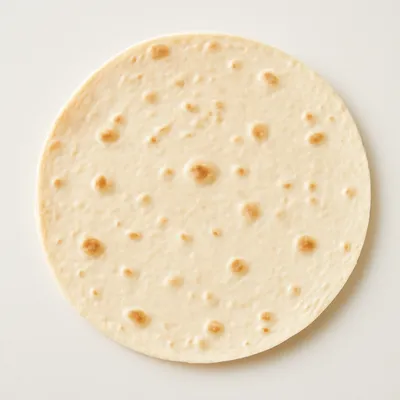
The skin shatters audibly — thin, salty, mahogany-bronze, with rendered fat just under it. Inside the leg, the meat is pale pink, velvety, milk-sweet — almost like the best lamb you've had but cleaner, less mineral. Mesquite smoke is in the fat, not the meat. The riñonada (loin around the kidneys) is the prized cut. You wrap a strip in flour tortilla, dab molcajete salsa, bite. The bone goes back to the board. A bad cabrito tastes gamey — that means it wasn't milk-fed.
Three things make cabrito al pastor work. First: milk-fed goat under 60 days has minimal goat-tallow (the source of gamey flavor); cabrito tastes more like veal than mutton. Second: vertical stake roasting uses radiant heat from the side, not direct flame from below — fat drips outward and bastes the descending parts of the carcass instead of fueling flare-ups. Third: salt-only seasoning relies on the meat being good; any marinade and you've admitted the goat is suspect.
Variations
Monterrey's vertical-stake estaca is canonical (riñonada is the prized cut); San Luis Potosí runs a pit-roasted version closer to barbacoa; Saltillo serves it with flour tortillas instead of corn.
On the Palate
Where Cabrito al Pastor sits in the Mexican flavor cloud
Ingredients
Serves 8How it's made
7 steps · 40 min active + 3 hours waiting
- 115 min
Source a whole milk-fed kid goat 4-6kg dressed weight. Have the butcher butterfly it: split down the breastbone, spread the carcass open like a book, leaving spine intact. Pat dry, trim excess fat from the flank, score the inner thighs 1cm deep.
Watch outOlder goat (over 60 days) is gamey and tough — the dish only works on milk-fed cabrito under 6kg.
- 235 min
Rub the entire carcass — inside and out — with 60g coarse sea salt and 1 tbsp black pepper. No marinade, no oil. Rest at room temperature 30 minutes while the fire is built.
Watch outNorteño tradition is purist: only salt. Marinades are seen as covering up bad goat.
- 330 min
Build a mesquite-charcoal fire in a long open pit or kettle grill. Burn down 30 minutes until coals are gray-ashed and emit steady radiant heat at ~180°C measured 40cm away.
- 410 min
Pierce the cabrito onto a 1.5m vertical iron stake (estaca) — stake enters at the pelvis, exits between the shoulder blades, with both forelegs and hindlegs splayed and tied to the stake with wire. Drive the base of the stake into the ground angled 30° away from the coals, ribs facing the heat.
Watch outVertical mount lets fat drip outward not into coals — you avoid flare-ups that scorch the skin black before the meat cooks through.
- 590 min
Roast 90 minutes ribs-side first, rotating the stake 90° every 20 minutes. The skin should slowly bronze, not blacken. Drippings catch in a tray below — these become tatemado, the prized crispy bits.
Watch outIf the skin chars before the leg interior reaches 70°C, move the stake further from the coals — distance, not heat, is the only adjustment.
- 660 min
Flip stake (skin-side toward coals) and roast another 60 minutes. Test doneness: pierce the thickest part of the leg with a knife — juices should run clear, internal temp 75°C. The skin should crackle when tapped.
- 715 min
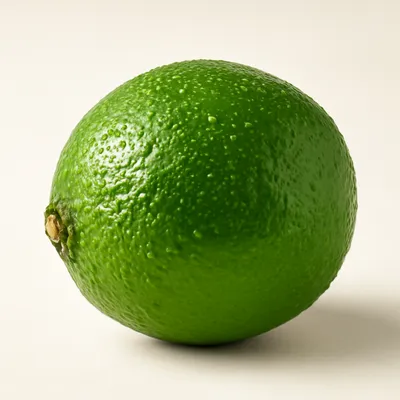
Lift cabrito off the estaca onto a board. Let rest 15 minutes. With a heavy cleaver, hack into traditional cuts: pierna (leg), paleta (shoulder), riñonada (loin/kidney), pecho (breast/ribs), cabeza (head). Serve on a wooden board with charro beans, flour tortillas, salsa de molcajete, and lime.
Archive tool suggestions — not reviewed
These legacy suggestions have not been evidence-reviewed and are not presented as required tools.
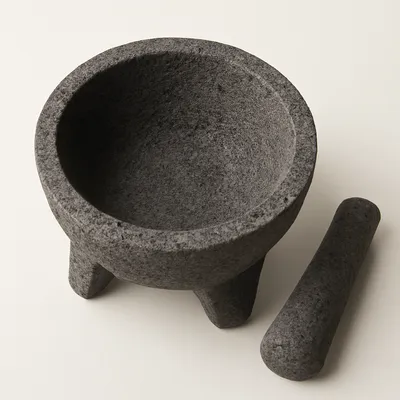
A three-legged mortar carved from porous volcanic basalt, 20-25 cm across, paired with a lava-stone pestle (tejolote). The rough surface tears cell walls instead of slicing them — the difference between a salsa de molcajete and a blender salsa is night and day, the molcajete-pounded version releases oils and aromatics the blade cannot reach. New ones must be cured by grinding rice and salt until the slurry comes out clean of grit.
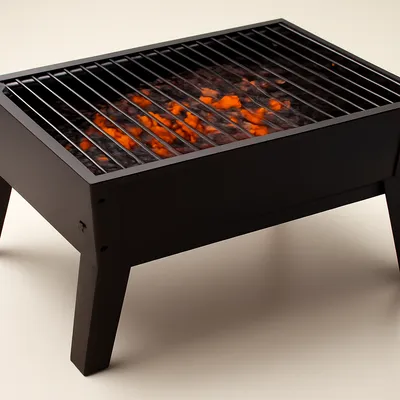
An open or hooded metal frame holding a bed of glowing charcoal embers, with a grate above. Charcoal burns at 700°C+ on the surface and emits short-wave infrared, which cooks proteins faster and with deeper Maillard browning than gas. Hardwood lump charcoal (oak, mesquite, fruitwood) lends its own smoke; cheap briquettes do not. Mastery is mostly heat zoning — direct over coals for searing, indirect off-coals for slow-roasting.


