Blended white-and-red miso, the home-cook standard. Lighter than red, deeper than white — the everyday miso-soup paste.


A Showa-era convenience invention — blending was already common in Tokyo households by the 1950s, but the two big Nagano makers behind shelf-stable awase miso are Marukome (Nagano, founded 1854) and Hikari Miso (founded 1936 in Suwa as Maruni Miso) when refrigeration let the two pastes co-exist on shelves.
Marukome's Ryotei-no-Aji (1982) is the bestselling awase miso in Japan — 80,000 tons/year. Tokyo Tsukiji ramen shops blend their own awase house ratio: typically 70% Shinshu white, 30% Sendai red, plus a spoon of Hatcho for color.
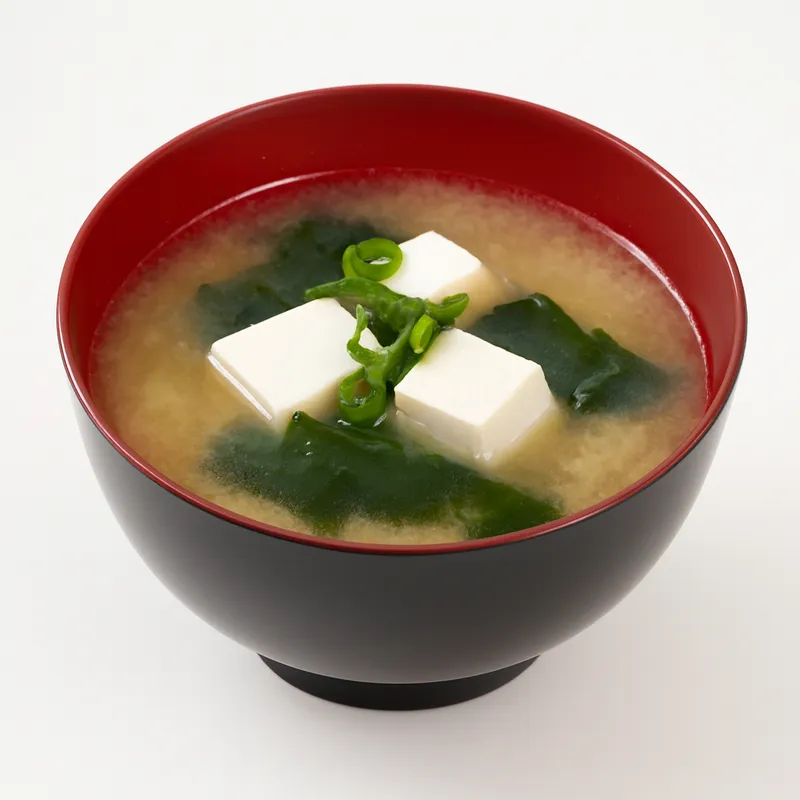
Tan-to-light-brown paste, smoother than pure red. Salt moderate, sweetness present but not dominant, finish balanced. The default for everyday miso soup with tofu and wakame; thins out cleanly at 80°C without breaking.
Two finished misos blended at 6:4 to 4:6 white-to-red. The pre-aging means no extra ferment time; flavor balancing is by ratio plus optional dashi-koji touchup. Shelf-stable refrigerated for 12 months sealed.
Variations
Shinshu-base awase (信州合, Nagano, lightest), Edomae awase (江戸前, Tokyo, sweet-leaning Tsukiji ratio), Kansai awase (関西, sweeter still with Saikyo), and the supermarket Marukome / Hikari / Hanamaruki big-three brand styles.
On the Palate
Where Awase Miso sits in the Japanese flavor cloud
Ingredients
Serves 6How it's made
3 steps · 5 min active + 5 min waiting
- 12 min
Combine 200 g white miso with 200 g red miso in a bowl.
Watch outStart with both misos at room temperature — fridge-cold red miso stays stiff and clumpy and won't fold smoothly into the softer white.
- 23 min
Mix thoroughly until uniform color (golden brown).
Watch outFold and press until the color's one even golden-brown with no white streaks — leave marbling and each spoonful pulls a different balance of sweet and salty.
- 35 min
Jar; refrigerate; use 1 tbsp per 200 ml dashi for miso soup.