
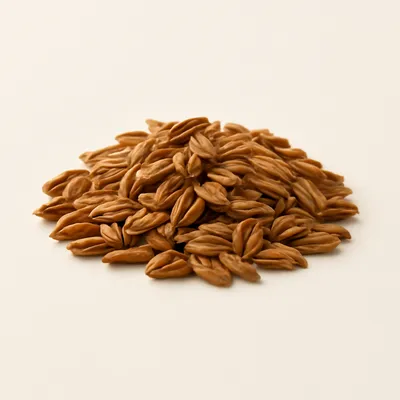


Among Xinjiang's roasted lambs, the smoky open-fire kawap (charcoal kebab) belongs to Turpan, while Kashgar's signature is tonur kawap — lamb cooked inside the cylindrical clay oven (tonur, the Uyghur form of tandoor) that everyday households also use to bake naan and samsa. The lamb is cut into fist-sized bone-in chunks, then coated in a batter of egg, flour, cumin, turmeric, black pepper and salt and left to marinate. The chunks are pressed onto the scorching clay wall; the open fire is then raked out, the pit mouth is sealed, and the meat roasts in the trapped heat for about half an hour. Pulled out and sprinkled with more cumin and chili, the result is closer to roasting than grilling — the wall's radiant heat cooks it evenly, giving a crusty surface over juicy meat.
The lamb forms a golden, crisp crust while the inside stays dripping with fat. The meat next to the bone is the best part, carrying the smoke of the clay pit, with the egg-flour batter adding an extra crisp layer. Cumin and chili are sprinkled on the moment it comes out of the pit, and it's at its best eaten piping hot.
It all comes down to the clay tonur. The walls are first heated until scorching; once the lamb is stuck on, the fire is raked out and the pit sealed, so the radiant heat trapped in the walls cooks the meat slowly and evenly — more thoroughly than over a direct flame. The egg-flour batter sets into a shell that seals in the juices, giving a crusty outside and tender inside, while the smoke trapped in the closed pit soaks deeper into the meat than any open fire.
Variations
Kashgar's nang-pit lamb is the canonical version; around Hotan in the south, more cumin powder is sprinkled on before serving; in northern Yili a pinch of red pepper is added — same pit, different finishing.
On the Palate
Where Tonur Kawap sits in the Uyghur flavor cloud
Cook the battered lamb by radiant trapped heat, not direct flame, and keep a piece of fat on every skewer: the egg-flour shell sets into a seal that locks the juices in while the enveloping heat browns the crust and cooks it evenly through.
Ingredients
Serves 4





How it's made
5 steps · 2 hours 48 min active + 1 hour 12 min waiting
- 148 min
Cube 1kg lamb leg or shoulder into 3cm chunks. Trim some external fat — but keep a piece of fat on every skewer for basting.
- 248 min
Marinate: 2 tsp salt, 2 tsp ground cumin, 1 tsp coarsely ground black pepper, 1 tsp red chili powder, 2 tbsp lamb fat (or oil), 1 egg white. Toss; refrigerate 3 hours.
Watch outToss the chunks until the batter clings in an even coat, then rest 3 hours so it can grip and set.
- 348 min
Soak iron or flat metal skewers. Thread 4-5 chunks per skewer, alternating with a piece of fat in the middle.
- 448 min
Approximate the tonur with a covered grill, oven, or pizza oven at 280-300°C. Suspend or place skewers so meat is exposed to radiating heat (not direct flame). Cook 8-10 min, turning halfway — surface should be deeply browned, interior just pink.
Watch outPosition skewers in the radiant heat off any direct flame; turn halfway so the surface browns deep and even.
- 548 min
Sprinkle hot skewers with extra cumin and a pinch of red chili. Serve with hot naan, raw onion in vinegar, and green tea (kahwa).
Archive tool suggestions — not reviewed
These legacy suggestions have not been evidence-reviewed and are not presented as required tools.
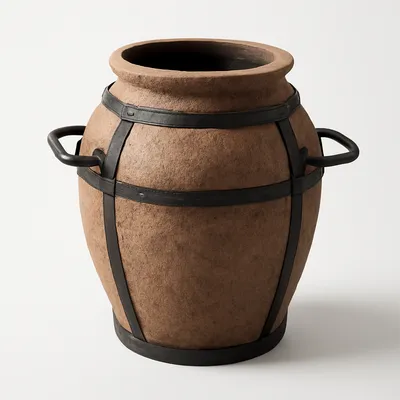
A vertical clay cylinder, 1-1.5 m tall, fired by a charcoal or wood pit at the bottom — the inner walls reach 480°C. Naan dough is slapped against the side and pulls free in 60 seconds, blistered and chewy; chicken on long iron skewers cooks dangling over the embers. Restaurant tandoors are gas-or-electric clones, but the original clay cylinder gives bread an aroma the modern versions can't quite replicate.
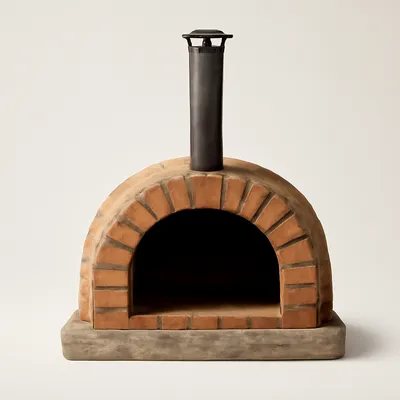
A domed wood-fired oven, brick or stone-lined, that reaches 450-500°C in the floor and 350-400°C in the dome. A Neapolitan margherita cooks in 60-90 seconds — the floor scorches the bottom while radiant heat from the dome flash-blisters the top. Building one requires three insulating layers (firebrick floor, refractory dome, ceramic-fiber jacket); a proper Neapolitan version is a multi-tonne fixture, not a backyard kit.