
Gaziantep folded pastry — paper-thin yufka pulled and stretched to gauze-thinness, brushed with butter, filled with kaymak (Turkish clotted cream) and freshly-ground Antep pistachios, folded into a square pillow and cooked on a hot griddle until golden — Gaziantep's signature breakfast pastry.



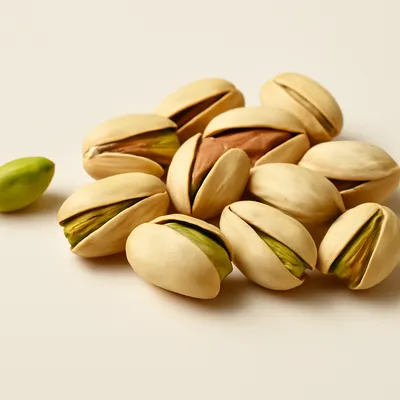


Katmer is the iconic breakfast pastry of Gaziantep, southeast Turkey's gastronomic capital. The dish is the most theatrical of Turkish pastries — at famous katmer specialists like Orkide and Koçak, the master pastry chef hand-stretches yufka dough on a marble counter, pulling it gauze-thin (you can read newsprint through it) while diners watch. The stretched dough is then filled with kaymak (preferably the fresh Afyon kaymak, made from water-buffalo milk) and freshly-ground Antep pistachios, folded into a packet, and griddle-cooked. The pastry is sold ONLY at breakfast — Gaziantep katmer houses open at 6am and sell out by 10am. Eating fresh katmer with strong tea in Gaziantep's old town is one of Turkey's most famous breakfast experiences.
A square of fresh katmer delivers everything in one bite: the outer pastry is golden-crispy, shattering audibly under the teeth; inside, hot melted kaymak floods the mouth — clotted cream's distinctive sweet-fatty-buttery flavor (it tastes nothing like American whipped cream); the ground pistachios add nutty crunch and the specific Antep flavor; the sugar provides sweetness; the butter ties everything together. Drink hot Turkish tea (the tannins cut the fat). This is the breakfast for which Gaziantep is famous, and one katmer per person is the rule.
Pull-thin yufka dough requires extremely high-gluten flour (or a long autolyse) so that the dough stretches without tearing — too little gluten and the dough rips during pulling. The 2-hour minimum rest allows full gluten development; restaurants often rest dough 12+ hours. The dough's thinness creates the dish's defining textural contrast: paper-thin pastry vs thick kaymak filling. Kaymak's high-fat content (60%+ fat) and unique flavor (from water-buffalo milk) cannot be substituted by butter or whipped cream — the dish identity comes from this specific dairy product. Antep pistachios contribute the floral-mineral flavor that distinguishes the dish from any other Mediterranean pistachio dessert.
Variations
Gaziantep canonical with kaymak + Antep pistachio + sugar; Adıyaman variant uses walnuts instead of pistachios (less expensive, different flavor); some Gaziantep cafes serve a savory version with cheese and herbs (peynirli katmer); modern Istanbul restaurants sell 'katmer' that is essentially layered phyllo with similar filling (not the same dish); commercial frozen katmer exists but the kaymak texture suffers in freezing; the diaspora version found in Turkish neighborhoods in Germany uses regular whipped cream — sad shadow; this is a dish that survives best in its place of origin.
On the Palate
Where Katmer sits in the Turkish flavor cloud
Stretch the yufka dough gauze-thin without tearing — the whole dish is the contrast of near-transparent crisp pastry against thick kaymak, and that only comes from fully-rested, high-gluten dough pulled patiently.
Ingredients
Serves 4
How it's made
9 steps · 1 hour 30 min active + 2 hours 30 min waiting
- 1135 min
Make dough: in a large bowl, combine 400g all-purpose flour + 1 tsp salt + 250ml warm water + 2 tbsp olive oil + 1 egg. Knead 12 min until smooth and very elastic. Wrap; rest 2 hours (longer rest = more pull-thin-able dough).
Watch outKnead until the dough is smooth and very stretchy, then rest it long enough to slacken — you can't pull thin from tight dough.
- 233 min
Divide dough into 4 balls (each ~165g). Brush each ball lightly with oil; cover; rest 30 min more.
- 34 min
Prep filling: grind 200g shelled Antep pistachios in a food processor to a medium-coarse texture. Set aside.
- 43 min
Have ready: 200g kaymak (Turkish clotted cream — if unavailable, substitute mascarpone or thick crème fraîche, though kaymak gives the authentic flavor); 50g melted butter (clarified is best); 100g sugar.
- 58 min
Stretch dough: lightly oil a large work surface (60cm × 60cm). Place one dough ball; flatten with palms; using fingers and wrists, slowly pull and stretch the dough outward from the center until it's completely transparent and covers most of the surface. This takes 5-8 min and is the hardest part — the dough must be paper-thin without tearing. Aim for ~50cm diameter circle.
Watch outStretch until the dough is truly see-through — you should almost read print through it before you fill it.
- 63 min
Brush the stretched dough lightly with melted butter. In the center of the dough, dollop 1/4 of the kaymak (50g), sprinkle with 1/4 of the ground pistachios (50g), and 1/4 of the sugar (25g).
- 73 min
Fold the dough over the filling like an envelope: bring the bottom up, the top down, then fold the sides in to create a square packet about 12cm × 12cm. Brush with more melted butter.
- 812 min
Cook on a hot heavy griddle or pan over medium heat: cook 3 min per side, pressing down gently with a spatula, until the dough is golden brown and crispy. Repeat with the other 3 dough balls. Keep warm under a towel.
Watch outGriddle over medium 3 min a side, pressing gently, until the surface is golden-brown and audibly crisp.
- 93 min
Cut each katmer into quarters with a serrated knife. Serve immediately, hot from the griddle, with strong Turkish black tea. The first bite must be within 2 minutes of cooking — katmer cold is katmer ruined.
Archive tool suggestions — not reviewed
These legacy suggestions have not been evidence-reviewed and are not presented as required tools.


