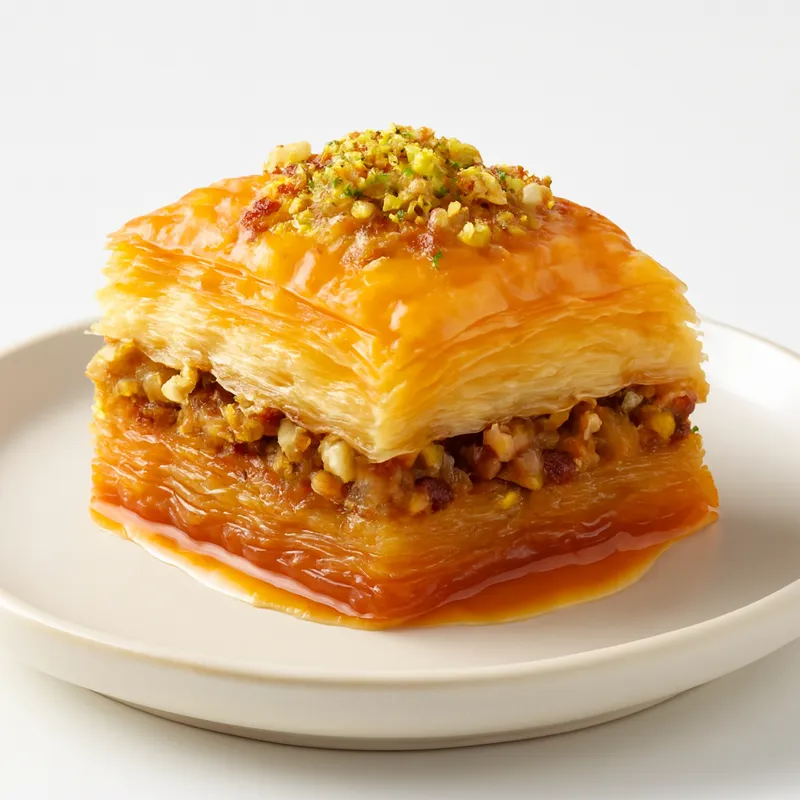
Adıyaman crepe-roll dessert — thin milk-and-flour crepes layered with crushed walnuts and rolled into cigars, then drenched in hot sugar syrup, baked briefly to caramelize the surface, served warm with crushed pistachios — a regional southeast Turkish dessert virtually unknown outside the area.






Şıllık (sometimes called şıllık tatlısı or katmer-tatlısı in nearby provinces) is a regional dessert of Adıyaman, a small province in southeast Turkey between Şanlıurfa and Malatya. The dish is virtually unknown outside the region — you won't find it in Istanbul restaurants or international Turkish cookbooks — making it one of the most genuinely local Turkish desserts surviving in 2026. The original name is 'şileki', a Kurdish word meaning 'wet/soaked' (referring to the syrup-soaked dessert); in the early 1990s a Şanlıurfa TV personality's on-air slip, repeated by newspaper columnists, corrupted 'şileki' into 'şıllık'. The dish combines the thin-crepe technique (similar to crêpe Suzette or scrippelle) with the syrup-soaked Turkish dessert tradition. The walnut filling is the southeast signature; the syrup soak is the universal Turkish ending; the brief broil at the end is a uniquely Adıyaman touch.
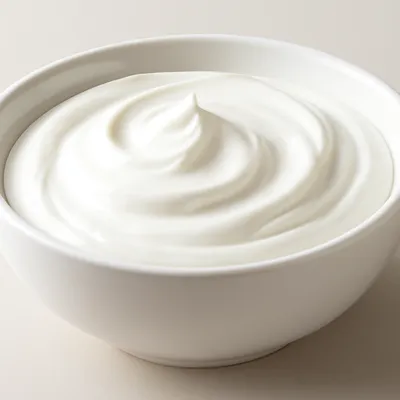
Cut into a şıllık cigar: the outside has a sticky-caramel coating from the broiled syrup, with small darker burnt spots; inside, layers of crepe spiral around chopped walnuts. The syrup has soaked completely through. The first bite: warm sticky sweetness, the unmistakable walnut crunch (still slightly textured, not pulverized), tender crepe softness. Cold yogurt on the side is the secret — it cuts through the sweetness and creates the temperature contrast that makes the dish special. The crepe's eggy richness underneath the syrup adds complexity. This is a dessert no one outside Adıyaman has tried.
Crepes (rather than layered pastry/yufka) are the dessert's textural identity — when soaked in syrup, crepes become tender-soft rather than crisp-shattering like yufka. The brief broil creates Maillard caramelization on the syrup surface, adding deeper flavor and the characteristic sticky-burnt finish; without the broil, şıllık tastes only sweet, not complex. The walnut crumble (coarse, not paste) provides essential textural contrast against the soft crepes. Cooling the syrup before pouring is important because the cool syrup absorbs gradually over 20 min rather than turning the crepes into mush instantly.
Variations
Adıyaman canonical with walnuts + syrup + broiled top; nearby Şanlıurfa variant uses pistachios instead; the Hatay version skips the broil step (just syrup-soaked); modern Istanbul fine-dining occasionally serves a deconstructed şıllık with crepe ribbons and walnut crumble; commercial frozen şıllık is rare (the dish is too regional for mass production); the dessert is often made for Iftar (Ramadan breaking) — sticky, filling, energy-dense; can be made a few hours ahead and rewarmed.
On the Palate
Where Şıllık sits in the Turkish flavor cloud
Ingredients
Serves 6


How it's made
8 steps · 50 min active + 40 min waiting
- 112 min
Make syrup: in a saucepan, combine 400g sugar + 350ml water + 1 tbsp lemon juice. Bring to boil; simmer 8 min until slightly syrupy. Cool to room temp. (Cool syrup on hot crepes — same principle as baklava.)
Watch outCool the syrup to room temp before it touches the crepes — cool syrup soaks in slowly over 20 minutes; hot syrup on hot crepes turns them to mush.
- 225 min
Make crepe batter: in a bowl, whisk 4 eggs + 250ml milk + 250ml water + 1/4 tsp salt + 200g all-purpose flour + 2 tbsp melted butter until completely smooth. Rest 20 min.
- 318 min
Cook crepes: heat a 22cm non-stick pan over medium heat; brush very lightly with butter. Pour 1/3 cup batter; swirl to coat thinly. Cook 45 sec until edges lift, flip 20 sec more. Slide onto plate. Repeat — make 12 crepes total. Stack between parchment.
Watch outSwirl the batter thin and flip once the edges lift — 45 seconds a side; these should stay tender and pliable to roll, not crisp up.
- 44 min
Prepare filling: in a food processor, pulse 200g shelled walnuts to a coarse-fine texture (some bigger pieces, not a paste).
- 514 min
Assemble: lay one crepe flat on a work surface. Sprinkle 2 tbsp ground walnuts across the lower third of the crepe. Roll up tightly into a thin cigar (the diameter should be about 3cm). Place seam-side-down on a baking sheet. Repeat for all 12 crepes. You'll have 12 walnut-stuffed cigars.
- 623 min
Arrange the rolled crepes side-by-side in a single layer in a rectangular baking dish (about 30x20cm). Pour the cool syrup evenly over the crepe rolls — the syrup should come up to the middle of the rolls but not completely submerge them. Let stand 20 min for the crepes to absorb the syrup.
- 75 min
Heat the broiler/grill at high. Broil the syrup-soaked crepes 3-5 min, watching constantly, until the tops form a sticky-caramelized surface and a few darker spots appear. Watch closely — they go from syrup-coated to burnt in 30 seconds.
Watch outStand right at the broiler and don't look away — the tops go from syrup-glossy to caramelized to burnt in about 30 seconds.
- 84 min
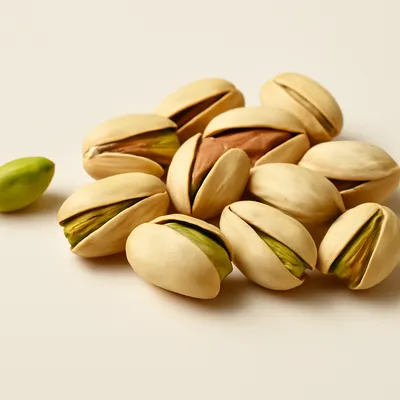
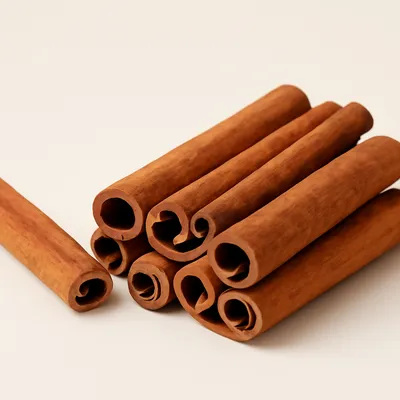
Serve warm, 2 cigars per person, drizzled with any remaining syrup from the pan, sprinkled with chopped pistachios and a little cinnamon. Cold yogurt or kaymak (Turkish clotted cream) on the side is the canonical Adıyaman addition.
Archive tool suggestions — not reviewed
These legacy suggestions have not been evidence-reviewed and are not presented as required tools.

Flat rectangular metal pan (sheet pan, half-sheet, quarter-sheet), 33×23 cm to 45×33 cm, with a low rim. The flat surface gives even heat for cookies, biscuits, roasted vegetables, sheet-pan dinners. Heavy aluminum sheets conduct heat fastest; non-stick coatings make cleanup easier but can warp over 200°C; rimmed half-sheet is the modern American restaurant standard.

Hand-held wire loop tool for beating eggs, whipping cream, emulsifying dressings, and incorporating air into batters. Balloon whisks (large round head) for whipping cream and meringues; French whisks (narrow tear-drop) for sauces in pots; flat whisks (gravy) for pan sauces. Stainless steel is universal; silicone-coated for non-stick pans.

Round metal pot, 14-26 cm diameter, with vertical walls and a long handle, designed for sauces, soups, oatmeal, rice, boiled vegetables. The vertical walls minimize evaporation (vs. a sauté pan). Sizes: 1 qt for melting butter, 2-3 qt for sauces, 4 qt for soups. Stainless-steel-clad aluminum or copper is best for conduction; cast-iron is too thick for delicate sauces.