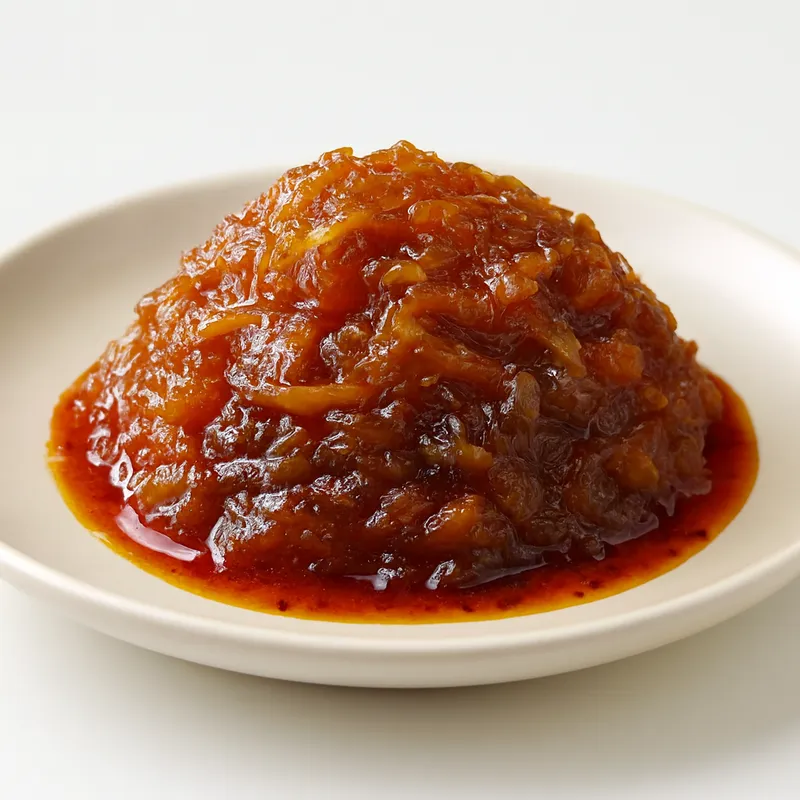




A modern South Indian and Goan kitchen adaptation rather than an ancient dish. Passion fruit (Passiflora edulis) was introduced to India by the British and Portuguese in the late 19th and early 20th centuries, taking root in the Nilgiris, Coorg, and the Konkan-Goa coast. Local cooks slotted it into the existing chutney framework — fruit + jaggery + tempered spice — alongside mango and tamarind chutneys. It remains a regional specialty, not a national staple.
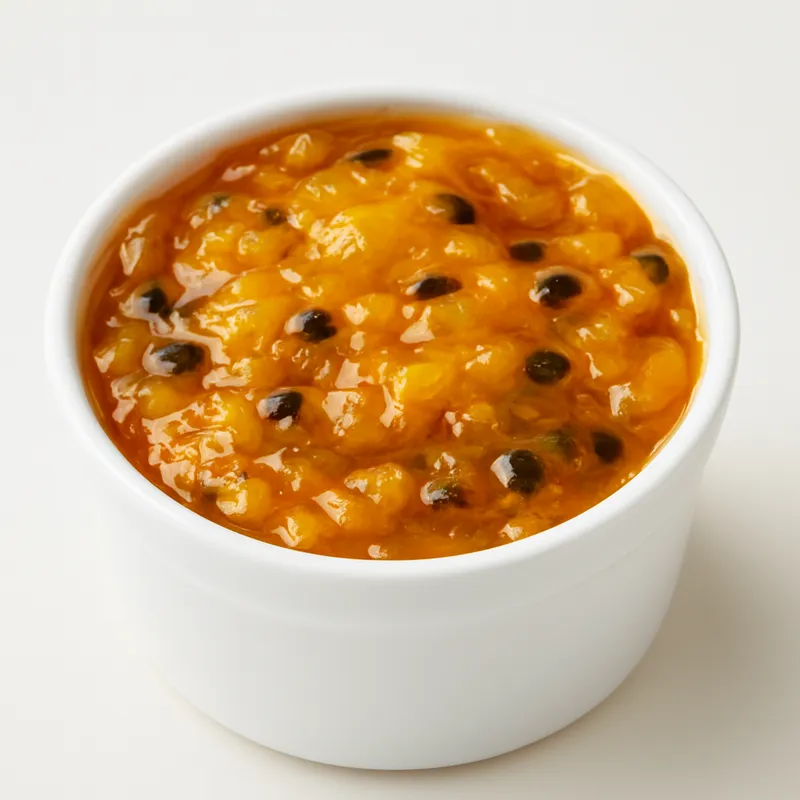
Goan-Portuguese hybrid — passion fruit pulp cooked down with jaggery, mustard seed tadka, dried red chili, and curry leaves. The seeds stay in; they're texture, not garnish. Sourness does the work pickle does elsewhere.
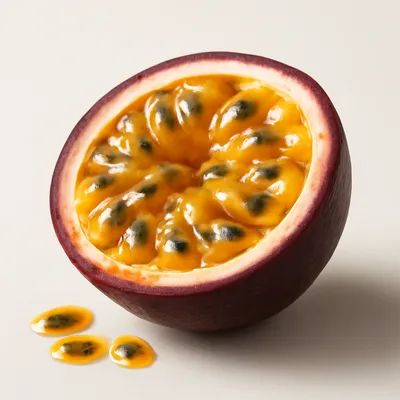
A small spoonful of glossy translucent gold, seeds visible through the gel. Sour first — passion fruit's sharp tropical acid — then a hit of sugar, then green chili at the back. Mustard seed and curry leaf from the tempering pop on the tongue as crunch. Served as a side with rice, dosa, or grilled meat. The seeds should still be intact and crisp; if mushy, the fruit was overcooked.
Passion fruit pulp is naturally pectin-rich and acidic (pH 2.7–3.3), so the chutney sets into a gel without added thickener — sugar plus the fruit's own acid is enough. Cook short and hot: prolonged simmering destroys the pulp's volatile esters (the perfume that says 'passion fruit') and breaks pectin into thinner sugars, leaving a syrup instead of a chutney. Add the tadka oil at the end so the spice fragrance survives.
Variations
Goan version uses jaggery and mustard tadka; Sri Lankan adds Maldive fish; Kerala simmer goes thicker with coconut; Australian-Asian fusion versions skip the tadka and add ginger.
On the Palate
Where Passion Fruit Chutney sits in the Indian flavor cloud
Ingredients

How it's made
4 steps · 20 min
- 15 min
Scoop the pulp from the passion fruits into a saucepan. Add sugar and heat gently, stirring until the sugar dissolves and the mixture becomes syrupy, about 5 minutes.
Watch outHeat gently just until the sugar fully dissolves and the pulp looks syrupy and glossy — don't let it gallop yet.
- 23 min
Add freshly grated ginger and cumin to the passion fruit mixture, stirring until the aroma of ginger fills the air, about 3 minutes.
- 310 min
Pour in vinegar and continue to cook, allowing the chutney to thicken and the flavors to meld, about 10 minutes.
Watch outIt's ready the instant it thickens enough to coat the back of a spoon and a spatula leaves a brief clear trail — any longer and you lose the perfume.
- 42 min
Allow the chutney to cool slightly before transferring it to a jar. The chutney will thicken further as it cools.
Watch outIt'll look a touch loose off the heat — that's right; the pectin firms it up as it cools, so don't chase a thick set in the pan.
Archive tool suggestions — not reviewed
These legacy suggestions have not been evidence-reviewed and are not presented as required tools.