
A classic Aragonese Christmas vegetable: cardoon — the celery-like edible stalk of a thistle related to the artichoke — boiled tender, then dressed in a sauce of garlic and ground toasted almonds thickened over a sofrito. The trimmed, de-stringed stalks are blanched, then simmered in the almond-garlic sauce, often with serrano ham and a splash of white wine. It is a faintly bitter, nutty winter side served at Christmas across Aragón, Navarre, and La Rioja.
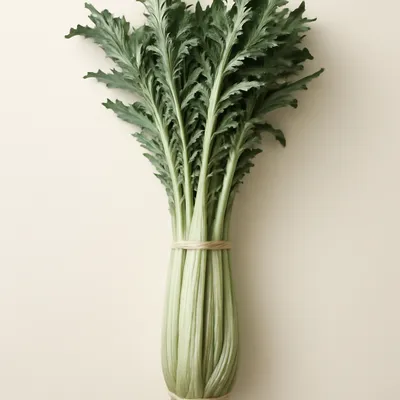
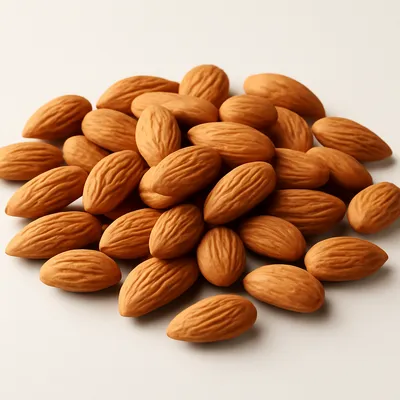



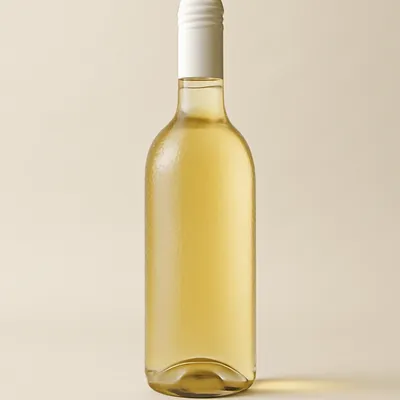
Cardoon (Cynara cardunculus) is a Mediterranean thistle, a close relative of and the wild ancestor to the globe artichoke, domesticated in ancient times; in Spain it is most eaten across Aragón, Navarre, La Rioja, and Soria, where it grows as a cold-hardy winter crop. The almond sauce ties it to a region where almonds were a staple of the festive pantry, and the dish is fixed in the Christmas Eve and Christmas table of these regions. The precise origin of the pairing is unrecorded, but it sits firmly in the traditional home cooking of the Ebro valley.
Pale, tender lengths of stalk — the texture somewhere between celery and a soft artichoke heart — coated in a thick, pale beige sauce with the ground almonds giving it a slightly grainy, nutty body. The cardoon carries a clean, gentle bitterness, like a mild artichoke, which the rich almond and the salt of the ham round off. Warm and comforting rather than sharp. Where ham is added it threads salt and savour through the mild vegetable.
Two steps tame the cardoon: the stalks must be peeled of their tough fibrous strings and rubbed or boiled with a little lemon or flour-water, because the cut flesh oxidises and browns fast, and a first blanch leaches out the harshest bitterness before the gentle final simmer. The sauce is thickened two ways at once — a sofrito of garlic in oil dusted with a little flour, plus the ground toasted almonds, whose starch and crushed cell structure absorb liquid and emulsify the fat into a smooth, body-rich sauce without cream. Toasting the almonds first deepens their flavour through the Maillard reaction.
Variations
The simplest version is just cardoon in the garlic-almond sauce; richer ones add serrano ham, pine nuts, or fried bread crushed into the sauce, and many cooks loosen it with milk thickened with a little flour or cornflour. Karlos Arguiñano's well-known version finishes it with gulas (imitation elver). It is a Christmas staple shared with Navarre and La Rioja; the same cardoon also turns up there boiled simply with oil, or gratinated, and the artichoke can stand in when cardoon is out of season.
On the Palate
Where Cardo en Salsa de Almendras sits in the Spanish flavor cloud
Ingredients
Serves 4

How it's made
5 steps · 30 min
- 120 min
Trim the cardoon, peel off the tough outer strings, and cut the stalks into short lengths, dropping them into water with lemon to stop browning.
Watch outPeel off the tough fibrous strings and drop the cut stalks into lemon water — cut cardoon browns fast on contact with air.
- 235 min
Boil the cardoon in salted water (a little flour added helps keep it pale) until tender, then drain, reserving some cooking water.
Watch outBoil to leach out the harshest bitterness before the final simmer — a little flour in the water helps keep it pale.
- 38 min
Toast the almonds in a dry pan until golden, then grind them; gently fry the chopped garlic in olive oil to make a sofrito.
- 46 min
Stir a little flour into the garlic oil, then add the ground almonds and some reserved cooking water to build a smooth sauce, with a splash of white wine.
Watch outBuild the sauce with the ground toasted almonds and a little flour — their crushed cells absorb liquid and emulsify the fat into a smooth body, no cream needed.
- 510 min
Add the diced serrano ham and the drained cardoon, simmer until the sauce thickens and the flavours meld, then season and serve warm.
Archive tool suggestions — not reviewed
These legacy suggestions have not been evidence-reviewed and are not presented as required tools.


