
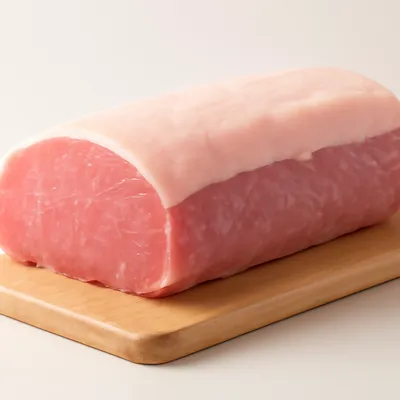
A Périgord confit of pork: a boned loin studded with slivers of garlic, rubbed with salt and pepper, then cooked very gently for hours submerged in duck, goose or pork fat until meltingly tender. It is set and served cold, sliced, surrounded by the fine savoury jelly that forms from its own juices. The slow fat-cooking and salt preserve the meat the way a duck confit is preserved, and traditionally a jar of enchaud was part of the winter larder. It is one of the great cold cuts of the Périgord festive table, classically eaten at Christmas.




Enchaud (also spelled anchaud) is among the oldest of the Périgord salt-cured pork preparations, a domestic charcuterie made in the days following the winter pig-killing, when the household preserved the year's pork. Boning a loin, studding it with garlic, salting it and then confiting it slowly in rendered fat let a prized cut keep for months sealed under its own fat in a jar — the same confit logic the region applies to duck and goose. For most of its history it was a home preparation rather than a commercial one, spreading into regional charcuterie only around the middle of the 20th century. It remains a fixture of the Périgord table, particularly as a cold festive dish around Christmas.
Cold, the slices hold together but yield at once, the pork pale and dense and threaded with soft garlic, tasting cleanly of salt and pork rather than spice. Clinging to each slice is a thin coat of pale amber jelly and a film of set fat that melts on the tongue. There is none of the dryness of a roast — the long fat-cooking leaves it silky and rich. Eaten on country bread with a smear of the jelly and a cornichon, it is robust, savoury and faintly sweet with garlic.
Confit is cooking and preserving in one. Held for hours at a low temperature in fat — well below a boil, around 80 to 90 degrees Celsius — the loin's collagen slowly breaks down into gelatin and the meat stays moist instead of drying out, while the fat conducts gentle, even heat without scorching. The salt rub draws out moisture and seasons throughout, and once the cooked meat is sealed under cooled fat the fat layer locks out air, so fat and salt together check spoilage. The jelly is gelatin from the connective tissue, set as the meat juices cool.
Variations
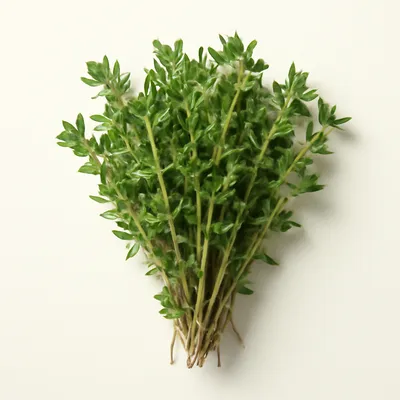
Recipes vary the aromatics — thyme, bay or a few juniper berries with the garlic — and the fat, using duck, goose or pork. Some cooks brown the loin briefly before confiting; others cook it covered in a slow oven rather than submerged in fat. It is sometimes served warm as a roast with sarladaise potatoes and a truffle-scented jus, but the classic form is cold, set in its jelly. In the neighbouring Limousin a closely related salt-cured pork goes by the same anchaud name.
On the Palate
Where Enchaud Périgourdin sits in the French flavor cloud
Ingredients
Serves 6
How it's made
8 steps · 40 min active + 5 hours 20 min waiting
- 115 min
Bone the pork loin and trim, keeping the meat in one long piece.
- 215 min
Cut peeled garlic into slivers and stud them deep into the meat with a knife tip.
Watch outPush the garlic slivers deep into the meat, not just the surface, so the flavor runs through the loin.
- 3180 min
Rub the loin all over with salt and pepper and let it cure in the fridge for a few hours.
- 410 min
Melt enough duck, goose or pork fat in a heavy pot to submerge the meat.
- 5180 min
Lay in the loin and confit very gently, well below a simmer, for about 3 hours until fork-tender.
Watch outDone when a fork slides in with no resistance and the meat feels yielding, not springy — about three hours.
- 620 min
Lift out the meat; reduce the meat juices under the fat to concentrate the jelly base.
Watch outReduce the juices under the fat until they taste concentrated and set on a cold spoon — that's the jelly base.
- 715 min
Pack the meat into a terrine or jar, strain over enough fat and juices to cover, and chill until set.
Watch outCover the meat completely with strained fat and juices; any exposed patch will spoil.
- 85 min
Serve cold, sliced, with the jelly, on country bread with cornichons or a salad.
Archive tool suggestions — not reviewed
These legacy suggestions have not been evidence-reviewed and are not presented as required tools.



