
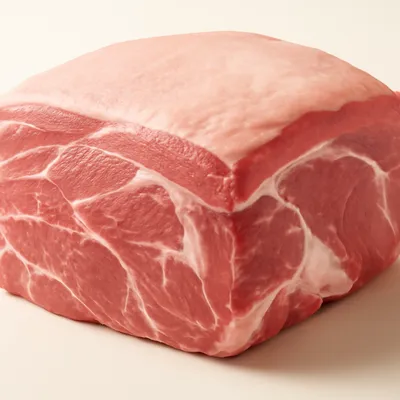
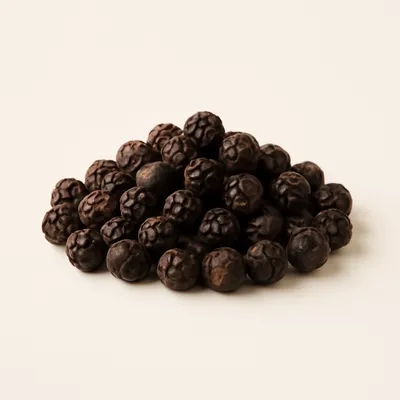
Sopressa Vicentina is the large, soft cured salami of the province of Vicenza, in the foothills of the Veneto, and one of the region's classic starters. It is made from heavy, mature pigs raised in the province, coarsely ground, seasoned with salt, pepper, garlic and a discreet mixture of cinnamon, clove and rosemary, then stuffed into a wide casing and slowly air-cured for two to four months. The cut is fatter and softer than most Italian salami, the slice an irregular pink shot through with white, mild and gently spiced rather than hot. It is sliced thick and eaten on its own or, in the traditional Vicentino way, with grilled or soft polenta and a glass of local red. It should not be confused with southern soppressata, the pressed and chilli-spiked salami of Calabria.



The sopressa belongs to the long Veneto tradition of curing the family pig, and its presence in the Vicentino countryside is documented for centuries: it appears, for instance, in the 1577 canvas 'Christ in the House of Martha, Mary and Lazarus' by the Bassano-born painter Jacopo dal Ponte. The name derives from the Veneto dialect verb 'sopressàre', to press or flatten, reflecting how the stuffed salami was once shaped under light pressure, and the spelling with a single 'p' distinguishes the Veneto product from the southern soppressata. It was for generations a peasant and farmhouse food, eaten as the 'marenda' (the country mid-day or mid-afternoon snack) with polenta. Its territory lies in the province of Vicenza, between the Piccole Dolomiti, the Asiago plateau and the Colli Berici. The European Union granted it Protected Designation of Origin status under Regulation (EC) No 492 of 18 March 2003; under its production specification the salami is made only from Large White, Landrace and Duroc pigs born and raised in the province, slaughtered at no less than nine months and over 130 kg, and aged from sixty days for the smallest pieces to a hundred and twenty days or more for the largest.
A thick slice is yielding and almost buttery, the coarse grain giving soft beads of lean meat bound by sweet, melting fat rather than the firm chew of a dry sausage. The flavour is round and savoury, faintly sweet, with garlic and pepper sitting just behind a warm whisper of cinnamon and clove, and a mild lactic tang from the cure rather than any heat. Eaten with grilled polenta it is rich and mellow, the salami's fat soaking into the warm cornmeal.
Curing is the engine. Salt, with a small dose of potassium nitrate, draws water out of the meat by osmosis and lowers its water activity, which together with the nitrate (slowly reduced to nitrite by the meat's bacteria) suppresses Clostridium botulinum and other pathogens while fixing the stable pink colour: nitric oxide binds the muscle pigment myoglobin into nitrosomyoglobin, locked in on heating as the cured 'rosa'. As the salami hangs, the meat's own and added lactic-acid bacteria ferment the small charge of sugar, dropping the pH toward roughly 5.3; the falling acidity nears the proteins' isoelectric point, so they shed water and gel, firming the loose grind into a sliceable paste and adding a gentle tang. Then comes the long, slow drying in cool, humid cellars over weeks and months, where enzymes do the deep work: lipolysis splits the abundant fat into aromatic free fatty acids and proteolysis breaks proteins into savoury peptides and free amino acids, building the rounded cured aroma and a quiet glutamate-driven umami. The coarse grind and high proportion of soft back fat keep water moving out evenly and give the slice its characteristic softness (morbidezza), while the restrained spicing and the deliberate absence of chilli keep it mild, unlike the pressed, peperoncino-laced soppressata of the south.
Variations
Within the DOP, sopressa is made plain or 'con aglio', with a slightly more pronounced note of garlic, and is sold in a spread of sizes from about one to several kilos, the larger pieces aged longest and prized most. Beyond the protected product, Veneto farmhouses make countless un-certified 'sopresse nostrane', some with a splash of local wine or a touch more spice, and a soft, very young version is eaten almost fresh. The classic accompaniment is polenta, grilled and charred or soft and white from the Marano maize of the Vicenza plain, often with mushrooms; it also anchors the regional antipasto board alongside cheese and pickles. It remains distinct in every form from the firm, fiery soppressata of Calabria.
On the Palate
Where Sopressa Vicentina sits in the Italian flavor cloud
Ingredients
Serves 12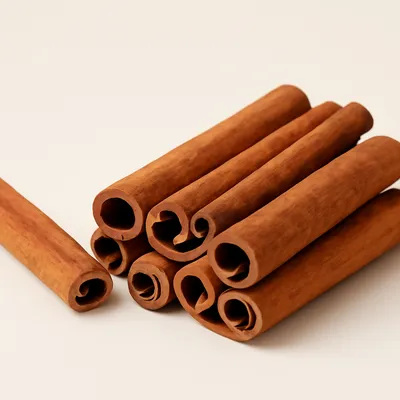

How it's made
9 steps · 2 hours active + 90 days waiting
- 160 min
Select coarse cuts of pork from heavy, mature pigs together with a generous proportion of firm back fat, and chill the meat to between 3 and 6 degrees Celsius so it grinds cleanly.
- 225 min
Grind the chilled pork and fat coarsely through a wide plate so the paste shows distinct flecks of lean and fat.
- 320 min
Mix the curing blend by weight: salt with a permitted small dose of curing salt, coarsely cracked black pepper, finely ground cinnamon, clove and rosemary, a little crushed garlic, and a pinch of sugar to feed the fermentation.
- 420 min
Work the seasoning evenly through the cold paste until it just begins to bind, taking care not to smear or overheat the fat.
Watch outWork the seasoning through just until the paste begins to bind, keeping it cold — smear or overheat the fat and the salami loses its distinct fleck and cures greasy.
- 530 min
Stuff the paste firmly into wide natural casings, packing it tightly to avoid air pockets, then tie off into large salami and bind lengthwise with twine.
- 620 min
Prick the casings all over with a fine needle to release trapped air and let moisture escape during drying.
Watch outPrick the casings all over — releasing trapped air and letting moisture escape is what prevents pockets and lets it dry evenly during the cure.
- 712960 min
Hang the salami in a warm, ventilated room for about a week to ten days to drain and begin the fermentation, then move them to a cool, humid cellar.
- 8115200 min
Cure undisturbed for two to four months according to size, keeping the cellar cool and humid so the salami dries slowly and evenly without case-hardening.
Watch outKeep the cellar cool and humid so it dries slowly — too dry an air case-hardens the outside, trapping moisture in and spoiling the core.
- 915 min
Slice thick across the salami and serve at room temperature, on its own or with grilled or soft polenta and a glass of Veneto red.
Archive tool suggestions — not reviewed
These legacy suggestions have not been evidence-reviewed and are not presented as required tools.


