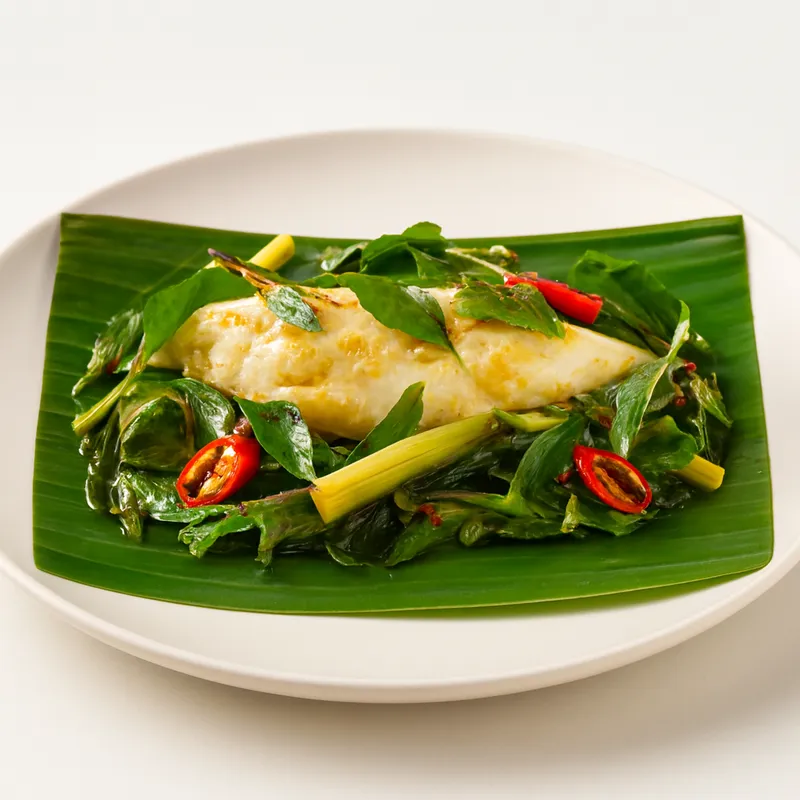
A Surabaya plate of sliced lontong rice cake topped with a generous tangle of stewed bean sprouts, fried tofu, and lentho — small fritters of mashed black-eyed pea or cassava. The bowl is moistened with a light, sweet-soy-tinged broth and finished with fried shallots, sweet soy, and sambal. It is brothy, soft, and savory-sweet, a classic East Javanese street meal. The name, 'racing lontong', recalls hawkers who once rushed their heavy baskets through the streets to sell it.





Lontong balap is firmly associated with Surabaya, East Java's largest city, where it is one of the defining street dishes. The name translates roughly as 'racing lontong': by popular account it recalls the old sellers who carried the dish in heavy shoulder baskets and hurried, almost raced, through the city to reach their selling spots. The combination of lontong, stewed sprouts, fried tofu, and lentho fritters in a light sweet broth is particular to the city. It is everyday hawker food rather than a formal recipe, with no recorded inventor.
This is a soft, soothing bowl. The lontong is dense and faintly springy, the stewed bean sprouts make up the bulk — juicy, just-tender, and slightly sweet from the broth — and the fried tofu turns spongy where it soaks up the liquid. The lentho fritters add a welcome crunch and a nutty, savory bite against all the softness. A drizzle of sweet soy deepens everything with a malty sweetness, and a spoon of sambal cuts through with heat. It is light yet filling, gentle yet moreish.
The bean sprouts are stewed only briefly so they soften and drink in the broth while keeping a little snap, releasing their own sweet liquid into the bowl. The broth is kept deliberately light — water seasoned with garlic and sweet soy rather than a heavy stock — so it moistens without overwhelming the mild components. Lentho relies on the soaked black-eyed peas being coarsely mashed and bound so the fritters hold together and crisp on the outside while staying tender within when deep-fried. Sweet soy added at the table contributes both color and a caramel-malt sweetness from its palm-sugar base.
Variations
Lentho can be made from black-eyed peas, cassava, or a mix, and some stalls use more tofu where lentho is scarce. The broth ranges from very plain to lightly spiced, and the amount of sweet soy and sambal is adjusted to taste at the table. Lontong balap is often eaten with sate kerang, skewers of small cockles in sweet soy, on the side — the pairing is a Surabaya tradition that rounds the meal out.
On the Palate
Where Lontong Balap sits in the Indonesian flavor cloud
Ingredients
Serves 4

How it's made
8 steps · 40 min active + 40 min waiting
- 110 min
Soak the black-eyed peas, then drain and coarsely mash them with garlic and seasoning.
- 28 min
Shape the mash into small patties and deep-fry until golden and crisp; set aside as lentho.
Watch outDeep-fry the lentho patties until golden and crisp outside — the coarsely mashed peas must bind first, or the fritters break apart in the oil.
- 36 min
Fry the tofu until golden, then drain.
- 45 min
Sweat sliced garlic in a little oil, then add water and sweet soy to make a light broth.
- 56 min
Add the bean sprouts and stew briefly until just tender, keeping a little crunch.
Watch outStew the bean sprouts only briefly, keeping a little snap — over-cook them and they go limp and lose the sweet liquid they should release into the broth.
- 64 min
Slice the lontong rice cake into bite-size pieces and arrange in serving bowls.
- 73 min
Top with the stewed sprouts and their broth, the fried tofu, and the lentho.
- 82 min
Finish with fried shallots, a drizzle of sweet soy, and sambal to taste.