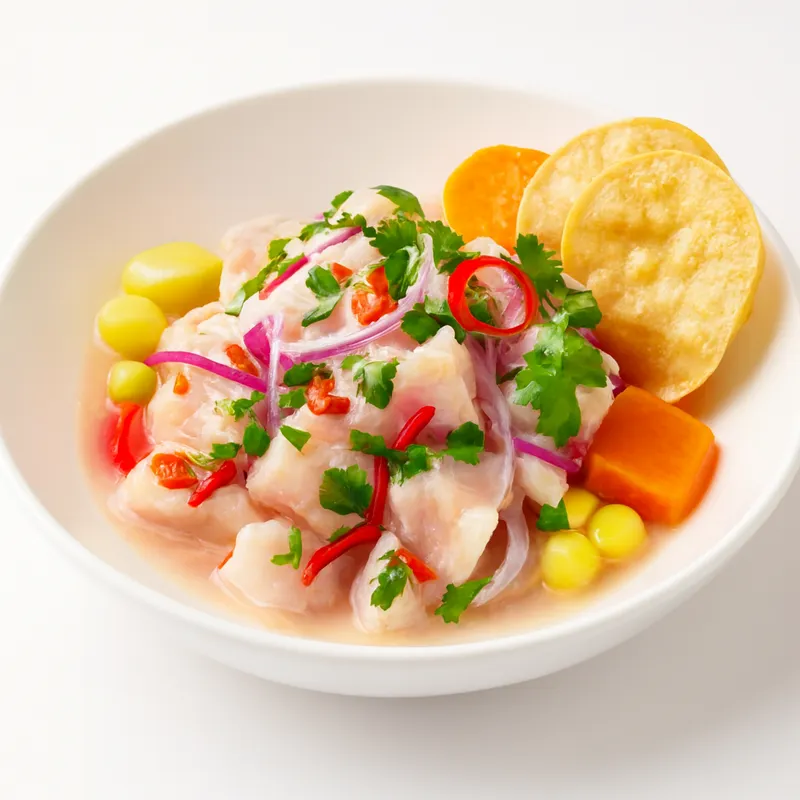
Apichado is a thick pork stew from the Peruvian Amazon, where browned pork is simmered in a sauce built on ground roasted peanuts and corn until it turns rich and faintly nutty. It is everyday comfort food across Loreto and San Martín, ladled deep and almost always served with green plantain. The peanut does double duty as flavor and thickener, giving the stew a velvety body rather than a thin broth. Aji panca and cumin carry the seasoning, keeping it warm and earthy rather than fiery.




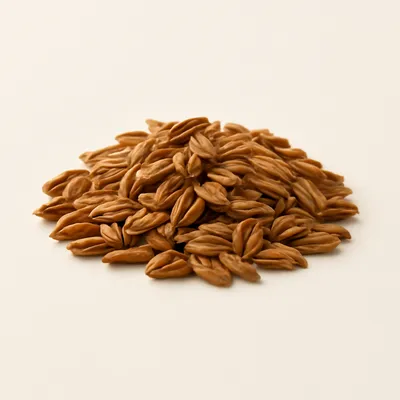
Apichado is documented as a traditional jungle guiso of the Peruvian selva, particularly Loreto and the San Martín region, where ground peanut and corn are staple thickeners for stews. It belongs to the everyday home and market kitchen rather than to a dated invention, so it has no single origin story; the peanut-thickened style links it to the broader Amazonian habit of binding sauces with ground seeds and nuts. In the rainforest the pork is often replaced with bushmeat such as majaz, picuro or sajino when available, a substitution noted in regional recipe collections.
A deep, terracotta-colored stew that coats the spoon. The pork is fork-tender and falls into the sauce, which tastes of toasted peanut and sweet corn with a low hum of chili and cumin. It is not soupy: the texture sits between a stew and a thick gravy, made to be eaten over rice with boiled or fried green plantain pushed through it. Comforting and rounded, with the peanut more savory than sweet.
The defining technique is thickening with roasted peanuts ground to a paste, often reinforced by a little corn flour slaked in cold water to avoid lumps. Roasting the peanuts before grinding deepens their flavor through the Maillard reaction and releases their oils, which emulsify into the braising liquid and give the body. The pork is seared first to build fond, then simmered slowly in stock so the connective tissue breaks down; the peanut paste goes in toward the end so it enriches without scorching. Aji panca paste and cumin season the base, and green plantain is cooked separately to serve.
Variations
Pork is the standard, but in the jungle it is often swapped for game meat such as majaz, picuro, sajino or carachupa. Some San Martín cooks add the local herb mishquina for aroma; others fold in a handful of corn kernels alongside the peanut. The plantain accompaniment may be boiled, fried, or mashed, and white rice is the usual base. Thickness varies from a loose stew to an almost spoon-coating sauce.
On the Palate
Where Apichado sits in the Peruvian flavor cloud
Ingredients
Serves 4
How it's made
8 steps · 30 min active + 50 min waiting
- 15 min
Season pork pieces with salt, pepper and cumin and let them sit a few minutes.
- 28 min
Sear the pork in hot oil until well browned, then set aside.
Watch outSear the pork until well browned before braising — that fond stuck to the pot is the base of the sauce's depth; drop pale meat in and the stew tastes flat.
- 35 min
In the same pot, fry garlic, onion and aji panca paste until fragrant.
- 440 min
Return the pork, add stock to cover and simmer gently until tender.
- 58 min
Roast the peanuts, then grind them to a paste with a little water.
- 64 min
Stir the peanut paste into the stew, adding corn flour slaked in cold water to thicken.
Watch outRoast the peanuts before grinding, then stir the paste in near the end — roasting deepens their flavour and releases the oils that give the sauce its body; add it early and it scorches on the bottom.
- 76 min
Simmer a few more minutes until the sauce is rich and smooth, adjusting salt.
- 84 min
Serve over white rice with boiled or fried green plantain.
Archive tool suggestions — not reviewed
These legacy suggestions have not been evidence-reviewed and are not presented as required tools.