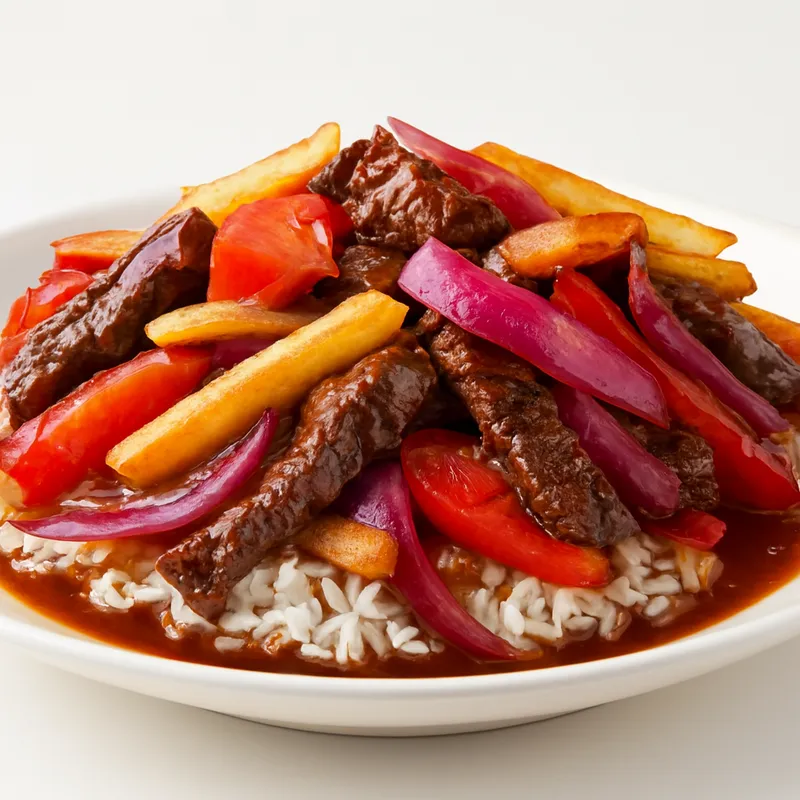
Seco de res is the beef rendition of Peru's criollo cilantro stew: chuck or shank is browned, then braised low in a green sauce of blended cilantro, ají amarillo and fermented chicha de jora until the meat pulls apart and the sauce reduces glossy and deep green. The name means dry, a nod to how the liquid cooks down concentrated rather than soupy. It is everyday lunch food the length of Peru, plated with canary beans, white rice and a fresh salsa criolla. Where seco de cordero leans on lamb and the north coast, the beef version is the standard home and menú-de-casa staple.





Seco descends from the Spanish colonial kitchen by way of Moorish Spain: the slow-braise-with-cilantro-cumin-garlic technique arrived with the conquistadors, kin to the Spanish 'carnero verde' (green-sauced mutton) and the Arab 'seco' style of reducing a braise. Beef itself was a colonial import — cattle, cilantro, cultivated onion, garlic, cumin, peas and carrot were all absent from Peru before the 16th century. Grafted onto native chilies and pre-Hispanic chicha de jora (a corn beer brewed since at least the Wari era, 500-1000 AD), the technique became a Peruvian family of secos: de cabrito and de cordero on the north coast, de res and de pollo as the everyday meat-and-poultry versions cooked nationwide. No single inventor is recorded; it is a documented criollo staple rather than a dated dish.
The plate reads green: tender beef chunks slick with an emerald cilantro sauce, golden canary beans alongside, white rice, salsa criolla on top. The meat gives way without resistance, soaked through with the herbal-grassy depth of cilantro cut by the warm fruit of ají amarillo. The chicha lends a faint sour-sweet backbone, and the beans drink up the concentrated sauce while the rice cools the heat. It is hearty and homey rather than refined — the flavor of a Peruvian weekday lunch table.
The bright green hinges on cilantro handling: blend it raw and add it only after the beef is browned, then keep the simmer no longer than the meat needs, because prolonged heat turns the chlorophyll olive-brown and dulls the color. Beef chuck and shank are collagen-rich cuts, so a slow 80-90 minute braise dissolves the connective tissue into gelatin and gives the fall-apart texture; the same long cook reduces the sauce to a clinging glaze rather than a broth. The chicha de jora does double work — its acidity tenderizes and its fermented edge deepens the base — while ají amarillo carries fruity heat and colors the sauce.
Variations
Beef is the everyday standard; the same green braise runs across seco de pollo (chicken), seco de cordero (lamb), seco de cabrito (goat) and even seco de pato (duck). Home cooks usually substitute beer or a splash of wine for the traditional chicha de jora. Some add a few cubes of yellow potato into the pot; others blend a little spinach into the cilantro to push the green and soften the herbal bite. The constants are canary beans, white rice and salsa criolla on the side.
On the Palate
Where Seco de Res sits in the Peruvian flavor cloud
Ingredients
Serves 4

How it's made
8 steps · 35 min active + 1 hour 25 min waiting
- 15 min
Season beef chunks with salt, pepper and cumin; let them sit briefly.
- 28 min
Sear the beef in hot oil until well browned, then set aside.
- 36 min
In the same pot, fry red onion, garlic and ají amarillo paste until fragrant.
- 45 min
Blend cilantro (and a little spinach if using) with water into a smooth green purée.
Watch outBlend the cilantro raw and add it after the beef is browned — long heat turns the chlorophyll olive-brown and kills the bright green.
- 54 min
Return the beef, pour in the chicha de jora and the green purée, and add stock to barely cover.
- 680 min
Cover and braise gently until the beef is fork-tender, about 80 minutes.
Watch outBraise gently until fork-tender, about 80 minutes — chuck and shank need the long cook to melt their collagen into that fall-apart texture.
- 712 min
Uncover and reduce the sauce to a glossy, clinging consistency; adjust salt.
- 84 min
Serve with canary beans, white rice and fresh salsa criolla.
Archive tool suggestions — not reviewed
These legacy suggestions have not been evidence-reviewed and are not presented as required tools.