A clear, trembling consommé of Lake Tai's spotted mandarin fish—not the flesh but the precious liver and side meat—given its current name by a calligrapher's famous miswriting and made immortal by the newspaper controversy that followed.



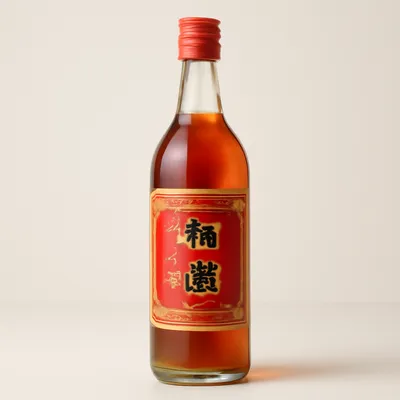
In the autumn of 1929, Yu Youren (1879–1964)—celebrated calligrapher and elder statesman of the Republic of China—traveled with his wife and friend Li Genyuan to Lake Tai to admire the osmanthus in bloom. Returning by boat through Mudu town, the party dined at Stone Family Restaurant. The kitchen prepared a specialty soup of spotted mandarin fish liver, called ban-gan soup in the local dialect. After eating, Yu wrote an impromptu poem in his famous cursive: 'Osmanthus blooms fragrant across the land; I walked all round the shores of Lake Tai; on the homeward boat through Mudu I shall long remember: many thanks to Stone Family for their ba-fei soup.' Being a Shaanxi native, Yu had misheard the soft Suzhou dialect—writing a different fish character for the spotted fish, and 'lung' for 'liver' since locals called fish liver 'fish lung.' Journalists spread the story; diners flocked to Stone Family Restaurant; and the misspelled name, backed by a master calligrapher's brushwork, permanently replaced the original.
The soup arrives almost perfectly clear with a pale gold tinge, its surface still as a mirror. The fish liver is ivory-soft—barely a nudge with the spoon and it breaks, releasing a flood of unctuous richness. The side meat is finer than any steamed fillet, carrying only pure sweetness and zero fishiness.
The spotted mandarin fish is prized because its liver has an unusually high lipid content—analogous to the foie gras principle. Poached at 70–75°C with no visible bubbles, the liver proteins denature slowly and uniformly, releasing fat-soluble umami compounds without toughening. Fish components are cooked separately and combined with the stock only at serving, preventing the fragile liver proteins from overcooking. Ham and bamboo shoots supply a layered glutamate-inosinate synergistic umami base that amplifies the liver's inherent richness while keeping the broth visually transparent.
Variations
Mudu's Stone Family Restaurant remains the most famous source, serving the dish only in summer and early autumn when Lake Tai spotted mandarin fish are at their peak. Some Suzhou restaurants substitute fresh tofu and mushroom to approximate the texture when fish is unavailable—a compromise regulars dismiss. The dish is essentially non-portable: spotted mandarin fish transport poorly and the liver spoils quickly, making authentic soup inseparable from the Lake Tai watershed and its season.
On the Palate
Where Ba Fish Liver Soup sits in the Chinese flavor cloud
Ingredients
Serves 2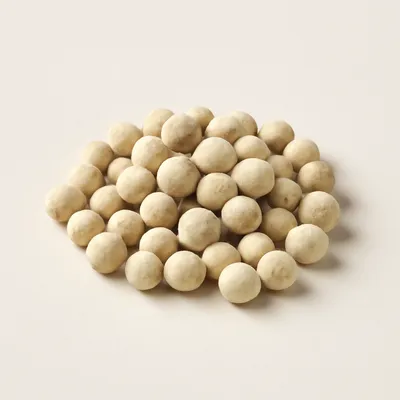

How it's made
7 steps · 33 min active + 3 hours 2 min waiting
- 1180 min
Prepare a clear pork-and-chicken stock in advance: simmer bones 3 hours; strain; optionally clarify with an egg-white raft until perfectly transparent.
- 215 min
Clean spotted mandarin fish; with extreme care, extract both livers whole; separate the tender belly meat from each side; rinse gently in cold water.
Watch outExtract the livers whole and handle them gently — they're fragile and fatty; nick one and it bleeds out its richness into the water.
- 310 min
Bring stock to a gentle simmer; add sliced Jinhua ham, soaked dried mushroom, and bamboo shoots; cook 10 minutes to build the umami base.
- 42 min
Blanch fish liver and belly meat in Shaoxing wine–spiked boiling water for 30 seconds; drain; rinse with cold water.
- 54 min
Lower blanched fish components into the simmering stock; poach at 70–75°C with no visible bubbling for 3–4 minutes.
Watch outPoach the liver at 70-75°C with no visible bubbles — the surface should barely shiver; let it boil and the delicate liver turns grainy and tough.
- 61 min
Season with salt and freshly ground white pepper; add pea sprouts; cook 30 seconds.
- 71 min
Ladle carefully into serving bowls; finish with a few drops of lard for richness; serve immediately.
Archive tool suggestions — not reviewed
These legacy suggestions have not been evidence-reviewed and are not presented as required tools.



