The jewel of Huizhou banquet cookery: stone frog legs (棘胸蛙, 'king of frogs') and cliff-harvested stone ear lichen (石耳) simmered in a clear chicken broth with aged ham. Where most Anhui cuisine runs rich and dark, this dish is crystalline and restorative—the frog legs silky-white and sweet, the stone ear gelatinous and faintly mineral, the broth impossibly pure.



Stone frog (Paa spinosa) has long been prized as a Huizhou mountain delicacy; local tradition holds that it served as imperial tribute from at least the Song dynasty onward, though no early court document precisely confirms this claim. Stone ear lichen, harvested from cliff faces above 1,000 meters in the Huangshan range, features in classical Huizhou materia medica as a cooling and complexion-nourishing ingredient, available only to those who could afford to send rope-climbers up bare rock faces. The combination as a banquet dish is linked by local legend to the 55th year of the Qianlong reign (1790): the Sanqing Hui opera troupe was summoned to Beijing to perform for the emperor's 80th birthday and, according to local accounts, presented Double Stone at the imperial feast. According to accounts, Qianlong tasted it and exclaimed it was 'the most extraordinary food under heaven—silky without greasiness, invigorating to the spirit,' after which it was incorporated into the court banquet menu. The dish remains one of Anhui's celebrated regional specialties and the prestige centerpiece of high-end Huizhou banquet cookery.
The stone frog legs are almost startlingly clean—tender, faintly sweet, with none of the earthiness of freshwater fish. The stone ear is gelatinous and faintly al-dente, releasing a barely perceptible mineral freshness. Together in crystal-clear broth, the effect is as restorative as a cold mountain spring.
Stone frog (Paa spinosa) lives in cold mountain streams typically below 15°C, accumulating glycogen in its muscles as a cold-adaptation energy reserve; this glycogen is the biochemical source of its distinctly sweet, clean taste absent in warm-water species. Its white muscle fibers contain minimal connective tissue, meaning just 2–3 minutes of gentle simmering fully coagulates myosin without toughening the meat—prolonged heat would ruin the texture. Stone ear (Umbilicaria esculenta) is a lichen whose thallus is rich in polysaccharides (primarily glucans); when soaked and briefly simmered, these water-soluble polysaccharides leach slowly into the broth, adding an almost imperceptible viscosity that makes the broth coat the palate while remaining visually clear. Trace lichen acids (such as usnic acid) in stone ear contribute a delicate, slightly bitter mineral undertone that distinguishes the soup from ordinary clear broths.
Variations
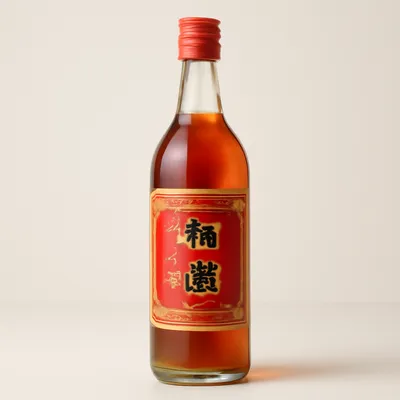
Xiuning County versions add dried scallop to the broth for deeper sweetness. A clay-pot braised variant (砂锅双石) replaces clear broth with a richer stock finished with Shaoxing wine, turning amber. Some restaurants present it tableside in a covered clay pot for theatrical effect.
On the Palate
Where Huangshan Double Stone (Stone Frog and Stone-Ear) sits in the Chinese flavor cloud
Ingredients
Serves 2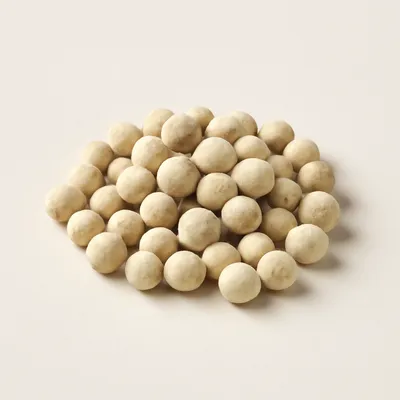


How it's made
7 steps · 50 min
- 135 min
Soak dried stone ear in cold water for 30–40 minutes until fully expanded and pliable. Remove the tough central root and any dark stem. Rinse in several changes of cold water until all sand is removed; drain.
- 210 min
Dispatch stone frogs cleanly. Remove skin and organs; separate legs at the hip joint and chop each leg at the knee. Rinse under cold running water for 5 minutes to remove any blood.
- 33 min
Bring a small pot of water to boil with two slices of ginger and a splash of Shaoxing wine. Blanch frog legs for 30 seconds, skim foam, remove immediately, rinse under cold water, and pat dry.
Watch outBlanch the frog legs just 30 seconds, skim the foam, and pull them out at once — leave them in and they toughen before the dish even starts.
- 45 min
Pour chicken stock into a clay pot and bring to a gentle simmer over medium-low heat. Add ginger slices, thin slices of Jinhua ham, and Shaoxing wine.
- 53 min
Add blanched frog legs to the simmering broth. Maintain a gentle simmer—never a rolling boil—for 2–3 minutes until flesh turns white and springs back slightly when pressed. Do not overcook.
Watch outHold a bare shiver, never a rolling boil, and pull the frog at 2 to 3 minutes the instant it turns white and springs back — one minute too long and the tender flesh goes stringy.
- 65 min
Add soaked stone ear to the pot. Continue simmering gently for 4–5 minutes until the lichen is tender and gelatinous but retains a slight chew.
Watch outSimmer the stone ear just till it's tender and gelatinous but still has a slight chew — cooked to mush it loses its whole character.
- 72 min
Season with salt and white pepper to taste. Ladle into individual bowls, garnish with a few slices of spring onion, and serve immediately while piping hot.
Archive tool suggestions — not reviewed
These legacy suggestions have not been evidence-reviewed and are not presented as required tools.



