In Shanxi dialect, sorghum flour is called red flour, and the small fish-shaped noodles rolled from it take their name from that warm reddish hue. The grain is first boiled to strip out bitter tannins, then milled and scalded with boiling water into a smooth dough. Two hands work five pieces simultaneously, rolling spindles pointed at each end and plump in the middle, before steaming to a chewy, waxy finish. Eaten with aged vinegar and sesame oil.
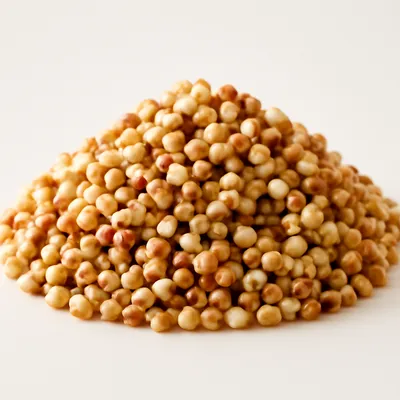

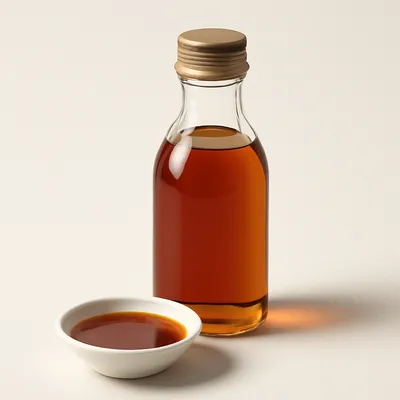



Sorghum was one of the few reliable dryland crops in Shanxi's Jinzhong, Lüliang, and Xinzhou basins. The technique of shaping its flour into fish forms has been practiced in Xinzhou for centuries. In its home territory, the ability to roll perfect red-flour fish was a domestic skill expected of brides before marriage — and tested by the groom's family on the wedding day.
Each fish holds its shape through the steam, turning a deep ruddy brown. It gives a gentle resistance — faintly waxy and cohesive — then releases a mild sorghum earthiness that a splash of Shanxi vinegar and sesame oil sharpen into something genuinely satisfying.
Sorghum contains condensed tannins concentrated in the bran layer; boiling the whole grain in water leaches out a substantial share of these water-soluble polyphenols, reducing bitterness markedly. Sorghum flour scalded with boiling water hydrates uniformly — sorghum starch gelatinizes fully above roughly 72°C — producing a workable, plastic dough. Sorghum's high amylopectin content gives a slightly waxy, cohesive texture once cooked. During the two-handed rolling motion, lateral pressure orients the protein network along the length of each piece, which is why the fish shapes retain their taper and do not deform during steaming.
Variations
Oat fish noodles (莜面鱼鱼, same shape rolled from hulless oat flour, lighter in color and milder in flavor); sorghum dough balls (高粱圪团, same dough rolled round for boiling); sorghum shell snacks (壳壳, same dough hollowed into shell shapes and stuffed with salt and vinegar).
On the Palate
Where Sorghum Fish Noodles sits in the Chinese flavor cloud
Ingredients
Serves 2
How it's made
7 steps · 30 min
- 120 min
Rinse sorghum grain; boil in a generous pot of water for 20 minutes to leach out bitter tannins; drain and spread on a tray to dry until the surface is dry but the interior still slightly moist
Watch outBoil the sorghum a full 20 minutes to leach the tannins — cut it short and the noodles stay bitter and astringent.
- 210 min
Mill or blend the par-boiled sorghum into flour; sift to remove coarse bran
- 35 min
Pour boiling water into a bowl of sorghum flour in a 1 to 1 ratio by weight; stir rapidly with chopsticks, then cover and rest 5 minutes until cool enough to handle
Watch outScald the flour with boiling water, not warm — only truly boiling water gelatinizes the starch into a workable dough.
- 45 min
Knead into a smooth, moderately firm dough; divide into walnut-sized pieces; roll each into a rope about thumb-width thick; cut into 5 cm segments
- 510 min
Arrange 5 segments in a row at one end of the board and 5 at the other; cup both hands over the two groups and roll inward simultaneously, pressing evenly, until each forms a spindle pointed at both ends and plump in the middle
Watch outRoll both hands inward evenly so each piece plumps in the middle and points at both ends — uneven pressure and they cook unevenly.
- 612 min
Arrange fish in a single layer on a lightly oiled bamboo steamer; steam over high heat for 12 minutes until cooked through and the surface is dry
Watch outSteam 12 minutes over high heat until the surface turns dry — a wet, sticky surface means they're underdone.
- 72 min
Transfer to plates; drizzle with Shanxi aged vinegar and sesame oil; add minced garlic and chili oil if desired
Archive tool suggestions — not reviewed
These legacy suggestions have not been evidence-reviewed and are not presented as required tools.
