Translucent crescent-shaped dumplings with a tender-chewy wrapper of cassava starch and taro, encasing a fragrant filling of winter bamboo shoots, pork, dried shrimp, and mushrooms. A Dabu county Hakka staple, boiled until they float and served with a sharp soy-chili dipping sauce.

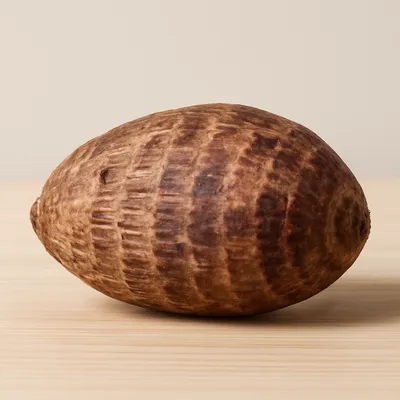




笋粄 is native to Dabu county (大埔县) in Meizhou and to broader Hakka settlements across eastern Guangdong and western Fujian. Its wrapper technique — cassava starch (薯粉) scalded with boiling water and blended with mashed taro — reflects Hakka hillside practicality: rice was precious on the terraced slopes of the Hanjiang River basin, while cassava and taro grew readily on marginal land. The use of winter bamboo shoots ties the dumpling to a seasonal harvest window, when newly cut shoots from the surrounding hills are at peak crunch. Dabu county government has documented 笋粄 among the district's representative traditional foods.
The wrapper is cool and slightly translucent, yielding with a gentle tug before releasing the earthy crunch of bamboo shoot, the savoriness of pork, and bursts of shrimp brine — all wrapped in the faint sweetness of taro.
Cassava starch is composed almost entirely of amylopectin, which gelatinizes between 65–70°C and forms a cohesive, pliable gel on cooling — more elastic and transparent than rice starch. Blending in mashed taro introduces a secondary starch with different granule size and natural mucilage that cross-links with the cassava network, increasing stretch and preventing tearing during folding. Boiling until the dumplings float signals complete starch gelatinization throughout; the wrapper turns from opaque to translucent as water fully penetrates the starch network.
Variations
Some households use sweet potato starch instead of cassava starch for a slightly yellower, denser wrapper; coastal Hakka communities in Fujian sometimes add diced oyster or cuttlefish to the filling; pan-fried leftover dumplings develop a lightly crisp exterior that is a treat in its own right.
On the Palate
Where Bamboo Shoot Rice Dumplings sits in the Chinese flavor cloud
Ingredients
Serves 4

How it's made
7 steps · 45 min
- 115 min
Dice winter bamboo shoots, half-fat pork, rehydrated dried shrimp, rehydrated squid, and soaked mushrooms; stir-fry with soy sauce, white pepper, and sesame oil until fragrant and dry. Cool completely.
- 215 min
Steam or boil taro until fully soft; mash to a smooth lump-free paste while still hot.
- 310 min
Place cassava starch in a bowl; pour boiling water in gradually while stirring with chopsticks, then add the hot taro paste and knead together until smooth, pliable, and crack-free at the edges.
Watch outScald the cassava starch with boiling water and knead in the hot taro until the dough is smooth and pliable with no cracks at the edge — cracked dough tears when you fold and seal the dumplings.
- 410 min
Divide dough into 20 equal portions; press or roll each into a round about 8 cm in diameter.
- 510 min
Place one tablespoon of cooled filling on each round; fold into a crescent and pinch the edge firmly to seal.
- 65 min
Bring a large pot of water to a rolling boil; cook dumplings in batches until they float to the surface, about 4–5 minutes.
Watch outThey're done when they float, about four to five minutes — the wrapper turns from opaque to translucent as the starch cooks through; pull them the moment they rise.
- 72 min
Remove with a slotted spoon; brush immediately with sesame oil to prevent sticking and serve with soy sauce and fresh chili.
Archive tool suggestions — not reviewed
These legacy suggestions have not been evidence-reviewed and are not presented as required tools.


