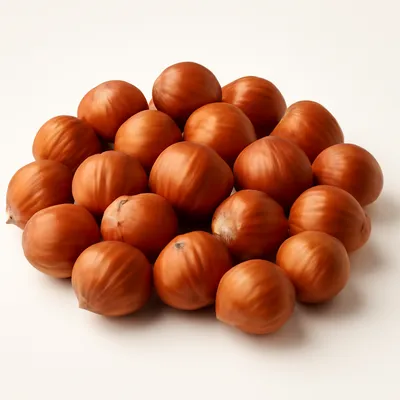
Belgium's most beloved fresh praline — a whole roasted hazelnut set atop a vanilla buttercream and praliné base, enclosed in a white chocolate shell. Popularised by Leonidas, the Manon Blanc reached its modern form around 1980 when white chocolate replaced an earlier sugar coating, nougatine gave way to fresh buttercream, and the walnut was swapped for a hazelnut; the Manon Café variant layers coffee-infused buttercream into white, milk, or dark shells. The fresh dairy filling limits shelf life to three to four weeks.




The name Manon traces to Jules Massenet's opera Manon, premiered in Paris in 1884 and long popular in Belgium; Leonidas separately attributes it to a young woman admired by one of the family's pastry chefs. The Manon is a signature creation of Leonidas, the confectionery house founded in 1913 in Ghent (its first tearoom opened at Veldstraat 34) by Greek-born chocolatier Leonidas Kestekides; the Leonidas tea salon at the coastal resort of Blankenberge is cited as the birthplace of the Manon. The original recipe was a walnut and buttercream filling on a nougatine base, finished in a sugar coating. A later family member — variously named as Yanni Kesdekoglou or Basile Kestekides — reformulated it, replacing the sugar shell with white chocolate, which Leonidas promotes as a world first; the nougatine gave way to praliné (a change one account dates to 1969) and the walnut to a roasted hazelnut that keeps longer. The white-chocolate Manon remains one of Leonidas's best-known pralines, though exact dates and the person responsible differ across the company's own accounts.
The white chocolate shell yields with a gentle snap; vanilla buttercream softens immediately on the tongue with milky sweetness; the praliné base adds a deeper, nutty undercurrent; the whole roasted hazelnut on top delivers a final burst of toasted warmth and crunch.
White chocolate — cocoa butter, milk solids, and sugar with no cocoa mass — tempers at lower temperatures than dark: melt to 45°C, cool to 26–27°C to seed beta crystals, then rewarm to 28–29°C. Because its higher milk-fat content narrows the tempering window, precision is critical for achieving the snap and clean release from moulds. Buttercream is built by beating softened butter until the fat crystal network loosens and traps air; powdered sugar dissolves in the butter's water phase, increasing viscosity and structural support; the system holds its shape at room temperature through fat recrystallisation around incorporated air bubbles. The praliné base derives its flavour from Maillard reactions during hazelnut roasting at 160°C: amino acids react with reducing sugars to form pyrazines (roasted-nut aroma) and furanones (caramel notes); grinding ruptures cell walls to liberate lipids, producing a fluid paste that firms on cooling via fat recrystallisation, providing textural contrast to the buttercream above.
Variations
Manon Café: coffee-infused buttercream in white, milk, or dark chocolate shell; Manon Noir: dark chocolate shell with intense chocolate mousse filling; milk chocolate Manon with caramelised hazelnut praliné; ruby chocolate shell with raspberry cream; double-coffee variant garnished with a whole coffee bean instead of a hazelnut.
On the Palate
Where Manon sits in the Belgian flavor cloud
Ingredients
Serves 20How it's made
8 steps · 30 min
- 115 min
Melt white couverture to 45°C; pour two-thirds onto marble and work with a scraper until it cools to 26–27°C, then return to bowl and rewarm carefully to 28–29°C. Test on parchment — it should set firm and glossy in 2 minutes. White chocolate has a narrow tempering window; reheat in short pulses if needed.
Watch outTemper the white chocolate to 28–29°C and test on parchment — it should set firm and glossy in 2 minutes; its milk fat gives a narrow window, so reheat in short pulses.
- 210 min
Pour tempered white chocolate into praline moulds; tap firmly to release air bubbles, invert to drain excess, and scrape the surface flush. Refrigerate 5 minutes to set shells.
Watch outTap the filled moulds hard to knock out air bubbles, then invert to drain — trapped bubbles leave holes in the shell and it cracks on demoulding.
- 320 min
Make praliné base: cook sugar with a splash of water to an amber caramel at 160°C; pour over roasted hazelnuts on a silicone mat. Cool completely, then blitz in a food processor until a smooth, fluid paste forms.
- 415 min
Spoon a 3 mm layer of praliné paste into the base of each shell; allow to firm at room temperature for 15 minutes.
- 510 min
Make vanilla buttercream: beat softened butter until pale and fluffy, about 3 minutes; sift in icing sugar in two additions; add vanilla extract and beat on high for 2 minutes until light and smooth.
- 610 min
Pipe vanilla buttercream into each shell over the praliné base, filling to 3 mm from the top; press one whole roasted hazelnut gently but firmly into the centre of each.
- 720 min
Seal each shell with freshly tempered white chocolate; scrape flush with a palette knife and refrigerate 15 minutes to fully crystallise.
Watch outSeal with fresh tempered chocolate and chill 15 minutes to crystallize fully — a poorly tempered seal blooms grey and won't release clean.
- 85 min
Demould over parchment; inspect for even gloss and clean edges. Store at 10–15°C and consume within 3–4 weeks.
Archive tool suggestions — not reviewed
These legacy suggestions have not been evidence-reviewed and are not presented as required tools.