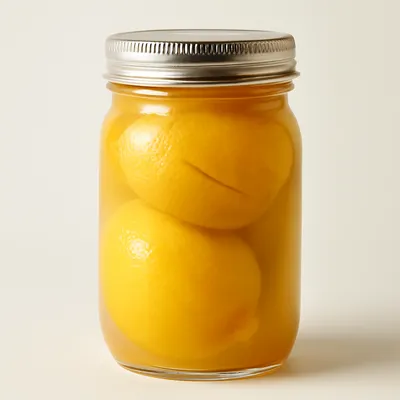
Tangy and aromatic, preserved lemons add a vibrant acidity and unique flavor to dishes. Their intense, salty-sour profile elevates everything from tagines to salads, infusing them with a Mediterranean essence.
Where it comes from
Preserved lemons are a staple in North African cuisine, dating back centuries and showcasing the region's innovative methods of preserving seasonal produce.
In the kitchen
Chopped or used whole, preserved lemons enhance dishes with their bright acidity and complex flavor, perfect for marinades, dressings, or as a condiment.
Across cuisines
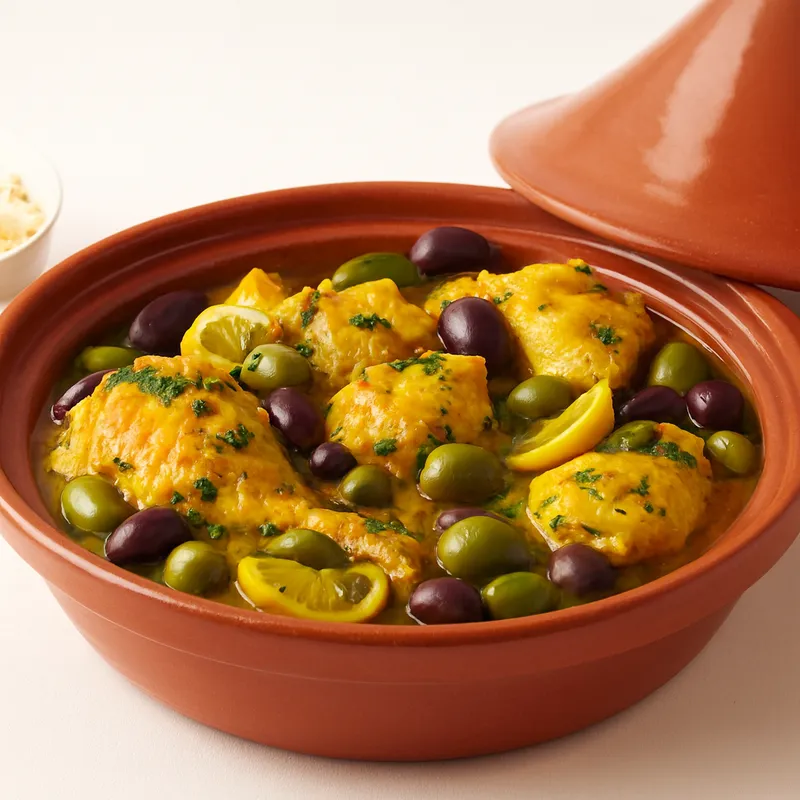
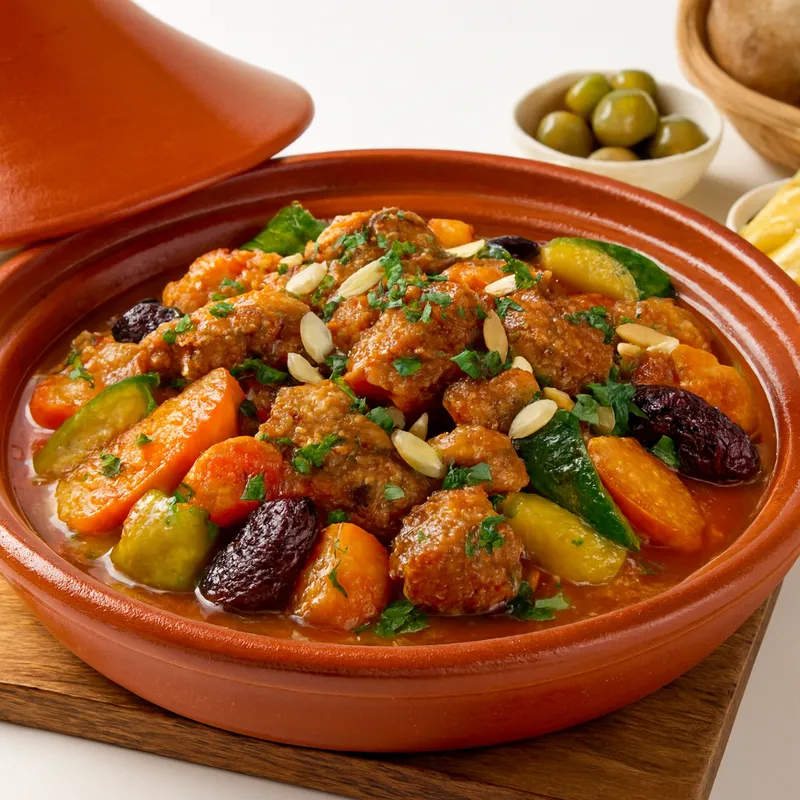
The bedrock acid of tagine. Tagine djaj bil zaytoun — chicken with olives and preserved lemon — is the canonical dish, where chopped rind goes in late so the floral salty-sour edge stays bright. Lamb tagines layer the pulp into the cooking liquid and the rind on top. Tanjia, the Marrakchi clay-pot stew steamed in the hammam embers, slow-extracts the lemon's depth over 5+ hours.
Notable varieties
Small thin-skinned lemons specifically grown for preserving — packed whole in salt and own juice for 30+ days. The rind softens to translucency, the pulp is usually discarded by purists.
Indigenous Moroccan citrus, sweeter and more aromatic than Eureka or Meyer. The standard for traditional homes — often hand-packed in stoneware jars and aged 3 months minimum.
Smaller, often with added spices (coriander seed, chili) — a similar preservation principle but spicier and pickled rather than pure salt-cure. Eaten as a side, not for cooking.
Nutrition (per 100g)
AI-estimated; model and run unavailable.