Yam
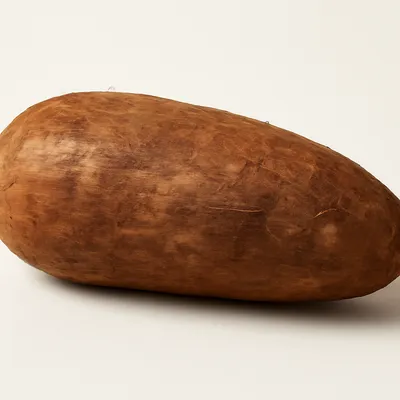
Rich and starchy, yam has a subtly sweet, earthy flavor that deepens when cooked. Its dense, creamy texture offers a comforting mouthfeel, while its aroma evokes the warmth of home-cooked meals.
Where it comes from
Yams are native to Africa and Asia, where they play a crucial role in traditional diets. They have been cultivated for thousands of years, with many varieties celebrated for their distinct flavors and textures.
In the kitchen
Yams are often roasted, mashed, or used in stews, imparting richness to both sweet and savory dishes. Their versatility allows them to shine as a side dish or as a key ingredient in hearty meals.
Across cuisines
In Nigerian cuisine, yam is commonly pounded into a smooth, stretchy dough called 'iyan' or 'pounded yam'. This preparation is a staple accompaniment to soups and stews like Egusi. The process involves boiling yam until soft, then pounding it vigorously in a mortar until it reaches a desired consistency. It is served as a side dish that complements the rich flavors of various Nigerian soups.
In Caribbean cuisine, yam is frequently used as a thickening agent in soups and stews. It is diced and cooked until it breaks down, imparting body and a subtle earthiness to dishes like Pepper Pot Soup. Yams are often combined with other root vegetables to enhance the texture and flavor of the broth. This method highlights the yam's ability to contribute both substance and flavor.
In Caribbean cuisine, yam is frequently used as a thickening agent in soups and stews. It is diced and cooked until it breaks down, imparting body and a subtle earthiness to dishes like Pepper Pot Soup. Yams are often combined with other root vegetables to enhance the texture and flavor of the broth. This method highlights the yam's ability to contribute both substance and flavor.
Nutrition (per 100g)
AI-estimated; model and run unavailable.
Pairs well with