Tunisian-Jewish croquettes of smooth mashed potato encasing a spiced filling of ground beef or tuna mixed with chopped hard-boiled egg, breaded and deep-fried to a thin, crisp golden shell. A Shabbat and Passover staple, served as a starter or side dish.

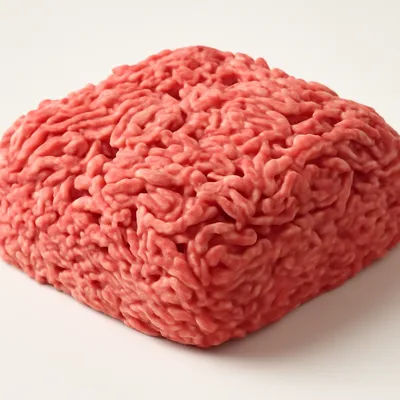


Banatages appear across Tunisian-Jewish community cookbooks and the Harissa.com cultural archive as part of the broad Sephardi fried-potato tradition carried to North Africa by communities expelled from Iberia in 1492. The name may derive from the French-colonial beignets de pommes de terre, shortened and phonetically reshaped through daily use in Tunis's Jewish quarter, the Hara. The tuna-filled version became especially important at Passover, when meat-and-dairy separation is strictly observed and lighter fish fillings remain practical; matzah flour replaces the wheat-flour coating to satisfy the holiday's grain restrictions, as documented in the Juliette Rivkah recipe archive.
A thin, crisp potato shell gives way immediately to a dense, warm interior where seasoned meat and crumbled hard-boiled yolk have merged into a single savoury mass — mild turmeric warmth throughout, lifted by parsley and lemon.
Deep-frying at 175–180°C rapidly dehydrates the outer potato-starch layer within seconds, triggering Maillard browning between egg-wash proteins and the starch to form a sealed, crisp crust. This shell traps steam inside, effectively steaming the filling through without over-cooking the exterior. Starch gelatinization in the potato during initial boiling and mashing creates dense, cohesive casing that holds its shape under the mechanical stress of frying. The sequential breading — flour first, then egg — exploits the fact that egg proteins denature almost instantly on contact with hot oil, locking the coating firmly in place.
Variations
The tuna version, made with canned tuna and lemon juice in place of ground beef, is the most common Passover preparation. Chicken is another filling option. Some families place a small piece of whole hard-boiled egg at the centre of each croquette, which reveals itself dramatically when bitten. Matzah meal replaces wheat flour in both the filling binder and the coating for Passover. A saffron-tinted variant appears in some family records.
On the Palate
Where Banatages sits in the Tunisian flavor cloud
Ingredients
Serves 6


How it's made
7 steps · 40 min
- 122 min
Boil potatoes in well-salted water until fully tender, about 20 minutes. Drain thoroughly and mash while hot until very smooth. Season with salt, turmeric and black pepper. Spread on a tray to cool completely.
Watch outMash the potato smooth and spread it out to cool completely before shaping — warm mash is too soft to hold a filling and the shells will split in the oil.
- 210 min
Make the filling: saute diced onion in oil until golden. Add ground beef, season with salt, pepper, parsley and a squeeze of lemon, and cook until the mixture is dry and crumbly. (For the tuna version, mix drained canned tuna with lemon juice instead.) Chop hard-boiled eggs and fold into the filling. Cool.
- 34 min
Divide cooled mashed potato into portions of roughly 80 g each. Flatten each portion in a lightly damp palm into a circle.
- 44 min
Place a generous spoonful of filling in the centre. Fold the potato over and around the filling, sealing the edges carefully and shaping each into a smooth oval croquette.
Watch outSeal the potato right around the filling with no cracks or thin spots — any gap and the shell bursts in the hot oil and the filling spills out.
- 53 min
Set up a breading station: flour in one shallow bowl, beaten eggs in another. Roll each croquette in flour to coat lightly, then dip and coat thoroughly in beaten egg.
- 618 min
Place breaded croquettes on a wire rack and rest for 15–20 minutes so the coating sets and adheres firmly.
Watch outRest the breaded croquettes fifteen to twenty minutes so the coating dries and grips — skip it and the crust slides off the moment they hit the oil.
- 78 min
Heat frying oil to 175°C. Fry croquettes in batches of 4–5 for 3–4 minutes, turning once, until uniformly golden. Drain on paper towels and serve hot.
Watch outFry at a steady hot oil until evenly golden all over — too cool and they drink up oil and go soggy before the crust sets.


