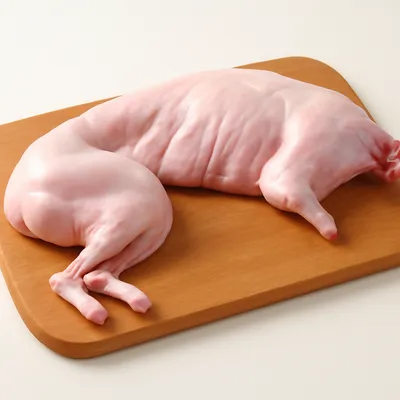
Tender rabbit joints braised in Roero Arneis—the ancient dry white grown on the left bank of the Tanaro—with carrot, onion, garlic, rosemary and bay, the wine added in three successive pours and cooked down until the lightly thickened juices turn creamy and the meat falls from the bone. The white-wine counterpart to the red-wine game braises of the Langhe across the river, this is the emblematic dish of the Roero.
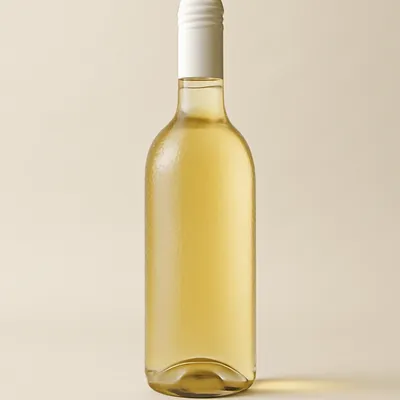




The Roero Arneis is an ancient Piedmontese autochthonous variety, documented as Ranaysii as early as 1432 in records from Chieri, near Turin; the name Arneis appears in Count Giuseppe di Rovasenda's ampelographic treatise of 1877. As a wine denomination, Roero Arneis received DOC status in the 1980s, covering the left bank of the Tanaro (the Roero hills), directly across the river from the Langhe. The habit of braising rabbit specifically in the local Arneis—rather than a red wine—is rooted in the culinary tradition of the Roero hills as the natural white counterpart to the Langhe's red-wine game preparations; the recipe is featured in the Piedmont regional recipe archives and in the Consorzio del Roero's official roster of traditional dishes. The two banks of the Tanaro, two wines, two parallel braising traditions.
Rabbit joints arrive cloaked in a pale, wine-fragrant sauce; the lean meat is fork-tender, floral Arneis perfuming every mouthful, and the lightly creamy sauce is delicate yet deeply savory.
Rabbit is notably lean—lower in fat and collagen than poultry—making it prone to drying out if overcooked. The initial acqua step (bringing pieces briefly to a boil in plain water, then discarding the liquid) purges bitter myoglobin and off-flavors from the muscle. A light flour dusting before browning creates a thin starch matrix that gelatinizes into the braising liquid, giving the finished sauce its lightly creamy body. Arneis is relatively low in tannins and moderately aromatic—apple, pear and almond blossom esters—so prolonged cooking integrates its floral compounds without imparting astringency; by contrast, a tannic red wine would tighten the lean rabbit proteins. The wine's tartaric and malic acids gently denature muscle proteins, while heat converts the limited connective-tissue collagen to gelatin, enriching the otherwise spare sauce. Three successive additions of wine and broth maintain braising temperature between 85 and 95 ℃, preventing the proteins from tightening and toughening.
Variations
A richer Roero variant adds black olives and pine nuts to the braise—the coniglio brasato al Roero. The deboned version using the grey rabbit of Carmagnola (a local breed) is a modern restaurant presentation. Some cooks fold cream into the finished sauce. Gavi (Cortese) or Favorita can substitute for Arneis.
On the Palate
Where Coniglio all'Arneis sits in the Italian flavor cloud
Ingredients
Serves 4


How it's made
8 steps · 30 min
- 110 min
Cut the rabbit into 8–10 pieces; place in a cold pan, cover with water, bring to a boil, then discard the water, rinse the pieces and pat dry.
Watch outBring to a boil then dump the water — this quick purge pulls the bitter blood off lean rabbit; skip it and the braise tastes livery.
- 22 min
Dust the rabbit pieces lightly with flour, shaking off the excess.
- 310 min
Heat olive oil in a wide casserole over medium-high heat; add 2 smashed garlic cloves and brown the rabbit pieces on all sides until golden, about 8–10 minutes.
Watch outBrown the floured pieces to real gold on every side — that crust is both flavor and the thin flour that later gives the sauce its creamy body.
- 45 min
Add finely chopped carrot, half an onion, a rosemary sprig and 2 bay leaves; stir and cook until the vegetables soften, about 5 minutes.
- 55 min
Season with salt, raise the heat and pour in the first glass of Roero Arneis, scraping up any caramelised bits; let it reduce by half.
- 645 min
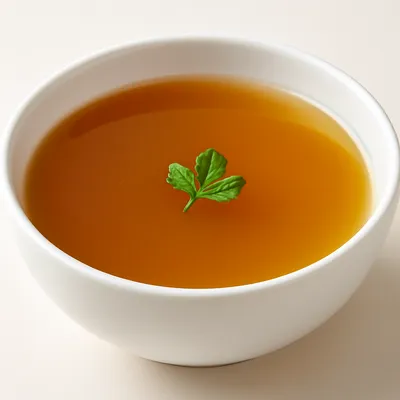
Pour in the second glass of Arneis and a ladle of hot meat broth; reduce the heat to low, cover and braise for 45 minutes.
- 740 min
Add the third glass of Arneis and another ladle of broth; continue braising covered for a further 30–40 minutes until the meat is fall-from-bone tender and the sauce is lightly creamy.
Watch outIt's done when the meat falls from the bone and the sauce has turned lightly creamy — thin and watery means it needs longer.
- 83 min
Discard the bay leaves, adjust seasoning, and serve hot.


