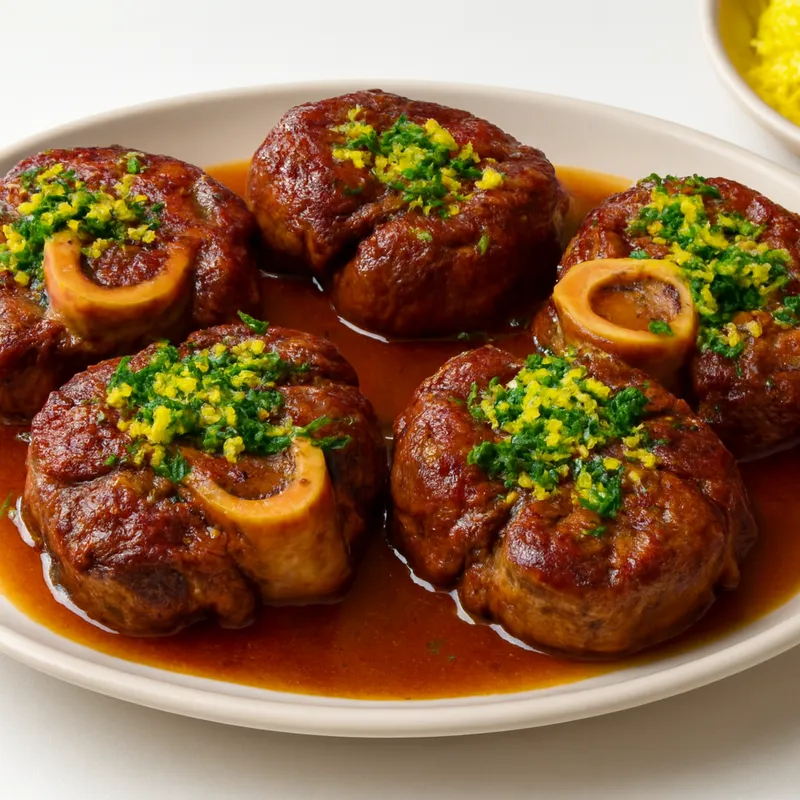
A Marche Easter dish of spring lamb's pluck — heart, liver and lung — briefly blanched, then stewed with onion, garlic, white wine, rosemary and plenty of lemon, whose acidity tames the offal's wild, metallic edge. Unlike the Roman and Umbrian versions it carries no tomato, and around Macerata a variant from Appignano is finished with beaten egg. It is traditionally eaten at Easter breakfast alongside cheese bread and hard-boiled eggs.






Coratella d'agnello belongs to the cucina povera of central Italy, a way of using the whole of the spring lamb slaughtered for Easter. The Marchigiana version is set apart by three things: the omission of the tomato found in the Roman and Umbrian versions, the generous use of lemon to tame the offal, and its place at the Easter breakfast table alongside pizza di formaggio (cheese bread) and hard-boiled eggs. It is a pan-Marche dish, strongest around Macerata, where the Appignano variant folds scrambled egg through the pieces at the end.
The pieces are tender with varied textures: liver soft and mineral, heart firmer with a gentle chew, lung light and spongy, all bound in a glossy, winey sauce sharpened with lemon. The egg-finished version turns silkier, the offal wrapped in soft curds.
Blanching draws out blood and coagulates surface proteins, cutting the metallic taste that liver's iron-rich myoglobin and residual hemoglobin give off. Lemon and white wine lower the pH: the acid protonates the volatile amines behind the offal's rank odor, keeping them off the air, while citrus limonene and evaporating ethanol carry away remaining off-notes and brighten the sauce. In the Appignano version, beaten egg coagulates at around 65–70°C into a soft custard that binds the pieces together.
Variations
The most notable variant is the Maceratese one from Appignano, finished with beaten egg for a softer, richer dish. Elsewhere in the Marche cooks may add a little wild fennel or a pinch of chili; some keep the sauce loose and lemony, others reduce it to a glaze. The Roman and Umbrian relatives, by contrast, add tomato and sometimes artichoke.
On the Palate
Where Coratella d'Agnello alla Marchigiana sits in the Italian flavor cloud
Ingredients
Serves 4
How it's made
7 steps · 25 min
- 110 min
Rinse the lamb pluck thoroughly under cold running water, trim away any windpipe cartilage, and cut into bite-sized pieces, keeping heart, liver and lung separate.
- 212 min
Bring a pot of lightly salted water to the boil, blanch the heart and lung pieces for about 10 minutes, then drain; keep the liver raw for now, as it cooks fastest.
Watch outBlanch the heart and lung but keep the liver raw for now — the liver cooks fastest and turns grainy if it goes in this early.
- 38 min
In a wide pan, gently soften the sliced onion and bruised garlic in olive oil with a sprig of rosemary.
- 46 min
Add the blanched heart and lung, raise the heat and sauté until lightly coloured, then pour in the white wine and let it evaporate.
- 525 min
Lower the heat, add a splash of water or broth, cover and stew for about 25 minutes until the pieces are tender.
- 610 min
Add the raw liver and the juice of one lemon, and cook uncovered for a further 8–10 minutes until the liver is just firm and the sauce glossy.
Watch outAdd the liver near the end and cook just until firm — a minute too long and it goes dry and chalky.
- 75 min
Season with salt and pepper; for the Appignano version, stir the beaten eggs through off the heat until they set into soft curds, and serve hot.
Watch outFor the egg version, stir the beaten egg off the heat until it barely sets into soft curds — on the flame it scrambles hard.