Thinly sliced marinated mutton cooked directly on a flat basalt stone heated over charcoal; a Hyderabadi royal-court technique requiring no vessel and no added oil, yielding intensely smoky, juicy results.




Pathar ka Gosht means literally 'stone meat' in Urdu, refining an ancient Deccan tradition of cooking directly on volcanic rock heated over open fire, a practice that predates metal cookware in the region. The Hyderabadi Nizams formalised this technique into an elaborate court preparation, employing flat basalt slabs sourced from the Deccan's volcanic geology that can withstand the extreme thermal shock of charcoal firing. The absence of cooking vessel or added oil marks pathar ka gosht as unique among all Mughal-derived meat preparations; the dish survives today as a specialist offering at heritage Hyderabadi restaurants.
Intensely smoky with a lightly charred, mineral-edged exterior and a remarkably juicy interior; the overnight papaya marinade dissolves the mutton's fibres to a melt-in-mouth tenderness that no pan method replicates.
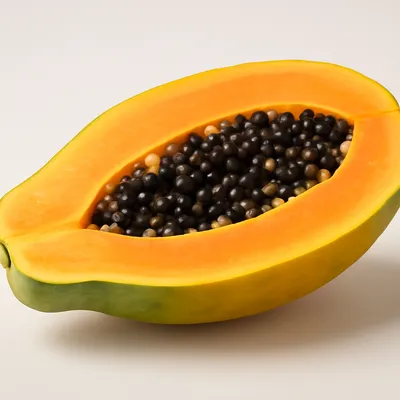
Basalt heated to 300–350°C over charcoal acts as a thermal flywheel: its high specific heat capacity and low thermal conductivity deliver steady, even heat across the surface. When 3–4 mm mutton slices touch the stone, surface proteins denature instantly and the Maillard reaction produces a sealed, browned crust that locks in moisture. Papain—the cysteine protease in raw papaya—cleaves myosin and collagen peptide bonds during the overnight ambient-temperature marinade, progressively softening muscle fibres well before cooking begins. The stone's micro-textured surface, combined with fat rendered from the meat itself, prevents adhesion without added oil.
Variations
Chicken pathar gosht uses thinner breast slices and cuts marination to 2–3 hours. Many modern Hyderabadi restaurants substitute a pre-seasoned cast-iron griddle for basalt, though purists hold that the stone's mineral character is irreplaceable. A coastal variant places pomfret fillets on the heated stone.
On the Palate
Where Pathar ka Gosht sits in the Indian flavor cloud
Ingredients
Serves 4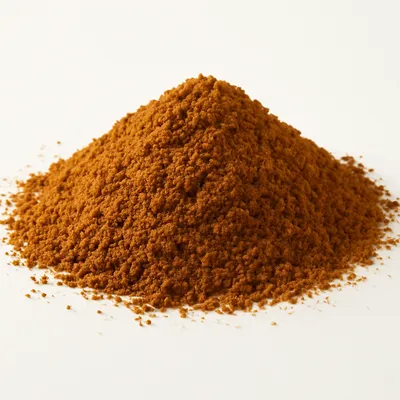

How it's made
7 steps · 30 min
- 1480 min
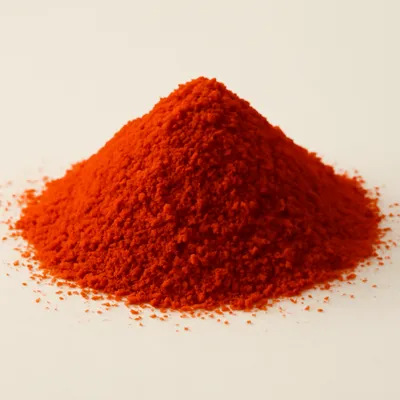
Slice 600g mutton leg across the grain into 3–4 mm pieces; combine with 4 tbsp plain yogurt, 2 tbsp raw papaya paste, 1 tbsp ginger-garlic paste, 1 tsp red chilli powder, ½ tsp turmeric, 1 tsp garam masala, salt, and juice of 1 lemon. Mix thoroughly, cover, and refrigerate overnight (8–12 hours).
- 240 min
Heat a flat basalt stone over a charcoal fire for 35–40 minutes until it reaches 300–350°C; a drop of water should evaporate with an audible sizzle in under 2 seconds.
Watch outHeat the stone until a drop of water skitters off in under two seconds — too cool and the slices stew grey instead of searing a crust.
- 32 min
Wipe the stone surface lightly with a cloth dipped in a small amount of oil to season it; allow to reheat for 2 minutes.
- 42 min
Lay marinated mutton slices flat on the stone in a single, non-overlapping layer; press down gently with tongs.
- 54 min
Cook undisturbed for 3–4 minutes until a firm, browned crust forms on the underside; flip each piece once.
Watch outLeave the slices untouched 3-4 minutes until a firm browned crust forms, then flip once — move them early and they tear and stick.
- 63 min
Cook the second side for 2–3 minutes until the meat is cooked through, charred at the edges, and the surface shows a deep caramelised colour.
- 72 min
Remove immediately and serve with thinly sliced raw onion rings, mint chutney, and lime wedges.
Archive tool suggestions — not reviewed
These legacy suggestions have not been evidence-reviewed and are not presented as required tools.