A leavened, saffron-and-cardamom-scented flatbread baked in a clay tandoor until golden and blistered. Enriched with milk, yogurt, and egg, it is lighter and softer than standard naan, with a tender, slightly flaky crumb and a subtly sweet, floral fragrance. Historically an aristocratic bread of Mughal-Persian court cuisine, reserved for celebratory occasions.


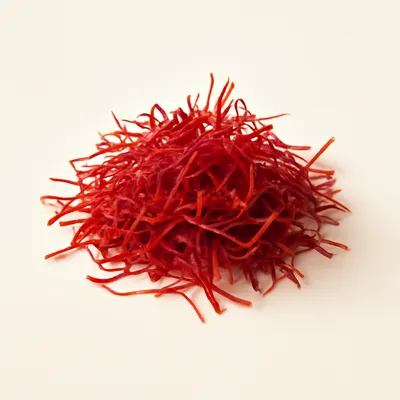
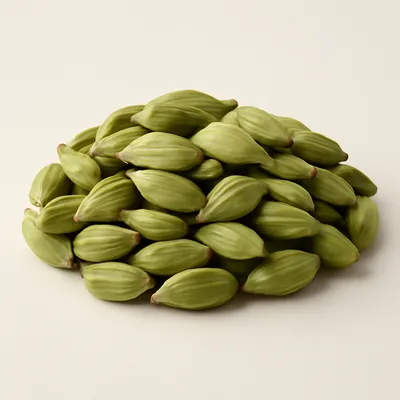

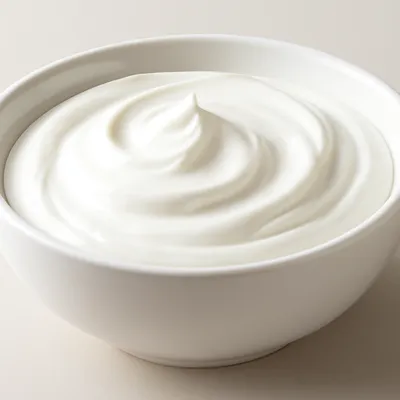
Taftan takes its name from the Persian verb tāftan, meaning 'to heat' or 'to burn,' a word root also attested in the Shahnameh, the 10th-century Persian epic compiled by Ferdowsi. The bread entered Mughal court cuisine through the sustained Mughal-Persian culinary exchange of the 16th and 17th centuries; its key ingredients — saffron, cardamom, and yogurt — were costly enough to make it an aristocratic preparation counted among the leavened breads of Mughal court origin. Under the Persian-influenced Nawabi courts of 19th-century Awadh (Lucknow), the bread was further refined into a specialty of aristocratic tea tables. Taftan is also widely made in Pakistan, where it is baked in a tandoor and served on festive occasions alongside slow-cooked gravies.
Warm from the tandoor, taftan is pillowy-soft and fragrant: saffron's honeyed, faintly medicinal note and cardamom's cool camphor warmth mingle on the first inhale. The crumb is tender with a gentle chew; the thin, blistered crust carries light tandoor char. A hint of egg richness and yogurt tang completes the finish.
The soft, airy interior of taftan is produced by yeast fermentation: Saccharomyces cerevisiae metabolizes sugars and releases CO₂ that inflates the gluten network developed by kneading. Saffron dissolved in warm milk releases water-soluble crocin pigments, tinting the crumb golden; picrocrocin decomposes on heating to yield safranal, the primary volatile aromatic compound responsible for saffron's floral scent. Cardamom's essential oil contributes eucalyptol (1,8-cineole), which provides its characteristic cool, camphor-like warmth. The tandoor's internal temperature of 370–480°C causes rapid surface moisture evaporation and Maillard browning on the crust within 2–3 minutes, while the enriched fat from milk, yogurt, and egg retards gluten overdevelopment, keeping the interior tender and moist.
Variations
Sheermal is a closely related Awadhi bread, richer in milk-fat and sweeter, traditionally made without yogurt and with no blistered crust. Lucknowi taftan emphasizes a spongier, more leavened crumb; Pakistani taftan is thinner and flakier. Some versions are decorated with poppy seeds or sesame before baking. Saffron-free everyday versions rely on cardamom alone for fragrance.
On the Palate
Where Taftan sits in the Indian flavor cloud
Ingredients
Serves 6


How it's made
7 steps · 30 min active + 1 hour waiting
- 115 min
Steep a generous pinch of saffron threads in 2 tablespoons of warm milk for 15 minutes until the liquid turns deep golden.
- 25 min
Combine flour, instant yeast, sugar, salt, and cardamom powder in a large bowl; add the saffron-milk, remaining warm milk, yogurt, and beaten egg and mix to a shaggy dough.
- 310 min
Knead on a lightly floured surface until smooth and elastic, 8–10 minutes; the dough should be soft and slightly tacky.
- 460 min
Place dough in an oiled bowl, cover with a damp cloth, and proof in a warm place until doubled in volume, about 1 hour.
Watch outProof until the dough has doubled — a well-risen dough is what bakes into that soft, airy crumb rather than a dense flatbread.
- 520 min
Punch down, divide into 6 equal portions, and roll each into an oval roughly 20cm long and 5mm thick; cover and rest 15 minutes.
- 63 min
Bake each piece on the hot inner wall of a preheated tandoor, or on a baking stone at maximum oven heat (260°C or higher), until golden and blistered, 2–3 minutes.
Watch outBake at max heat just two to three minutes until golden and blistered — a slow oven dries it into a cracker before it puffs.
- 71 min
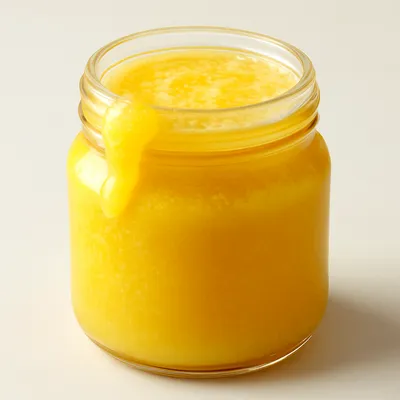
Brush immediately with ghee and serve warm.
Watch outBrush with ghee the instant it comes out — a hot crumb drinks it in and stays soft; a cooled one just sits greasy on top.
Archive tool suggestions — not reviewed
These legacy suggestions have not been evidence-reviewed and are not presented as required tools.


