A Goan Konkani side of dried prawns dry-roasted until fragrant, then tossed with freshly grated coconut, raw onion, and green chili, sharpened with kokum or tamarind and lifted by teffal, the Konkani sansho-pepper relative that gives Saraswat kitchens their signature tingle. The word kismur means "a mixture," and the dish is exactly that: a dry, textured heap eaten as a monsoon-season foil to rice and fish curry when the storm-tossed sea halts fresh fishing.




Kismur belongs to the dried-seafood repertoire of coastal Konkan, the tradition that carries Goan kitchens through the monsoon. From roughly June through September the Arabian Sea turns too rough for fishing, and households that spent the pre-monsoon summer salting and sun-drying prawns, known as sungta or galmo when very small, draw on those stores for protein. The dried prawns are dry-roasted on a tawa to drive off their sharp aroma, then combined with grated coconut, onion, and chili. In Saraswat (Gaud Saraswat Brahmin) homes the coconut is briefly fried to a pale gold and the dish is scented with teffal, the fresh green berry of a Zanthoxylum tree native to the Konkan and closely related to Sichuan pepper; kokum, the dried rind of Garcinia indica, or tamarind supplies the sour edge. Catholic and Hindu Goan kitchens alike make a version, and a vegetarian kismur built on fried papad or bitter gourd stands in when no seafood is at hand.
Concentrated, briny bursts of dried prawn play against the cool sweetness of fresh coconut, with raw onion adding sharp crunch and green chili a clean heat. Teffal leaves a faint citrusy tingle on the lips, and kokum's fruity sourness keeps the richness in check. Dry and loose in texture, never saucy, it is meant to be forked up alongside soft parboiled rice.
Salting and sun-drying pull water out of the prawns, dropping their water activity low enough to arrest spoilage while concentrating free glutamate and inosinate, the two compounds whose synergy multiplies savory intensity far beyond either alone. Dry-roasting on the tawa near 150°C drives off volatile trimethylamine, the source of stale-fishy odor, while Maillard browning builds toasted, nutty notes. Frying the grated coconut browns its proteins and sugars and melts its lauric-acid-rich oil, which carries fat-soluble aromatics through the mix. Teffal's hydroxy-alpha-sanshool binds touch receptors on the lips and tongue to produce the light tingling paresthesia; kokum's hydroxycitric acid and tamarind's tartaric acid lower the pH to cut the oily richness.
Variations
The most traditional Konkani version uses dried prawns, but dried Bombay duck (bombil) and small dried anchovies make equally prized kismurs. Some cooks keep everything raw and simply toss roasted prawns through fresh coconut and onion for a salad-like freshness, while others sauté the whole mixture into something closer to a dry chili-fry. A meatless papdachi kismur built on crushed fried papad, or one made with bitter gourd, serves vegetarians and fasting days.
On the Palate
Where Kismur sits in the Indian flavor cloud
Ingredients
Serves 4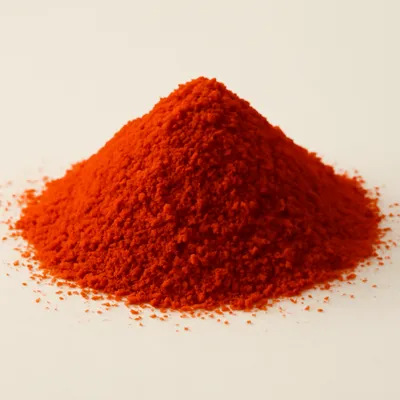


How it's made
8 steps · 15 min
- 15 min
Clean the dried prawns: pull off heads and tails, rinse briefly if very salty, and pat dry.
- 24 min
Dry-roast the prawns on a tawa or heavy pan over medium heat until crisp and fragrant and the sharp smell fades, 3-4 minutes; do not let them scorch, then set aside.
Watch outDry-roast the prawns until crisp and the sharp smell fades, but don't let them scorch — toasting drives off the stale-fishy edge; burnt turns them bitter.
- 33 min
Soak the kokum (or tamarind) in 2 tablespoons warm water for a few minutes, then squeeze out a thick pulp.
- 44 min
Heat coconut oil in the same pan; fry the chopped onion until pink and softened, then add grated ginger and crushed teffal and fry 1 minute until aromatic.
- 54 min
Add the grated coconut and fry over low heat, stirring, until it turns pale gold, 3-4 minutes.
Watch outFry the grated coconut on low just to pale gold — colour it further and its sweet nuttiness tips into a burnt, flat taste.
- 62 min
Return the roasted prawns to the pan; add turmeric, red chili powder, chopped green chili, and salt, and toss over low heat 1-2 minutes.
- 71 min
Stir in the kokum or tamarind pulp and mix thoroughly; taste and adjust salt and sourness.
- 81 min
Turn off the heat and, for extra crunch, fold in a little raw onion just before serving; serve at room temperature with rice and fish curry.
Archive tool suggestions — not reviewed
These legacy suggestions have not been evidence-reviewed and are not presented as required tools.