


Feteer meshaltet is one of Egypt's oldest breads. The name meshaltet means roughly "fluffy" or "shaken loose" in Egyptian Arabic, describing how the paper-thin layers pull apart. By tradition it is said to date to pharaonic times — offered to the gods at temples in Upper Egypt and placed in tombs — though this antiquity is folklore passed down orally rather than firmly documented; what's certain is its long life as village wedding and Eid food. The craft is still an oral apprenticeship: the best fataris (feteer makers) spend a decade or two training the hand that stretches the dough translucent.
Pharaonic temple offering food still on Greco-Roman reliefs in Upper Egypt. The technique is laminate-by-stretching — a single 1.5 m sheet pulled translucent on marble, then drowned in ghee, gathered, stretched, stacked. Twenty-year hand to do it right.
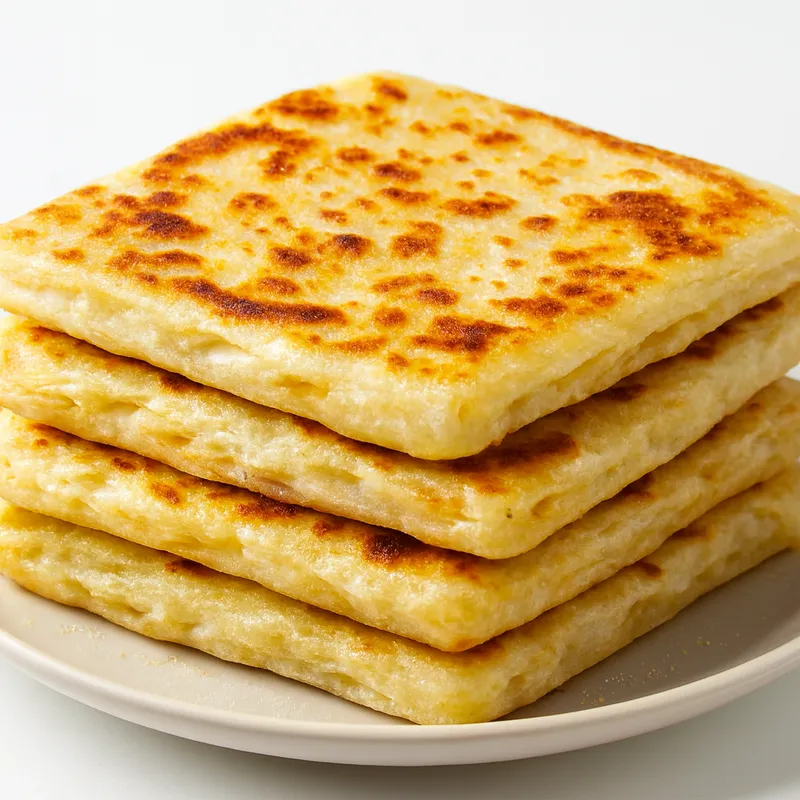
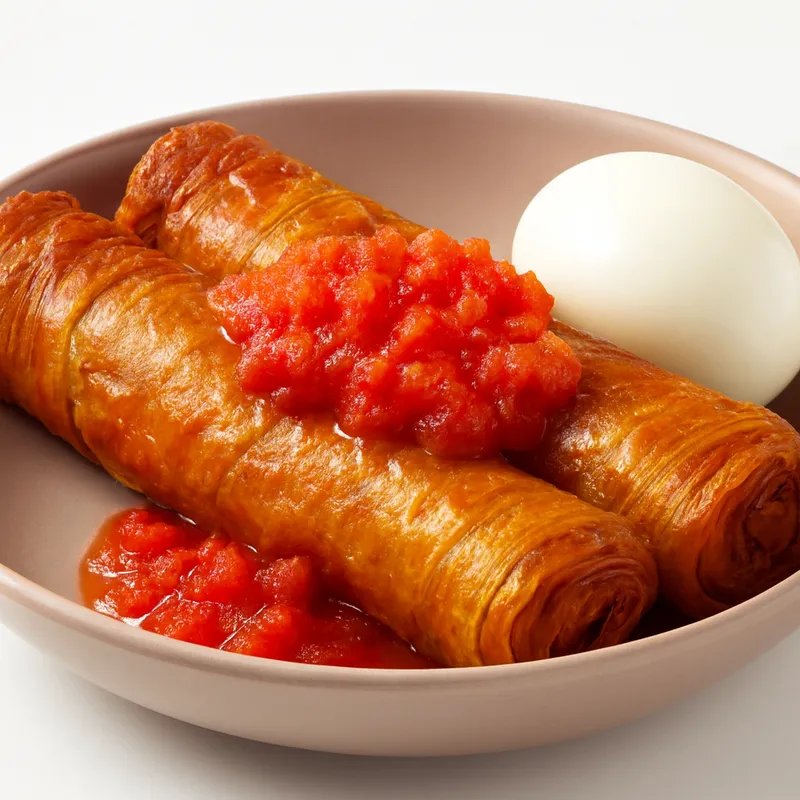
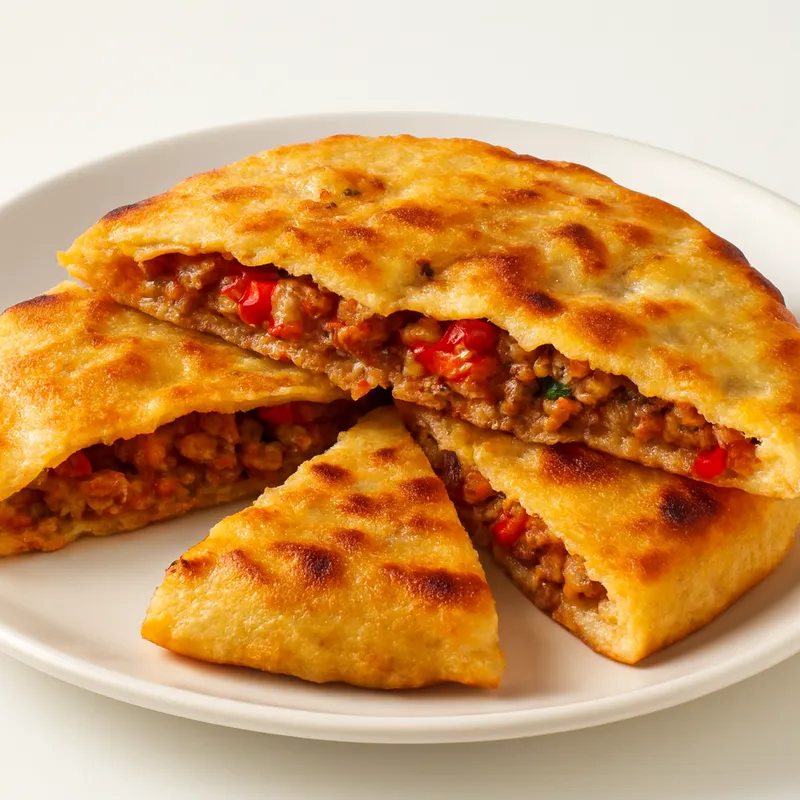
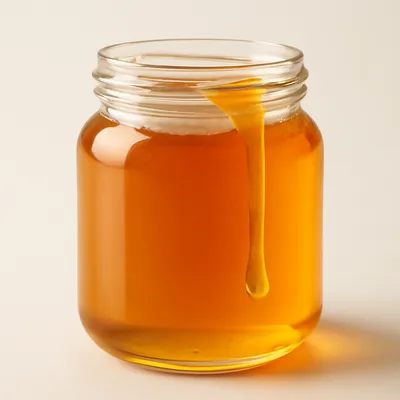
A stack of paper-thin pastry layers, ghee soaking through to the bottom, the whole disc shattering when you press a fork into it. Plain version eaten with honey, molasses, or cream cheese; savory versions stuffed with pastrami or feta before the final bake. It's heavier than croissant — a single slice is a meal. If it's not greasy on the fingertips, the baker shorted the ghee.
Lamination by hand-stretching, not folding: the dough is hydrated to roughly 70% water, slapped onto a marble slab, and pulled translucent in a single sheet (sometimes 1.5 m across), then drenched in ghee, gathered, stretched again, and stacked. Unlike croissant's cold butter blocks, hot ghee penetrates fully — that's why feteer is greasy where croissant is crisp. Refrigerator dough fights the stretch; this is a room-temperature, same-day discipline.
Variations
Plain meshaltet with honey or eshta cream; Upper Egypt savory version stuffs pastrami and Roumi cheese; Siwa Oasis variant bakes in a buried ground oven that browns the bottom unevenly — that's the prized bite.
On the Palate
Where Feteer Meshaltet sits in the Egyptian flavor cloud
Ingredients
How it's made
6 steps · 2 hours
- 13 min
Mix wheat flour, salt, and water to form a dough.
- 27 min
Knead the dough until smooth and elastic.
Watch outKnead until the dough turns smooth and stretchy and pulls back when tugged — that gluten is what lets you stretch it paper-thin later without tearing.
- 330 min
Divide the dough into balls and let it rest.
- 45 min
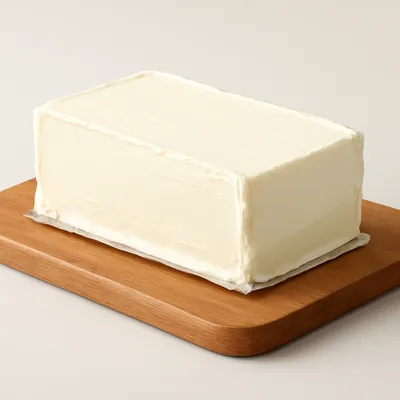
Roll out each ball, generously brushing with ghee and butter.
Watch outPull each ball out translucent and drench it in warm ghee so the fat soaks right in — the sheet should be thin enough to almost read through; cold stiff dough fights the stretch.
- 55 min
Fold and layer the dough multiple times to create layers.
Watch outGather and stack the greased sheets into many fine layers — each ghee-slicked fold is a leaf that'll puff and flake in the oven.
- 625 min
Bake until golden and flaky.
Watch outBake until deep gold and the layers set flaky and shattering — pull it while the sheets still crackle, not gone tough.
Archive tool suggestions — not reviewed
These legacy suggestions have not been evidence-reviewed and are not presented as required tools.