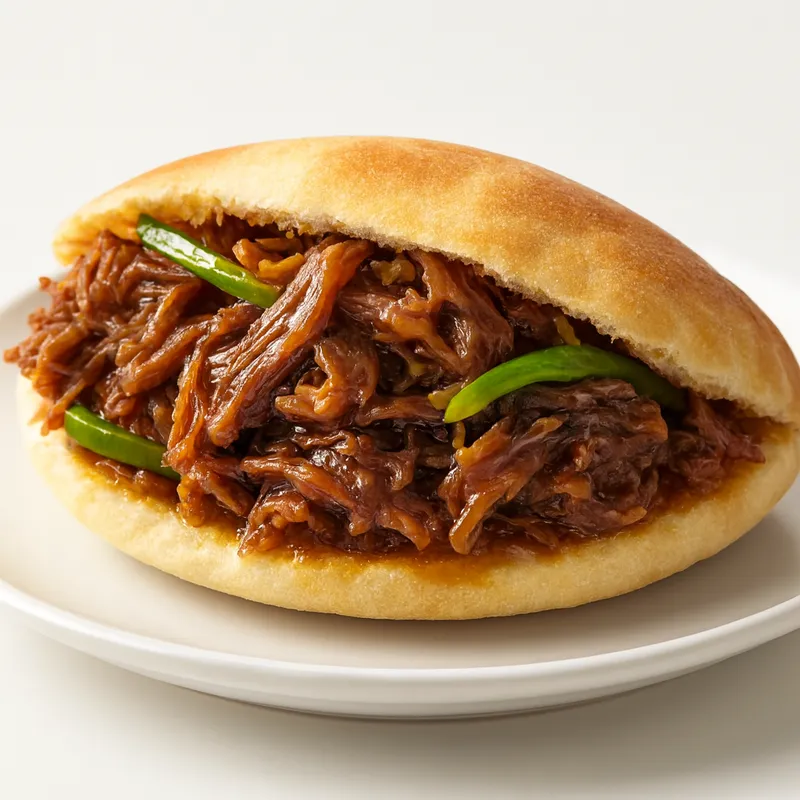
A whole chicken brined in herb master-stock and oil-glazed mahogany — a centuries-old roast from Daokou Town in northern Henan, eaten cold and pulled apart by hand.



Created in 1661 in Daokou Town, Hua County, northern Henan, then refined into its current form in 1787 by the Yixing Zhang shop (founded by Zhang Bing) with the addition of eight specific Chinese herbs and the master-stock method. The Yixing Zhang shop has reportedly maintained the same lao tang (master stock) base continuously since then, topping up rather than starting fresh. Listed as one of China's Four Famous Roast Chickens.
1661 Daokou Town, refined by the Yi family in 1787 with eight herbs and a master stock that's been topped up for 240 years. The maltose glaze Maillards faster than sucrose at 180°C — that's the mahogany lock.
The chicken arrives mahogany-brown, in rough sections, on a plain plate with no sauce. You don't need a knife: pull a leg, the meat slides clean off the bone in long savory strands. The taste isn't smoky or strongly soy — it's herbal, deep, with a slow warmth from cassia and cloves underneath the salt. Skin is gelatinous, not crisp; chicken eaten cold like this should taste of stock, not seasoning.
Two non-obvious things hold this together. First, the chicken is brushed with honey water before frying — the sugars brown fast in the hot oil, locking in the mahogany color before the meat overcooks. Second, the brine must stay below 92°C: above that, the bird's skin and meat shrink apart and the leg meat goes stringy instead of falling whole off the bone. A continuously reused master stock is what makes the herbs taste round instead of raw.
Variations
Daokou is one of China's Four Famous Roast Chickens, alongside Dezhou braised chicken (Shandong), Goubangzi smoked chicken (Liaoning), and Fuliji roast chicken (Anhui); the Yi family shop is still the benchmark; modern factory versions skip the air-dry and run watery.
On the Palate
Where Daokou Roast Chicken sits in the Chinese flavor cloud
Ingredients
Serves 4




How it's made
5 steps · 1 hour
- 140 min
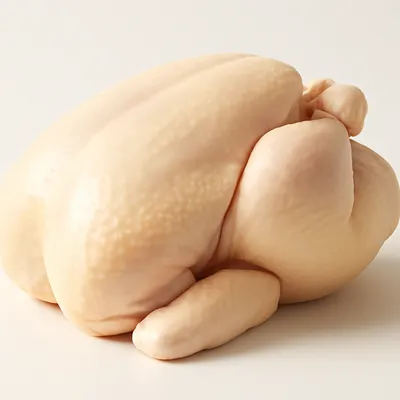
Truss a 1.5kg whole chicken into the traditional 'pipa' shape: tuck wings and legs back through small slits in the skin so the bird forms a flat oval. Air-dry skin uncovered for 30 minutes.
- 25 min
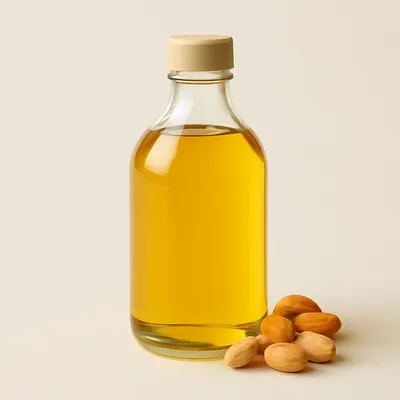
Brush chicken skin with 30g maltose syrup dissolved in 50ml hot water. Heat 1 liter peanut oil to 180°C in a wok. Lower the chicken in and fry 60-90 seconds until the skin sets to deep mahogany. Remove.
Watch outPull the bird the second the skin turns deep mahogany, about a minute — the maltose browns fast, and past that the oil starts cooking the meat.
- 38 min
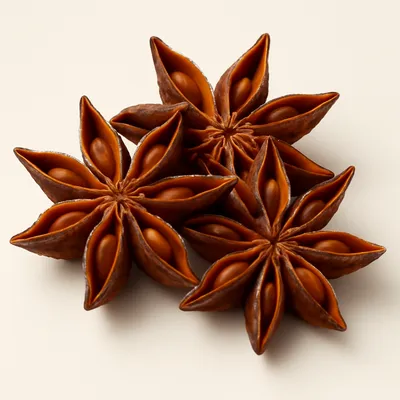
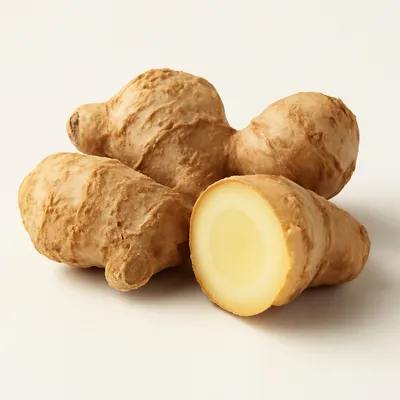
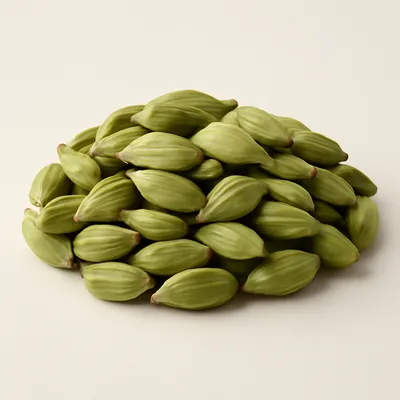
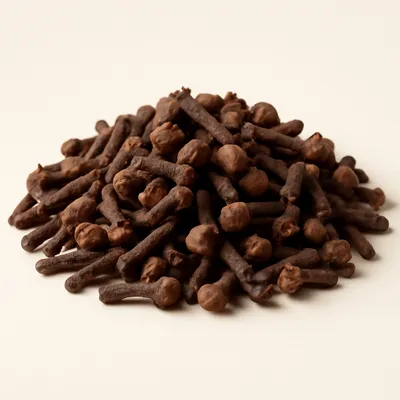
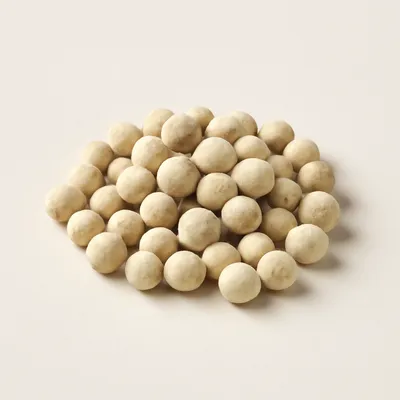
In a deep pot, build the master stock: 3 liters water, 100ml light soy, 30g rock sugar, 20g salt, plus a spice bag of star anise (8g), cassia (5g), sand ginger (5g), green cardamom (3g), cloves (2g), white pepper (3g), bay leaf, ginger, scallion. Bring to a boil.
- 4180 min
Lower the fried chicken into the simmering stock breast-side down. Cook at a bare simmer (88-92°C, never a rolling boil) for 2.5 hours. Turn off heat and let the bird rest in the stock another 30 minutes.
Watch outHold it at a bare shiver, never a rolling boil — over 92°C the skin and meat pull apart and the leg goes stringy instead of sliding off the bone whole.
- 590 min
Lift out gently; the meat will be falling off. Drain on a rack 15 minutes. Cool to room temperature, then refrigerate at least 1 hour. Carve into rough sections and pull apart by hand at the table; serve cold.