Pan-seared fattened duck breast — skin scored, rendered crisp, flesh kept rosy-rare — the dish that brought Gascon foie-gras-duck cuisine into modern bistros.
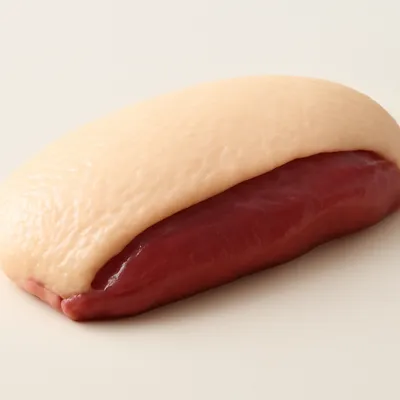



Magret as a pan-seared rare-cooked dish was popularized in 1959 by chef André Daguin at Hôtel de France in Auch, Gascony. Before him, fattened duck breasts (the by-product of foie gras production) were almost always confited or braised. Daguin treated the breast like a steak — sear and rest — which was a radical reframing in French cuisine and helped move Gascon duck cooking out of preserves-and-cassoulet territory into modern bistro food. The word magret specifically denotes the breast of a fattened duck (canard gras), distinguishing it from regular duck breast (filet de canard).
André Daguin pan-seared this rare in 1959 at Hôtel de France in Auch — radical at the time, since fattened-duck breasts were always confited or braised before. Cold-pan start renders the 60–70%-fat skin without overcooking the flesh.
A fan of glossy ruby-pink slices, a clean band of golden rendered fat behind the cracker-crisp mahogany skin. The flesh is dense — chewier than chicken, redder than turkey, more like flat-iron beef in texture. Iron-rich, gamey but not strong. The skin should shatter under your knife — if it bends, the render was too short. Eat with the fat layer; the dish makes no sense without it.
The cold-pan start is non-negotiable. Duck skin is 60-70% fat by weight; you need 12+ minutes of low gradient render to liquefy it without overcooking the flesh underneath. Drop a duck breast into a hot pan and the skin sears closed before the fat renders — you get rubbery skin and undercooked fat. The flesh is best at 52°C (rare to medium-rare); higher and the dense breast muscle toughens. Resting matters more than for chicken because the muscle fibres are tighter.
Variations
Magret séché is the cured-and-air-dried charcuterie cousin; magret aux pruneaux deglazes with Armagnac and prunes (the Gers benchmark); the Périgord version finishes with a sauce périgueux of Madeira and chopped truffle.
On the Palate
Where Magret de Canard sits in the French flavor cloud
Ingredients
Serves 2
How it's made
4 steps · 25 min active + 5 min waiting
- 15 min
Score the skin of two 350g moulard or mulard duck breasts in a 1cm crosshatch — through the fat, NOT into the flesh. Pat dry. Salt the skin generously, the flesh lightly.
- 213 min
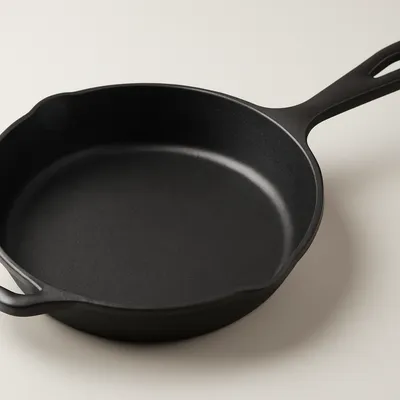
Place breasts skin-down in a COLD heavy skillet — no oil. Set over medium-low heat. Render gently — fat will pool — for 12-15 minutes, until the skin is mahogany and the rendered fat is 8mm deep.
Watch outStart skin-down in a cold dry pan over low heat — you want a slow 12–15 minute render so the fat liquefies fully; a hot pan sears the skin shut and leaves the fat rubbery.
- 35 min
Pour off most of the fat into a heatproof jar (save it — duck fat is gold). Raise heat to medium-high. Flip the breasts and sear flesh-side 3-4 minutes until medium-rare (52°C internal). Add a sprig of thyme and 30g butter, baste 30 seconds.
Watch outSear the flesh side just to 52°C internal, rare to medium-rare — this dense breast toughens fast, so pull it the moment it springs back with a little give.
- 45 min
Rest on a board, skin-side up, for 5 minutes — vital for redistributing juices. Slice 5mm thick on a slight angle. Fan onto warmed plates with flaky salt and cracked pepper. Serve with the pan sauce or a drizzle of reduced honey-Armagnac.
Watch outRest skin-up a full 5 minutes before slicing — the tight breast fibers need it to reabsorb the juices, or they'll run out onto the board.
Archive tool suggestions — not reviewed
These legacy suggestions have not been evidence-reviewed and are not presented as required tools.