Hair-fine threads of duck-egg yolk drizzled through a pierced funnel into hot pandan-scented sugar syrup, where they set into glossy golden strands lifted out into small nests.


Foi thong was introduced to Ayutthaya in the 17th century by Maria Guyomar de Pinha (Thao Thong Kip Ma), a Portuguese-Japanese-Bengali woman who became chief of the royal kitchens under King Narai. It is the Thai adaptation of Portuguese fios de ovos, brought via Goa and Macau. Maria's nine duck-egg-yolk sweets — foi thong, thong yip, thong yot, met khanun, sangkhaya, and others — became the foundation of Thai royal-court desserts, and they remain auspicious sweets served at weddings and ordinations because their gold colour and the word thong (gold) signal prosperity.
Brought to 17th-century Ayutthaya by Maria Guyomar de Pinha, a Portuguese-Japanese-Bengali woman who ran King Narai's royal kitchens. Adapted from Portuguese fios de ovos via Goa and Macau. Duck yolks (~30% denser than chicken) hold the threads in syrup; chicken yolks collapse to ribbons.
A small oval nest the size of a walnut, the colour of polished brass, glossy with set syrup. Pull a thread loose with chopsticks and it stretches like spun gold — fine and silky, with the tensile snap of cooked egg. The taste is concentrated yolk against pandan-jasmine sugar; very sweet, almost honey-like, but with the deep custard back-end of duck egg. A poorly made batch is grainy or pale; a good one is uniform, lustrous, and the threads separate cleanly into hairs without breaking.
Duck-yolk over chicken-yolk is non-negotiable: duck yolks are about 30% denser in solids and contain more lecithin, so the threads hold their shape in syrup instead of collapsing into ribbons. Syrup temperature is the second variable — under 100°C the yolk doesn't set fast enough and the lines fall apart; over 110°C it caramelizes and the threads turn brown and brittle. Practiced makers move the funnel in steady tight overlapping circles to lay continuous threads, not droplets.
Variations
Foi thong (gold threads, eaten alone); foi thong roll cake (modern bakery use, often at S&P chain); Maria's full nine-yolk-sweet collection includes thong yip (gold pinches), thong yot (gold drops), met khanun (jackfruit-seed mock); Portuguese-Macanese fios de ovos remains the parent recipe.
On the Palate
Where Foi Thong sits in the Thai flavor cloud
Ingredients
Serves 8How it's made
5 steps · 1 hour 15 min active + 15 min waiting
- 120 min
Separate 20 fresh duck eggs — yolks only. Strain the yolks twice through a fine cloth to remove every speck of white and chalaza. Stir in 2 whole egg yolks loosened with a teaspoon of water for fluidity. The mixture should pour like thick cream, no lumps.
Watch outThe strained yolk should pour in an unbroken ribbon like thick cream — any lump or stray white will clog the funnel and break the threads.
- 210 min
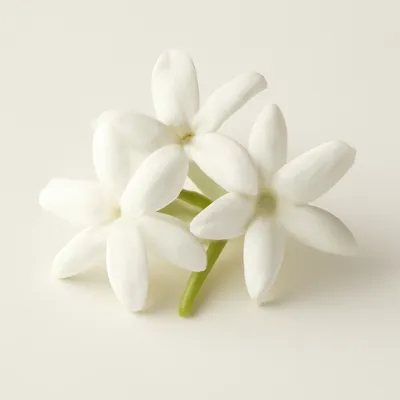
Combine 800g sugar, 600ml water, 4 knotted pandan leaves, and 1 tablespoon jasmine flower water in a wide shallow pan. Bring to a boil, skim foam, then hold at a steady gentle bubble — about 105°C. The bath should be wide enough that threads don't pile on top of each other.
Watch outHold the syrup at a lazy, steady simmer — just fine bubbles, no rolling boil; too hot and the threads brown and turn brittle, too cool and they slump into ribbons.
- 35 min
Pour about 80ml strained yolk into the foi thong funnel — a small brass cone with three pinhole spouts. (A clean piping bag with a tiny round tip or a coconut shell pierced with three holes also works.) Test by drizzling a few drops in syrup — they should set instantly into thin yellow lines.
- 425 min
Hold the funnel 15cm above the syrup and move it in tight overlapping circles for 20 seconds, drawing long continuous threads onto the syrup surface. They cook in about 30 seconds. Slip a long bamboo skewer under and lift the bundle out, draining over the pan.
Watch outDrizzle a few test drops first — they should set into firm thin lines the instant they hit the syrup; if they spread or sink, the heat or the yolk isn't right yet.
- 515 min
Dip the bundle in a bowl of warm jasmine water for 5 seconds to wash off excess syrup, then transfer to a tray and gently fold each bundle into a 4cm oval nest. Repeat in batches; keep the syrup at temperature, topping up with water as it reduces. Serve at room temperature.
Watch outKeep the funnel moving in tight overlapping circles so the threads lay continuous, not as droplets; lift them out within about thirty seconds, before they thicken and toughen.
Archive tool suggestions — not reviewed
These legacy suggestions have not been evidence-reviewed and are not presented as required tools.