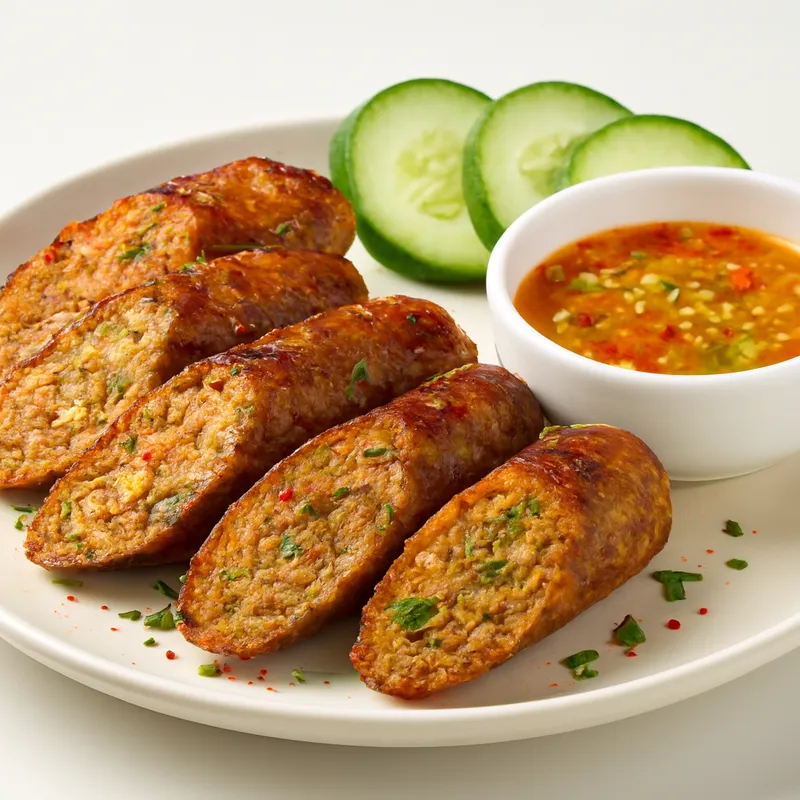
Chinese-Thai roast duck laid over rice and bathed in a five-spice gravy. Slices of mahogany roast duck, skin burnished and meat juicy, fan across a plate of jasmine rice, and over them goes a peppery brown gravy perfumed with star anise, cinnamon, and pepper. A few slices of cucumber, sometimes a halved egg or salted vegetable, sit alongside, and a saucer of chili-soy or chili-vinegar comes to sharpen each bite. It is the duck counterpart to red-pork rice, a staple of Bangkok's Teochew roast-meat shops where whole ducks hang glistening in the window.




Duck-on-rice is Teochew kitchen craft that the Chinese diaspora carried across Southeast Asia; in Thailand it became khao na pet, literally rice topped with duck, sold today from roast-meat shops and mall food courts. The roasting and the five-spice belong to the Chaozhou tradition of lou-style braised and roast poultry, brought to Bangkok by the same Teochew community that dominated the city's commerce. Thai cooks tuned it to local palates — a sweeter, peppered gravy, the inevitable chili dip on the side — but did not pretend it was anything but Chinese in bone. Pinning the dish to a date or a founding shop would be guesswork; what is solid is the lineage.
The skin is thin and burnished, the meat dark and juicy with a clean gamey depth. The gravy is the signature: warm with star anise and cinnamon, savory-sweet, peppery on the finish, just thick enough to wet the rice. Cucumber cools and cleanses; the chili-soy dip on the side brings the sour heat that keeps the rich, spiced duck from feeling heavy. Each spoonful is duck, gravy-soaked rice, and a little raw bite all at once.
The duck is dry-brined or marinated with five-spice and salt, then roasted hot so the skin's fat renders and crisps while Maillard browning deepens both color and flavor; resting before slicing lets the juices redistribute so the meat stays moist. The gravy is a starch-bound sauce: a duck or pork stock simmered with the warm spices — star anise's anethole, cinnamon's cinnamaldehyde, white pepper's piperine all infusing the liquid — then tightened with a tapioca or cornstarch slurry to a clinging gloss. The slurry is what lets a thin stock coat the rice instead of running off it. The acidic chili dip is doing balance work, its sourness and capsaicin cutting the duck fat and the gravy's sugar.
Variations
Many shops sell duck three ways: roast duck (pet yang), stewed five-spice braised duck (pet palo) in a darker gravy, or a mix. The same roast duck goes over egg noodles in soup as bamee pet, or with rice noodles as kuay teow pet. Garnishes vary by shop — pickled mustard green, a hard-boiled egg, blanched greens — but the spiced gravy and the chili dip are constant. A red-curry version of roast duck (kaeng phet pet yang) is a separate, curry-based dish entirely.
On the Palate
Where Khao Na Pet sits in the Thai flavor cloud
Ingredients
Serves 2
How it's made
8 steps · 50 min
- 18 min
Rub duck legs or breast with a five-spice and salt cure and marinate, refrigerated, for several hours.
- 290 min
Roast the duck at high heat until the skin is crisp and burnished and the meat just cooked through; rest before slicing.
Watch outRoast hot until the skin is crisp and burnished but the meat only just cooked — then rest before slicing so the juices settle back in instead of running out.
- 330 min
Build the gravy stock: simmer duck or pork bones with star anise, cinnamon, garlic, soy, and pepper.
- 48 min
Season the stock savory-sweet, then whisk in a starch slurry and cook to a glossy, clinging consistency.
Watch outWhisk the starch slurry in off a hard simmer and cook only until it turns glossy and coats a spoon; cook it too long and the gravy thins back out and won't cling to the rice.
- 56 min
Slice cucumber and prepare the chili-soy or chili-vinegar dip.
- 63 min
Slice the rested duck across the grain into neat pieces.
- 71 min
Mound jasmine rice and fan the duck slices over it.
- 82 min
Ladle the hot five-spice gravy across duck and rice, add cucumber, and serve the chili dip alongside.
Archive tool suggestions — not reviewed
These legacy suggestions have not been evidence-reviewed and are not presented as required tools.