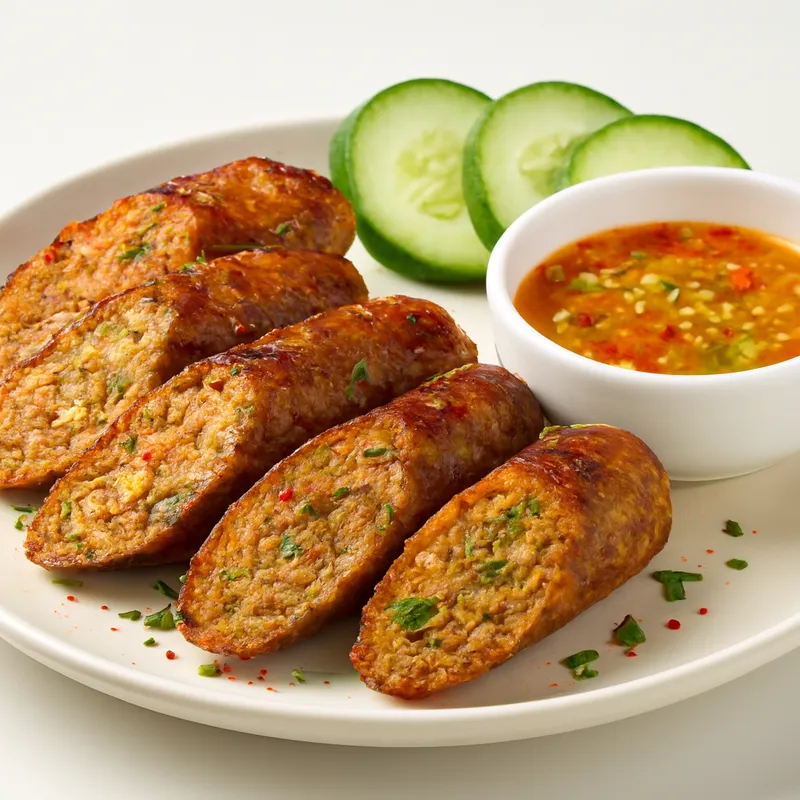
Isaan fermented sausage of pork, glutinous rice, and garlic, sour from natural lacto-fermentation, grilled and eaten with raw cabbage, ginger, fresh chiles, and roasted peanuts.
Sai krok Isaan is a preservation food from the Northeast — Lao-Isaan villages where pork, sticky rice, and salt are the three constants. The fermentation came out of necessity in pre-refrigeration kitchens: cooked rice supplies the carbohydrate that lactic-acid bacteria convert into the sour, which simultaneously preserves the meat and gives the dish its identity. It is now a roadside-stall staple across Northeast Thailand and the Bangkok Isaan diaspora — sold by the bag, grilled to order on a chain of charcoal beads.
Northeast Lao-Isaan preservation sausage. The cooked sticky rice inside isn't filler — it feeds wild lacto-bacteria that drop the pH and produce the signature sour. 28-32°C is the right ferment band.
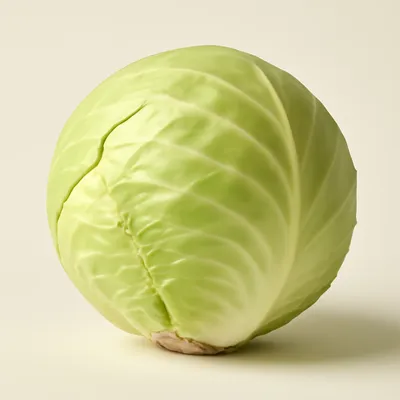
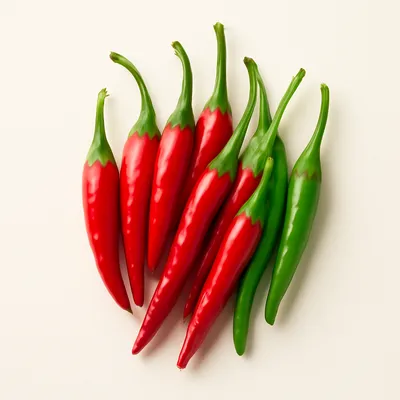
The casing snaps; inside is a tight-grained pork-and-rice ball with a clean lactic tang — yoghurt-sour cut by garlic and white pepper. The grill gives a charred edge that turns the sourness nutty. The accompaniments are not optional — biting raw chile, slice of cold sweet ginger, salt-roasted peanut, all wrapped in a crunch of raw cabbage — they reset the palate between sausages. A sai krok with no sourness is just an undercooked sausage; one with vinegar-fake sour is a lazy shop's shortcut.
The cooked glutinous rice is the load-bearing detail — its starch feeds the wild lacto-bacteria on the meat surface and casing, producing lactic acid that drops the pH, preserves the pork, and gives the signature sour. Skipping the rice or using uncooked grain breaks the fermentation. Temperature matters: 28-32°C is the band where the right bacteria dominate; cooler and the ferment stalls, hotter and putrefying bacteria outpace the lacto strains.
Variations
Khon Kaen and Udon Thani run the sourest 4-day ferments; Ubon adds galangal; Bangkok diaspora versions cheat the sour with vinegar (locals can taste it); Sai Oua is the Northern fresh-grilled cousin, not fermented.
On the Palate
Where Sai Krok Isaan sits in the Thai flavor cloud
Ingredients
Serves 8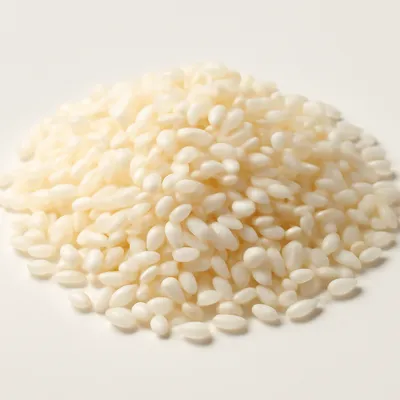






How it's made
6 steps · 30 min
- 130 min
Cook 200g glutinous rice as for sticky rice — soak 4 hours, steam in basket 25 minutes. Cool fully.
- 28 min
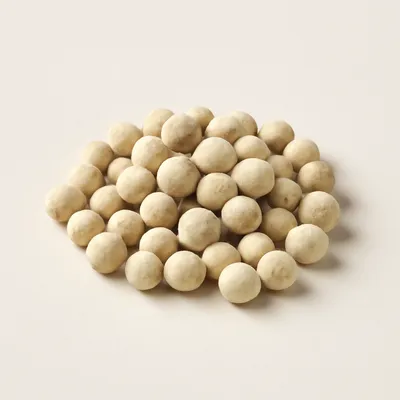
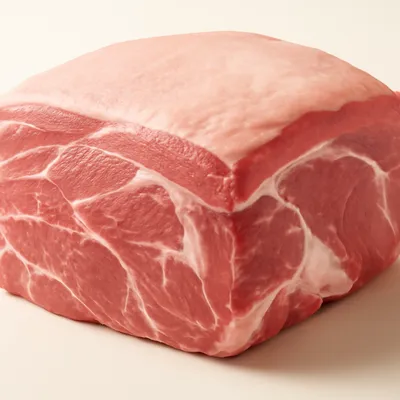
Pound 30g garlic and 1 tbsp white peppercorn to a paste. Mix with 800g coarse-ground pork shoulder (with 25% fat — leaner gives a dry sausage), 200g cooked glutinous rice, 2 tsp salt, 1 tsp sugar. Knead 5 minutes until tacky and homogenous.
Watch outKnead the mince until it turns tacky and pulls together in one mass — that stickiness is the bind that keeps the beads from crumbling on the grill.
- 312 min
Stuff into rinsed natural pork casings using a sausage funnel. Twist into 4cm balls — Isaan tradition is the round bead, not a long link. Prick each ball once with a needle.
- 44320 min
Hang sausages in a warm spot (28-32°C) for 2-3 days. Fermentation is done when the surface is no longer pink-raw but pale grey-pink and the smell is sharp-sour, like yoghurt and lightly cured pork. Below 25°C fermentation stalls; above 35°C it spoils.
Watch outThe ferment is ready when the surface goes from pink-raw to grey-pink and it smells sharp-sour like yoghurt — pink still means underripe, off-smells mean it spoiled.
- 510 min
Grill over medium charcoal 8-10 minutes, turning often, until the casing browns and pops. Or pan-fry in a little oil. Inside should be cooked through but still juicy — sour smell turns nutty when grilled.
Watch outGrill over medium coals turning often until the casing browns and pops — the sour smell shifts to a nutty roast when it's cooked through.
- 63 min
Serve hot with: a handful of raw cabbage leaves, thumb-thick batons of young ginger, 8-10 fresh bird's eye chiles (whole), 50g roasted peanuts, a few sprigs Thai basil. Each bite: a piece of sausage, a chile, a slice of ginger, a peanut, wrapped in cabbage.
Archive tool suggestions — not reviewed
These legacy suggestions have not been evidence-reviewed and are not presented as required tools.
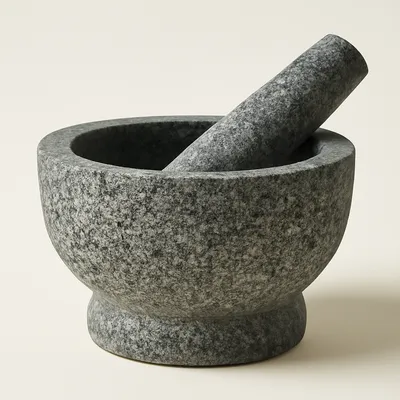
The simplest tool in any kitchen: a heavy bowl and a club to bash things in it. Different cuisines use different stones — Thai cooks pound green papaya in a tall granite mortar (krok hin); pesto Genovese requires the soft-pored Carrara marble; Indian masalas grind down on rough basalt. The bash-don't-cut motion releases volatile oils that a blade keeps sealed in the cell wall.
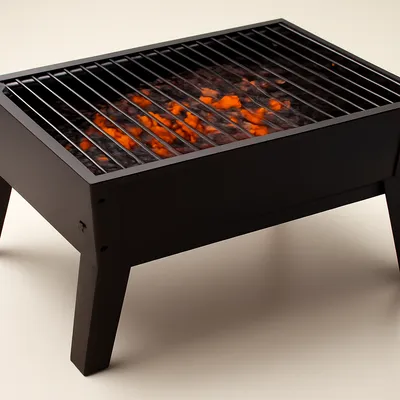
An open or hooded metal frame holding a bed of glowing charcoal embers, with a grate above. Charcoal burns at 700°C+ on the surface and emits short-wave infrared, which cooks proteins faster and with deeper Maillard browning than gas. Hardwood lump charcoal (oak, mesquite, fruitwood) lends its own smoke; cheap briquettes do not. Mastery is mostly heat zoning — direct over coals for searing, indirect off-coals for slow-roasting.