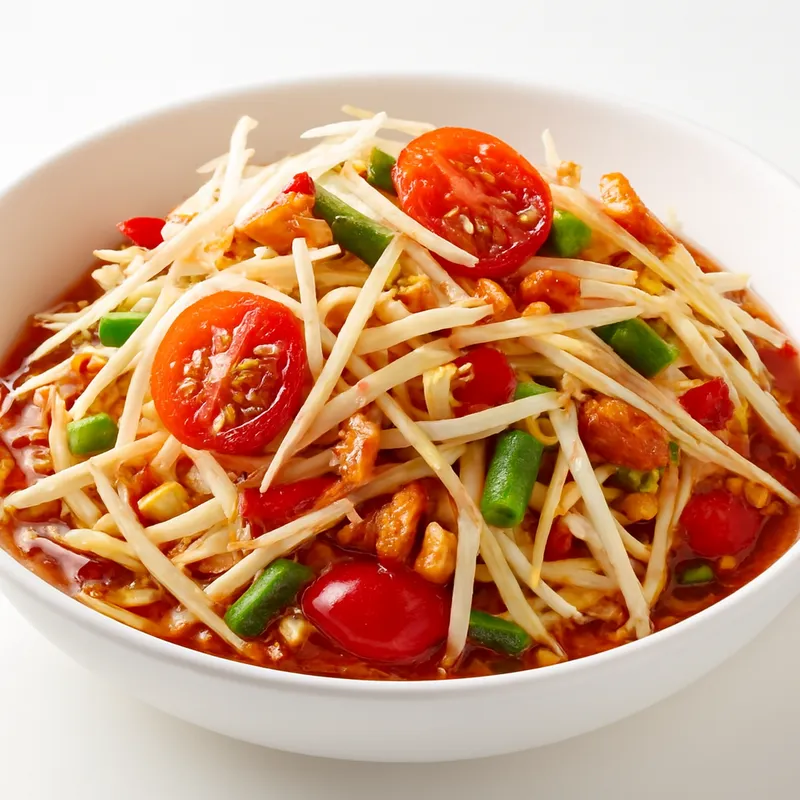
Lao-style green papaya salad pounded with pla ra (fermented mud-fish sauce), pickled crab, raw chile, lime, and tomato — heavier on funk than the Thai version.
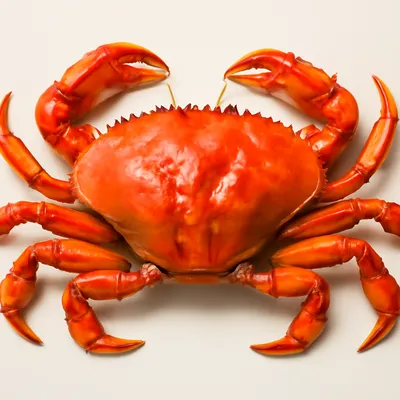
Som tum lao — also called tum lao or tum pla ra — is the cross-Mekong Lao version of pounded papaya salad, the older form from which the Bangkok-friendly som tum thai was sweetened down. In Laos and Isaan provinces (Khon Kaen, Roi Et, Yasothon, Ubon Ratchathani), pla ra is the defining ingredient — a brined, fermented freshwater-fish sauce far funkier than nam pla. Pickled rice-paddy crabs (poo dong) are added whole. Som tum thai (with peanuts, dried shrimp, palm sugar) is the central-Thai tourist-market evolution; tum lao stayed put.
The cross-Mekong original. Pla ra (6-12 month fermentation of fish, salt, roasted rice bran) is the load-bearing ingredient — substitute nam pla and the dish goes thin and sweet. Pickled paddy crab adds shell-brine glutamate that pla ra alone can't deliver.
Sour-salty-funky and almost no sweetness — the opposite of som tum thai. The pla ra hits first, that deep fermented-fish baseline, then the chile cuts through and the lime sharpens it. Papaya shreds stay crunchy; pickled-crab fragments crack between teeth and release a briny burst. Sticky rice and raw cabbage are mandatory, not garnish — they buffer the funk. If you taste sweetness more than ferment, the cook used too much palm sugar; this should taste rural and pungent, not balanced.
Pla ra is the load-bearing ingredient and also the divisive one. It's a 6-12-month fermentation of freshwater fish, salt, and roasted-rice bran — the result is a sludgy, deeply funky paste-sauce that's strained and added by the spoonful. A common error is using nam pla in its place; the dish becomes thinner, sweeter, less Lao. The pickled crab adds glutamate-rich shell brininess that pla ra alone can't deliver. Sugar is minimised — Lao tum balances on funk, salt, and acid, not the sweet-spicy-sour triangle of central Thai cooking.
Variations
Tum lao Vientiane-style (heavy pla ra, almost no sugar); Roi Et and Yasothon versions add raw paddy snails; Khon Kaen mixes long bean and yardlong; Bangkok-friendly tum thai (peanut, dried shrimp, palm sugar) is the sweetened evolution.
On the Palate
Where Som Tum Lao sits in the Thai flavor cloud
Ingredients
Serves 4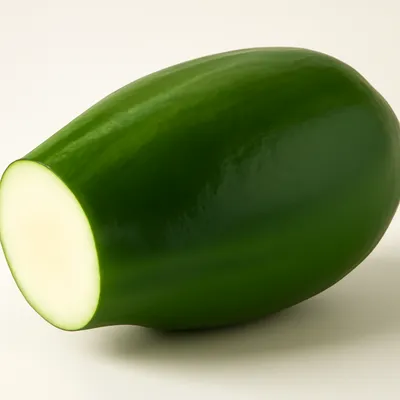





How it's made
5 steps · 12 min active + 3 min waiting
- 16 min
Peel one green papaya — about 400g flesh — and shred on a julienne mandoline or with the traditional chop-and-shave method (light knife taps along the surface, then a wide shave). Soak shreds in cold water 5 minutes; drain.
- 22 min
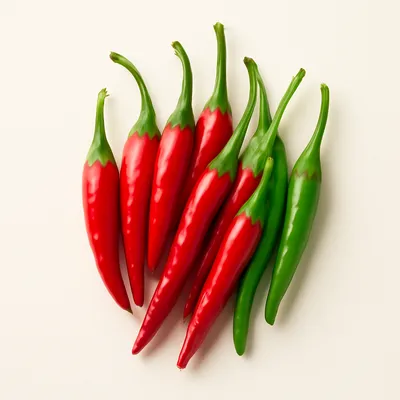
In a clay mortar, pound 5 cloves garlic and 5-8 bird's-eye chiles to a rough paste. Add 1 tbsp roasted peanuts and bruise lightly.
- 32 min
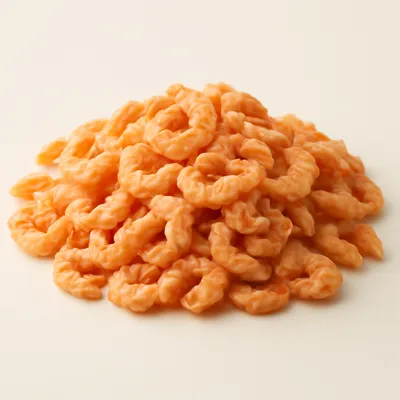
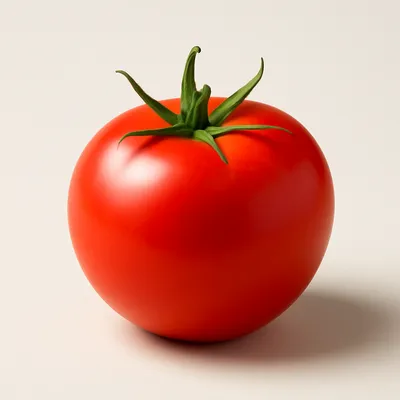
Add 2 small whole pickled rice-paddy crabs (poo dong), 1 tbsp dried shrimp, 6 halved cherry tomatoes. Pound 6 times — crabs crack, tomatoes split.
- 41 min
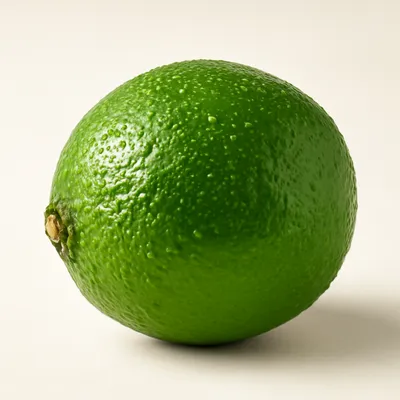
Add 3 tbsp pla ra (strained), 1 tbsp fish sauce, 2 tbsp lime juice, 1 tbsp palm sugar, 1 short piece of yard-long bean snapped in. Less sugar than Thai-style — Lao tum is funkier and saltier, not sweet.
Watch outUse pla ra, not fish sauce — the strained fermented-fish paste is what makes it Lao; swap in nam pla and it goes thin, sweet and wrong.
- 53 min
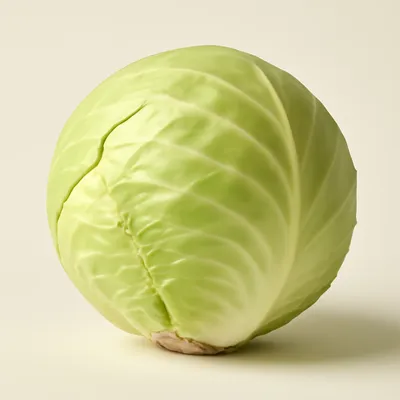
Tip in the papaya shreds. Pound-and-fold 12-15 turns until shreds are glossed and bruised but still crunchy. Plate. Serve immediately with sticky rice, raw cabbage wedges, and grilled freshwater fish.
Watch outPound-and-fold just 12-15 turns — the shreds should glisten with sauce and bruise a little but still snap; over-pounding turns them soft and watery.
Archive tool suggestions — not reviewed
These legacy suggestions have not been evidence-reviewed and are not presented as required tools.
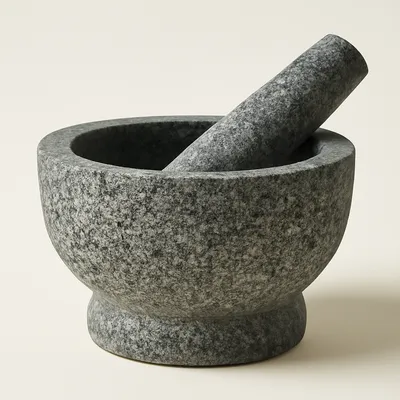
The simplest tool in any kitchen: a heavy bowl and a club to bash things in it. Different cuisines use different stones — Thai cooks pound green papaya in a tall granite mortar (krok hin); pesto Genovese requires the soft-pored Carrara marble; Indian masalas grind down on rough basalt. The bash-don't-cut motion releases volatile oils that a blade keeps sealed in the cell wall.
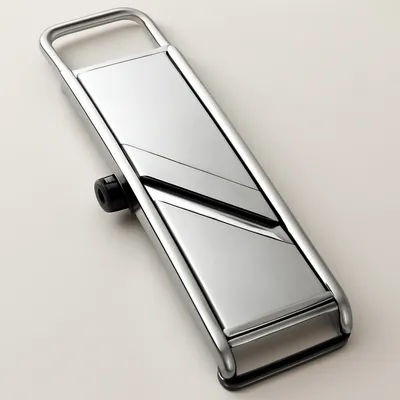
A flat slicing platform with an adjustable razor-sharp blade, set in a frame so the food slides over it. Outputs paper-thin discs (1 mm), julienne, waffle-cut, or matchstick — uniform in a way no knife work can match in speed. The Japanese benriner version is plastic-and-ceramic; the French Bron mandolin is heavy steel. Both demand a hand-guard — the blade has eaten more chefs' knuckles than any other kitchen tool.