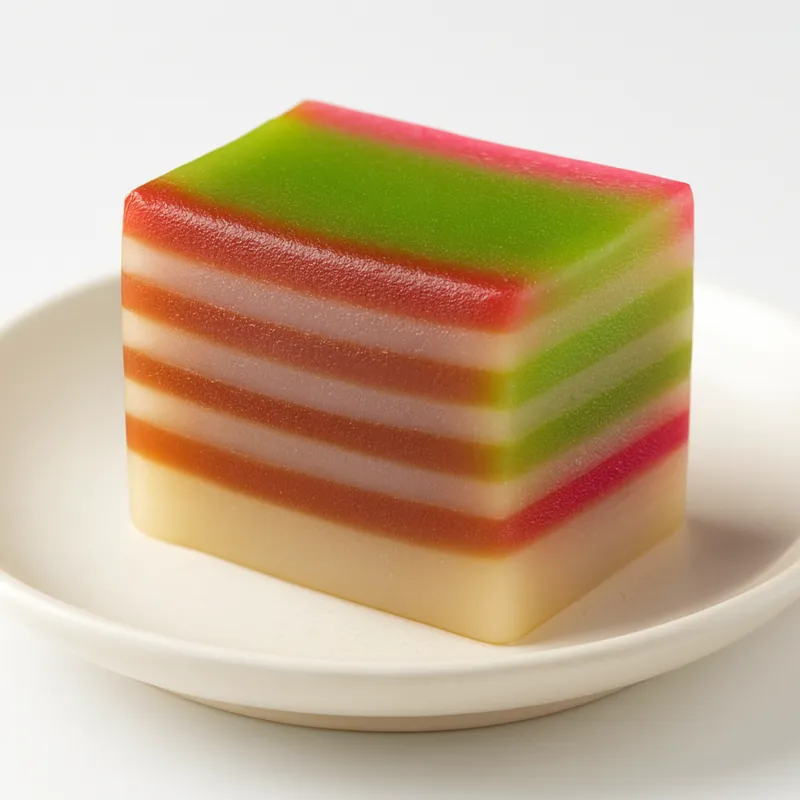
Two-layer steamed jelly cups: a green pandan-flavoured starch-jelly bottom (typically tapioca/arrowroot, mung-bean or rice flour) and a thick salty-sweet coconut-cream top, set in folded pandan-leaf cups about 4cm wide.



Tako is a Central Thai household and street-vendor sweet, an old traditional Thai sweet from the rice- and coconut-growing central and southern regions, pairing a starch pudding with salted coconut cream. The pandan-leaf cup form became the standard street version because the leaf both perfumes the jelly and serves as a disposable single-portion vessel. Variations stack the salty coconut cap over fillings of fresh corn (tako khao phot), water chestnut (tako haew), or jackfruit (tako khanun), but the salted-cream-over-pandan original is the benchmark.
Two-layer pandan jelly under a salted-coconut cap, served from a pandan-leaf cup. The salt-to-sugar ratio in the white top is load-bearing — a heaping teaspoon of salt to 300ml cream against just 2tsp sugar. Most non-Thai cooks halve the salt out of disbelief and ruin it.
A two-bite jelly that you eat from the leaf cup with a small spoon. The white top hits first — surprisingly salty, with the dense fat of pure coconut cream, almost like a savoury panna cotta. Underneath, the pandan layer is sweet, fragrant, and chewier from the rice and tapioca starches. The contrast is the whole game: salty cream on sweet jelly. Bad versions skip the salt and the dessert tastes like flavourless coconut pudding; properly seasoned, it stops you on the first bite.
The salt-to-sugar ratio in the white top is the load-bearing detail: a heaping teaspoon of salt for 300ml coconut cream against just 2 teaspoons of sugar means the cap is saltier than seawater. Most non-Thai cooks halve the salt out of disbelief and ruin it. The two-stage steam matters as well — set the green layer first or the coconut sinks through; pour the coconut while the green is still hot or the layers debond when cooled.
Variations
Tako pandan (the benchmark); tako khao phot (sweet corn through the green layer); tako haew (water chestnut for crunch); tako khanun (jackfruit); modern street vendors at Or Tor Kor market run salted-egg-yolk hybrids.
On the Palate
Where Tako sits in the Thai flavor cloud
Ingredients
Serves 6How it's made
5 steps · 45 min active + 30 min waiting
- 115 min
Fold 24 small pandan-leaf cups: cut leaves into 14cm strips, overlap two strips into a cross, fold up the four sides to make a 4cm square box, and pin the corners with toothpicks. Set on a tray.
- 210 min
For the green base: whisk 50g rice flour, 30g tapioca starch, 80g sugar, pinch salt, 250ml water, 100ml strong pandan juice. Strain. Cook over low heat, stirring constantly with a wooden spoon, until thick and glossy — about 5 minutes. Pull off heat as soon as the streaks hold.
Watch outPull the green base off the heat the instant a dragged spoon leaves a streak that holds — glossy and thick; cook it further and it turns gummy and won't set clean.
- 38 min
Spoon the warm green pudding into each leaf cup, filling halfway. Set the cups on a steamer tray and steam over rolling water for 5 minutes — surface should be set and matte, not tacky.
Watch outSteam the green layer until the surface goes matte and set, not tacky — a tacky top means the coconut will sink through and the layers will debond.
- 46 min
For the coconut top: whisk 300ml thick coconut cream (the dense head from a fresh can), 30g rice flour, 1 teaspoon salt, 2 teaspoons sugar over low heat for 4 minutes until thickened to porridge consistency. The top must read as salty-sweet, not just sweet — without the salt the dessert flops.
Watch outTaste the coconut top before it goes on: it should read distinctly salty-sweet, saltier than you'd believe — if it tastes just sweet, the whole dessert flops.
- 56 min
Spoon the coconut layer over each set green base, filling to the rim. Steam another 5 minutes. Cool on the tray for 30 minutes — the layers fully set as they cool. Serve at room temperature in the leaf cups; pull out toothpicks before eating.
Archive tool suggestions — not reviewed
These legacy suggestions have not been evidence-reviewed and are not presented as required tools.