Pyramid-folded banana-leaf packets of sticky rice with sweet mung-bean-and-coconut filling — the candle-shape gives the name; eaten as a temple offering and festival snack.
Khanom Tian (literally candle dessert, named for its candle-flame shape) is a temple-offering food found across central Thailand and overlapping with Lao kha-nom thian and Cambodian num ansom chek — the recipe traveled with Theravada Buddhism. The pyramid wrap is functional sacred-geometry: the shape stands upright on a banana-leaf platter at festival altars (Songkran, kathin, and merit-making ceremonies). Older savoury versions used a salted mung-bean paste seasoned with white pepper and garlic (often with minced pork); the sweet mung-bean form is the Bangkok-codified version.
Pyramid-wrapped temple offering found across Central Thailand, overlapping Lao kha-nom thian and Cambodian num ansom chek — the recipe traveled with Theravada Buddhism. Coconut cream in the rice-flour skin keeps it from going hard when cooled.
A green pyramid the size of a fist, fragrant of warm banana leaf the moment you peel it back. Inside, the rice-flour dough is pale, glossy, slightly translucent, with a soft chew that gives at the teeth; the centre is a dark, dense, sweet-coconut mung-bean paste that melts on the tongue. Pandan and coconut cream perfume the dough faintly. Eat at room temperature — refrigerator-cold turns the dough hard and ruins the texture.
Two doughs in two textures share one wrapper. The rice-flour skin must include coconut cream — the fat keeps it from going hard when cooled; a water-only dough turns to plastic. The mung-bean filling has to be cooked stiff enough to hold a ball at room temperature, otherwise it melts and bursts the seam during steaming. The banana leaf isn't just packaging — it imparts a faint vanilla-grassy aroma during the steam, the same way pine needles flavour songpyeon.
Variations
Sweet mung-bean version is the Bangkok-codified standard; older savoury versions used a peppery salted mung-bean paste, often with minced pork; Cambodian num ansom chek wraps with banana inside; Lao versions add roasted coconut to the bean filling.
On the Palate
Where Khanom Tian sits in the Thai flavor cloud
Ingredients
Serves 8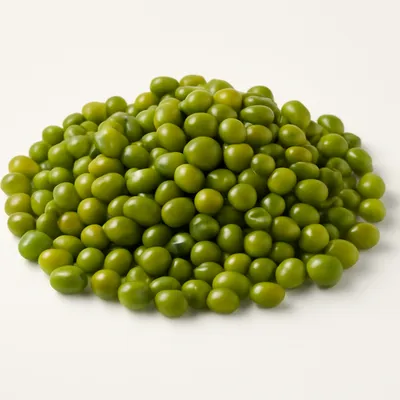




How it's made
6 steps · 1 hour 30 min active + 2 hours 30 min waiting
- 135 min
Soak 200g split mung beans 4 hours, drain, steam 25 minutes until tender. Mash while warm. Cook with 100g grated palm sugar, 1/2 tsp salt, 50ml thick coconut cream over low heat until a stiff paste that holds its shape on a spoon. Cool and roll into 16 marble-sized balls.
Watch outCook the mung-bean filling stiff enough to hold a ball on the spoon — too soft and it melts and bursts the seam mid-steam.
- 210 min
Soak 300g glutinous rice flour with 250ml thick coconut cream, 80g sugar, 1/2 tsp salt, 2 tbsp pandan-leaf water (extracted from pounded leaves) into a smooth, soft, pliable dough — like soft mochi. Cover and rest 30 minutes.
Watch outThe skin dough must go into coconut cream, not water — soft and pliable like mochi; a water dough sets hard as plastic once cooled.
- 315 min
Cut banana leaves into 18cm squares; wilt over a flame for 5 seconds per side until pliable, wipe with a damp cloth, brush one side with coconut oil. Cut 16 squares.
Watch outDo not over-wilt the leaves, as they can become too fragile and tear easily.
- 415 min
Take a tablespoon of dough, flatten in oiled palm, place a mung-bean ball inside, close the dough around it, roll smooth — about 4cm diameter.
Watch outEnsure the dough fully encases the filling to prevent it from leaking during steaming.
- 520 min
Place a dough ball on the oiled side of a leaf. Fold the leaf into a triangle: lift one corner over the ball, fold the next corner across, then the third — forming a closed pyramid. Tuck the final flap under or tie with banana-leaf twine. Repeat all 16.
- 630 min
Steam over high heat 25-30 minutes until the leaf is olive-dark and the dough inside is glossy and springs back when poked. Cool 10 minutes before serving — they are pulled apart with the fingers, leaf peeled back.
Watch outSteam until the leaf goes olive-dark and the dough springs back when poked — set through, glossy, no raw-white core.
Archive tool suggestions — not reviewed
These legacy suggestions have not been evidence-reviewed and are not presented as required tools.