




Sopa de Ajo is shepherd food from the Castilian meseta, codified in the high plains of Castilla y León over centuries. It belongs to the same poverty-cuisine family as migas and gachas — recipes built to recover stale bread in a region where wheat was the harvest and meat was rare. The poached-egg version became standard in 19th-century Madrid taverns, where it was eaten as a 4 a.m. meal after a long night out, and is still served that way at venerable casas de comidas.
Castilian shepherd's bread soup from the meseta, eaten at 4 a.m. in 19th-century Madrid taverns after a long night out. Pimentón de la Vera must hit the oil off the heat — above 140°C the smoke compounds scorch and the broth turns grey.
A deep brick-red broth thickened by dissolving bread, with a still-runny poached yolk that you break and stir through. The first spoonful is smoke (pimentón de la Vera) then garlic then bread; the egg yolk binds it into something almost custardy. Eaten scalding hot from earthenware. If the soup tastes thin and pink rather than red and thick, the cook used too little pimentón or too much water.
Two non-obvious moves carry this dish. First: the pimentón must hit the oil off the heat — capsaicin and the smoke compounds in pimentón de la Vera scorch fast above 140°C and turn the broth bitter and grey. Second: stale bread, not fresh, because dry bread absorbs broth and breaks down evenly into a thickener; fresh bread turns to gluey lumps. The egg is a textural binder, not a garnish — the broken yolk emulsifies the oil into the broth.
Variations
Sopa castellana adds ham and chorizo; Sopa de ajo segoviana drops the egg and pours over baked clay; Sopa albada (Aragón) folds in a beaten-egg ribbon; some Salamanca cooks toast the bread first in lard, not oil.
On the Palate
Where Sopa de Ajo sits in the Spanish flavor cloud
Ingredients
Serves 4
How it's made
5 steps · 20 min active + 5 min waiting
- 15 min
Slice 200g of day-old country bread into rough 1cm cubes. Peel and thinly slice 8 fat garlic cloves. Have 1.2L hot water or light chicken stock ready on a back burner.
- 24 min
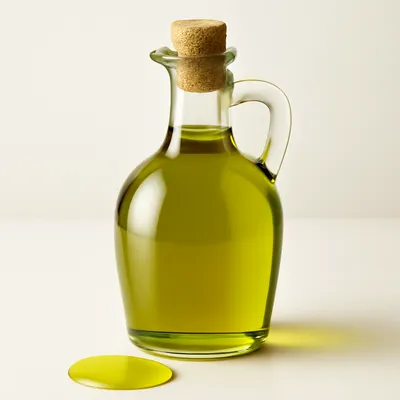
Heat 60ml olive oil in a wide earthenware cazuela or heavy pot over medium-low. Add the garlic and cook 2-3 minutes until pale gold and fragrant — pull it off the heat the instant it colours.
Watch outBurnt garlic turns the whole soup bitter — slow heat, constant stir.
- 31 min
Off the heat, stir in 2 tsp pimentón de la Vera (smoked paprika) and 1/2 tsp sweet paprika. Stir for 10 seconds — the oil turns deep red.
Watch outPimentón scorches and goes acrid above 140°C — the pot must be off the burner.
- 414 min
Add the bread cubes and stir to coat in the red oil. Pour in the hot water or stock, season with salt, return to medium heat and simmer 12-15 minutes. The bread breaks down into a thick, ruddy porridge-like soup.
- 54 min
Crack 4 eggs into the gently simmering soup, one in each portion's spot. Cover the pot and poach 3 minutes — whites set, yolks still loose. Ladle into bowls, egg first, broth around it.
Watch outIf broth is at full boil the eggs shred — keep it at a tremble.
Archive tool suggestions — not reviewed
These legacy suggestions have not been evidence-reviewed and are not presented as required tools.
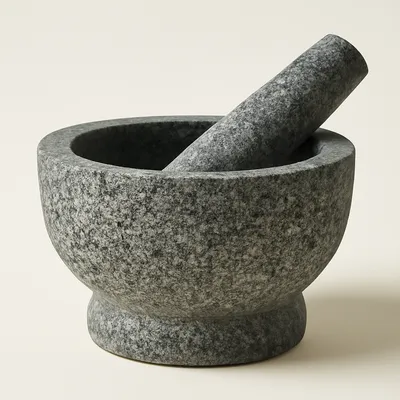
The simplest tool in any kitchen: a heavy bowl and a club to bash things in it. Different cuisines use different stones — Thai cooks pound green papaya in a tall granite mortar (krok hin); pesto Genovese requires the soft-pored Carrara marble; Indian masalas grind down on rough basalt. The bash-don't-cut motion releases volatile oils that a blade keeps sealed in the cell wall.

A round, shallow, glazed terracotta dish, 18-30 cm across with sloping walls, used for tableside-served Spanish tapas — gambas al ajillo, almejas a la marinera, callos, fideuà. Clay's slow heat retention keeps olive oil at the perfect 80-90°C garlic-confit zone for prawns without scorching, and the wide shallow profile lets liquids reduce while keeping protein lightly moored at the bottom.


