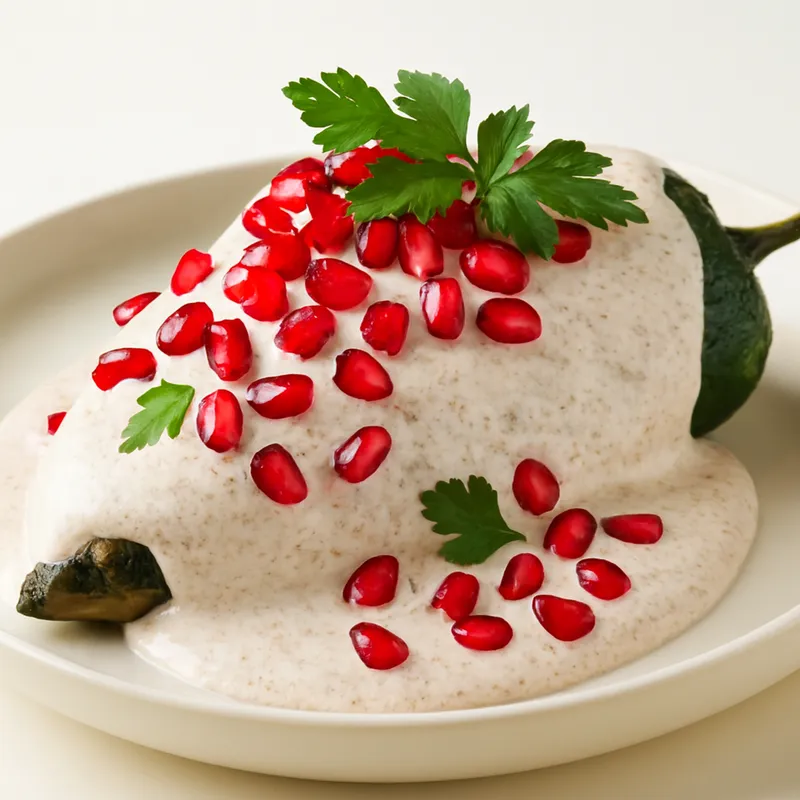
Oaxacan agave distillate made from maguey hearts (piñas) roasted in earthen pits over wood and stones — Espadín is the most common varietal.
Mezcal is broader than tequila — tequila is a specific kind of mezcal made only from blue agave in five Mexican states, with steam-cooking instead of pit-roasting. Mezcal proper is pre-Columbian in spirit (the Mexica fermented agave for pulque) but distillation came with Spanish-introduced still technology after 1521. Oaxaca holds the heartland status, with palenques in the Central Valleys, Sierra Sur, and Mixteca — many family-run for five or more generations. Forty-plus agave species are legal under the Denominación de Origen, and rare wild varieties (tobalá, tepeztate, madrecuixe) have driven the international boom since the 2010s.
Mezcal is the broader category — tequila is one specific kind, made only from blue agave in five states with steam-cooking. Pit-roasting agave in earth with wood and stones bathes the piñas in guaiacols and syringols (phenolic smoke compounds) that bind into the fibers and survive distillation. Forty-plus agave species are legal under the DO.
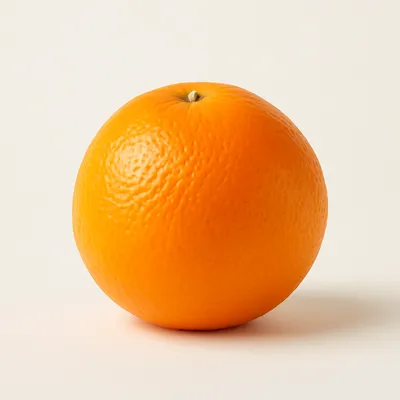
Pour into a copita and the smoke comes up before the glass reaches the lip — wood fire, wet earth, faintly green. The first sip is sharp on alcohol, then the agave's vegetal sweetness opens, then the smoke settles in the throat. Espadín is the gateway: clean, smoky, balanced. A bite of orange and a lick of sal de gusano (worm salt — toasted maguey worms ground with chile and salt) cut and complement. Sip slowly. A good mezcal warms across the chest, not down the throat.
The smoke is the load-bearing flavour difference from tequila. Pit-roasting in earth, with wood fire and stones, simultaneously cooks the agave's complex carbohydrates into fermentable sugars and bathes the piñas in phenolic smoke compounds — guaiacols and syringols — that bind into the fibres and survive distillation. Steam-cooked agave (tequila) yields a clean, citrus-vegetal spirit; pit-roasted agave (mezcal) yields a smoky, mineral one. Wild yeast and tahona crushing add additional flavour layers that industrial processes flatten.
Variations
Espadín is the Oaxacan workhorse and gateway; tobalá is wild and small-batch (8-15 year maturation); tepeztate runs another decade; madrecuixe is mineral and herbaceous; Durango mezcal (cenizo agave) and Michoacán mezcal (cupreata agave) are the rising challengers to Oaxaca's heartland.
On the Palate
Where Mezcal sits in the Mexican flavor cloud
Ingredients
Serves 1How it's made
6 steps · 2 hours active + 9 days 22 hours waiting
- 160 min
Note: production-scale steps for context — this is artisanal palenque practice, not a home recipe. Harvest mature Espadín maguey at 6-10 years, when piñas reach 30-80kg and the stalk (quiote) is just beginning to emerge. The plant dies in producing one harvest.
Watch outCut too early and sugars haven't peaked; too late and sugar goes to the stalk, leaving fibrous low-yield piñas.
- 27200 min
Dig or open a stone-lined earth pit (horno) about 3m wide, 2m deep. Build a wood fire, top with river stones, burn down to glowing rocks — 5-8 hours. Layer in piñas (split or whole), cover with agave leaves, mats, and earth. Roast 3-5 days. The earth pit imparts mezcal's load-bearing smoke.
Watch outPit temperature, leaf cover, and earth seal control how much smoke and how much caramelisation. This stage is where each palenque develops its signature.
- 3240 min
Pull cooled roasted piñas from the pit. Crush — traditionally with a tahona (a stone wheel pulled by a horse or mule around a circular stone basin) — until fibres and juice form a wet pulp. Modern palenques may use a mechanical shredder; tahona is the artisanal benchmark.
- 414400 min
Transfer the crushed agave (juice plus fibres, called «tepache» at this stage) to open wooden tinas. Ferment with wild yeast for 5-15 days depending on weather — no commercial yeast is added in traditional production. Fermentation finishes when bubbling subsides and the wash reads dry.
Watch outTemperature and humidity drive fermentation speed — Oaxaca's altitude and dry winter make for slow, complex ferments.
- 5480 min
Distil twice in small copper or clay pot stills. First pass («ordinario») strips alcohol from the wash; second pass («refinación») concentrates and the distiller cuts heads, hearts, and tails. Final ABV is usually 45-55%. Some producers triple-distil; others use clay pots for a different aromatic.
Watch outCuts are made by smell, taste, and hydrometer — heads carry methanol-acetone notes, tails carry oily off-flavours. The hearts are the mezcal.
- 65 min
Bottle straight from still (joven, the standard) or rest in glass (reposado: 2-12 months) or oak (añejo: 12+ months). Joven is the purest expression — no wood interference. Serve neat at room temperature in a copita (small clay cup), with orange wedges and sal de gusano on the side.
Watch outNo shooting. Mezcal is sipped — kiss the rim, take a small mouthful, exhale through the nose. The smoke comes through that exhale.
Archive tool suggestions — not reviewed
These legacy suggestions have not been evidence-reviewed and are not presented as required tools.
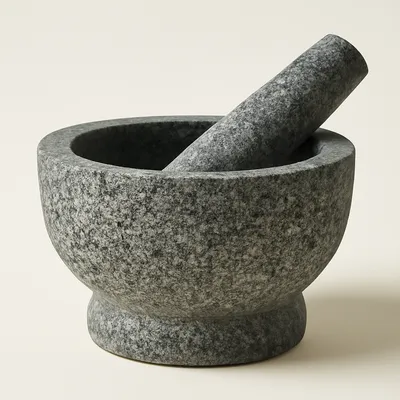
The simplest tool in any kitchen: a heavy bowl and a club to bash things in it. Different cuisines use different stones — Thai cooks pound green papaya in a tall granite mortar (krok hin); pesto Genovese requires the soft-pored Carrara marble; Indian masalas grind down on rough basalt. The bash-don't-cut motion releases volatile oils that a blade keeps sealed in the cell wall.

A round-bellied unglazed clay pot, 1.5-3 liters, with a domed lid and side handles, used for slow-cooking Chinese soups, claypot rice (煲仔饭), and stews. The clay's high porosity diffuses heat slowly so soups never come to a violent boil — flavor develops over 2-3 hours of low simmer. Cantonese claypot rice gets its prized crispy bottom (锅巴) from the same direct-flame stovetop heat that would crack a less robust pot.

A pit oven dug into the ground, lined with porous lava rock, in which a wood fire is built and burned down to embers. Banana stalks and ti leaves are layered on top of the hot rocks, then a whole kalua pig (or other large protein) is wrapped in more leaves and lowered in; the whole pit is covered with wet burlap and earth and steams for 6-12 hours. The result has a smoky-sweet flavor no above-ground oven can replicate.