
Oaxaca claims seven traditional moles, of which Negro is the most famous and Rojo is the everyday red sister. Oaxacan moles emerged from the post-conquest convergence of Mesoamerican chile-and-seed pastes (Zapotec, Mixtec) with Spanish-introduced spices, raisins, almonds, and chocolate-with-sugar. Diana Kennedy and Mexican food scholar Ricardo Muñoz Zurita both document Rojo as a household mole — less labour than Negro, served at baptisms and Sunday tables rather than weddings.
The everyday red of Oaxaca's seven moles — chiles toasted dry on a comal (never fried, which adds bitterness), then the strained paste fried in lard for 25+ minutes until the oil splits visibly at the edges. That step is sazonar; without it the mole stays one-dimensional.
Spoon-side it first — the sauce coats the back of the spoon and runs off slow, brick-red and faintly oily on the surface. The first taste is dried fruit and toasted seed, then chile warmth blooms across the tongue (more depth than heat), then a faint chocolate-cinnamon round-off. The chicken underneath is pure broth-poached, soft enough to pull with a fork. Eaten with rice and a warm tortilla used as a spoon. The benchmark: each bite should taste of about three different things in sequence, never one single flavour.
Two technical pivots define Oaxacan red mole. First, the chiles are toasted dry — never fried in oil — to develop dried-fruit Maillard compounds without adding bitterness; over-toasting (any black on the skin) produces unmaskable char notes. Second, the strained paste is fried in lard at medium heat for 25+ minutes (sazonar) until the oil splits visibly at the edges. This frying caramelizes the chile-sugar and tomato-glutamate compounds; an unfried mole stays sharp and one-dimensional no matter how long it then simmers.
Variations
Diana Kennedy documents Tlacolula-valley versions with more chocolate; Itanoní in Oaxaca de Juárez serves a heritage-chile rojo with chilhuacle rojo; Origen and Los Danzantes both run their own house formulas.
On the Palate
Where Mole Rojo Oaxaqueño sits in the Mexican flavor cloud
Ingredients
Serves 8












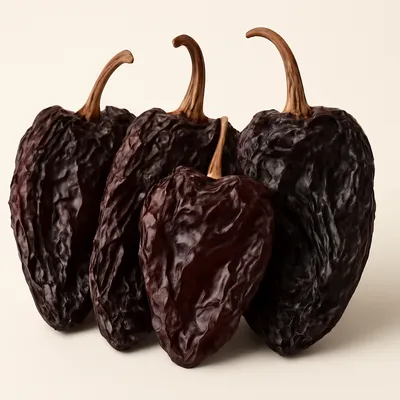
How it's made
7 steps · 2 hours active + 1 hour waiting
- 125 min
Stem and seed 80g ancho chiles and 60g guajillo chiles. Toast on a dry comal at medium heat 30 seconds per side — they should pucker and smell of dried fruit, not smoke. Rinse, then soak in 1L hot water 20 minutes.
Watch outIf a chile turns black at the edge it is burnt — bitter mole follows. Pull at the first wisp of smoke.
- 212 min
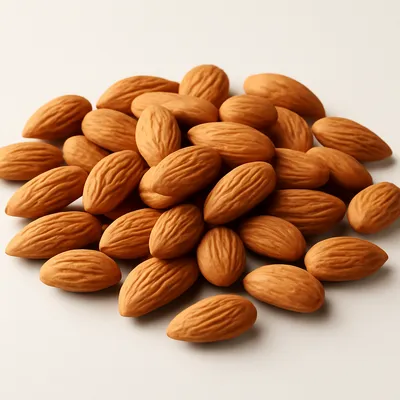
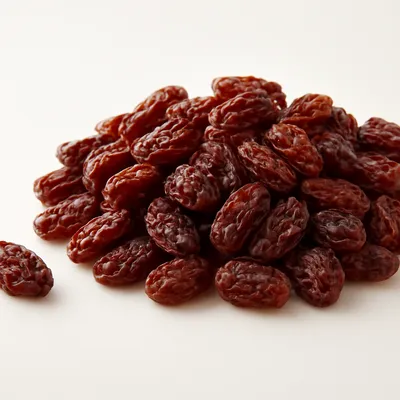
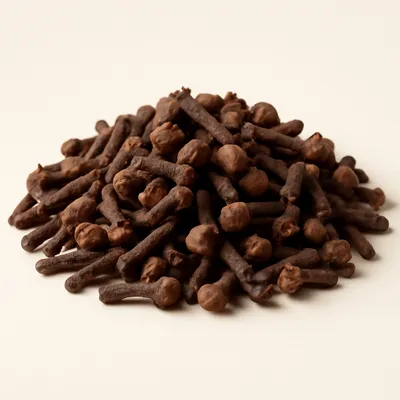
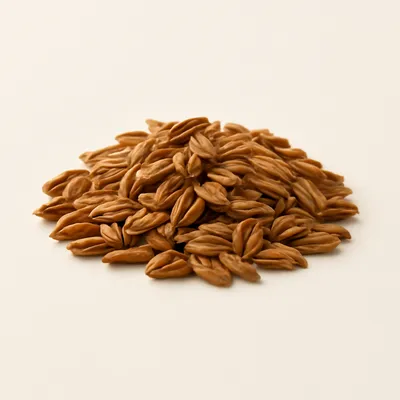
On the same comal, toast 60g sesame seeds until pale gold (3 min), then 30g blanched almonds, 30g pecans, 20g raisins, 1 stick canela, 4 cloves, 6 black peppercorns, 2 allspice berries, 1 tsp cumin, 1 tsp dried oregano. Reserve.
Watch outToast each item separately — sesame burns in seconds while almonds need a full minute.
- 314 min
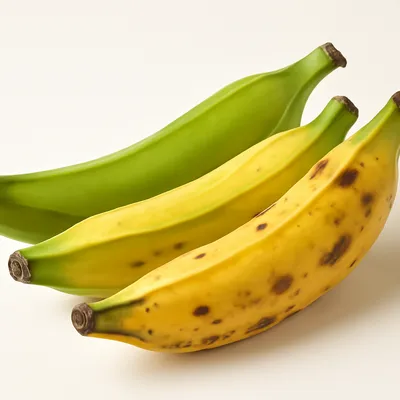
Slice 1 ripe plantain (yellow with black spots) and 4 garlic cloves. Fry the plantain in 60ml lard until caramelized at the edges, 4 minutes. Add garlic and 1 chopped white onion, sweat soft. Char 4 medium tomatoes whole on the comal until blackened in patches, 6 minutes.
Watch outPlantain must be ripe — green plantain stays starchy and refuses to dissolve into the sauce.
- 420 min
Drain the chiles (reserve soaking water). Blend chiles, charred tomato, fried plantain-onion-garlic, the toasted spice-nut-seed mix, and 400ml chile water in batches until very smooth. Pass through a medium sieve — pulp must be silky, not gritty.
Watch outSieving is non-negotiable; chile skin fragments will scratch the throat and ruin the texture.
- 525 min
Heat 60ml lard in a heavy clay olla (or Dutch oven) until shimmering. Pour the strained paste in all at once — it will spit. Stir constantly over medium heat 25 minutes until the paste darkens, splits its oil at the edge, and a wooden spoon leaves a clean trail across the bottom.
Watch outThis frying step (called sazonar) is what separates mole from chile sauce — under-fried mole tastes raw and acrid.
- 630 min
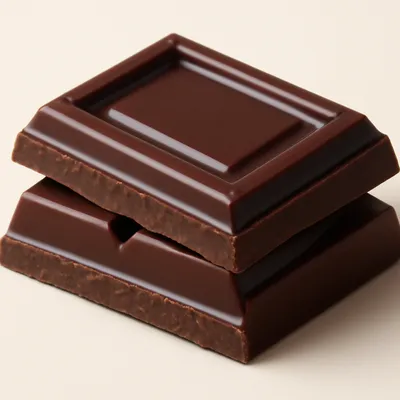
Add 1.5L unsalted chicken stock, 30g Oaxacan or Mexican chocolate (chopped), 1 tbsp sugar, and salt to taste. Simmer uncovered 30 minutes, skimming the red oil that rises. Adjust: more salt for depth, more sugar to round, never add water once chocolate is in.
Watch outMexican chocolate already contains sugar and cinnamon — taste before adding more.
- 745 min
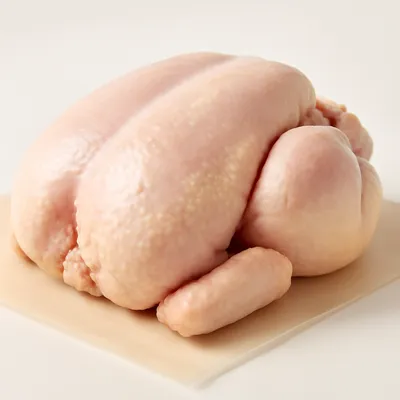
Poach a 2kg whole chicken (or pieces) in salted water with onion and bay 35 minutes; let cool in the broth, then pull or quarter. Ladle hot mole over the chicken on warm plates. Sprinkle toasted sesame seeds. Serve with white rice and warm corn tortillas.
Archive tool suggestions — not reviewed
These legacy suggestions have not been evidence-reviewed and are not presented as required tools.
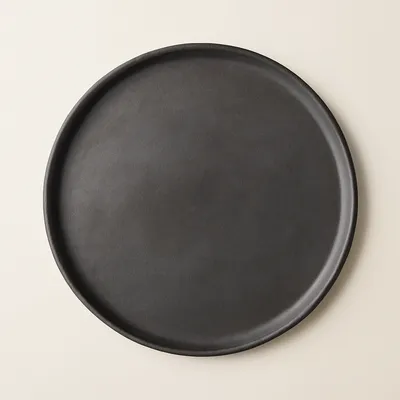
A flat round griddle of steel, cast iron, or unglazed clay, 30-50 cm across, the workhorse of the Mexican kitchen. It sits directly over a flame to toast tortillas (the puff happens in 30 seconds when the heat is right), char chiles for moles, blister tomatoes for salsas, and warm reheated leftovers. Clay comales (especially from Oaxaca) season with each use and impart a faint smoky tang that no metal version can fake.
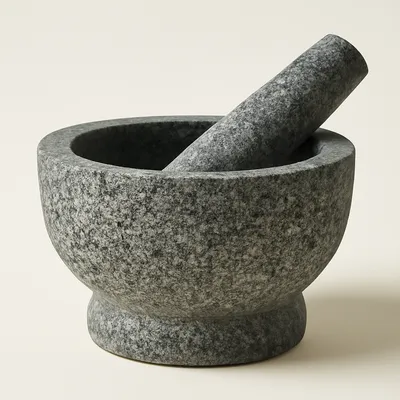
The simplest tool in any kitchen: a heavy bowl and a club to bash things in it. Different cuisines use different stones — Thai cooks pound green papaya in a tall granite mortar (krok hin); pesto Genovese requires the soft-pored Carrara marble; Indian masalas grind down on rough basalt. The bash-don't-cut motion releases volatile oils that a blade keeps sealed in the cell wall.

A heavy enameled or bare cast-iron lidded pot, 4-7 liters, with thick walls and a snug lid. The mass evens out hotspots; the lid traps moisture for braising. Sears on the stovetop, then transfers to a 150°C oven for 3-4 hours of even, contained heat — the structural difference between a beef bourguignon that comes out luminous and one that turns to gray mush. Le Creuset and Staub are the celebrated versions; an old American Wagner is functionally identical.


