
Bremen-Lower Saxony winter kale dish — curly kale slow-braised for 2 hours with smoked bacon, onion, mustard and oats, served with Pinkel (Bremen groats sausage of oats or barley with pork and beef suet), Kassler smoked pork, and boiled potatoes — the iconic Northern German winter meal.





Grünkohl mit Pinkel is a North German winter dish, found in Bremen, Lower Saxony, Hamburg, and Friesland kitchens from November through March. It is made after the first frost (Erster Frost) — kale that hasn't been frost-touched is bitter and tough; the cold sweetens the leaves by converting starches to sugars. Bremen-area villages still hold annual 'Kohlfahrt' (kale-walking) events, where groups walk to a country inn for a Grünkohl meal and the biggest eater earns a kale-king title. Large pots feed groups of 10-20. Pinkel — the Bremen oat-and-pork sausage with a light smoke — is essential; without it the dish is just kale-and-meat stew. Kassler (smoked pork loin) and Bauchspeck (pork belly) add more pork-fat richness.
Grünkohl mit Pinkel is a Bremen winter banquet on one plate: a heap of deep-emerald-green kale stew at the center; a fat brown Pinkel sausage on top; pink Kassler chunks visible in the kale; crispy bacon bits scattered; boiled potatoes alongside. The first bite: tender kale that's almost spinach-soft from the 2-hour braise (no chew), rich with bacon-rendered fat and mustard-tang; Pinkel's oat-and-pork is unique — almost like meaty oatmeal in sausage form, savory and slightly grainy. The Kassler is smoke-sweet. The whole plate is meant for winter substance — calories, salt, fat, smoke, the things a 1700s Hanseatic farmer needed to survive February.
Curly kale must be frost-touched because freezing causes the kale's starches to convert to sugars (cold-shock enzymatic activity), making it sweeter and tenderizing the cell walls. Unfrosted kale is bitter and tough. The 2-hour braise breaks down the dense kale leaves into a soft jam-like consistency — this is why Bremen Grünkohl looks like spinach, not the al-dente kale of American cooking. The rolled-oats addition at the end is the Bremen secret: oats absorb excess liquid and thicken the dish into a stew-not-soup. Pinkel sausage's unique character comes from being a Grützwurst (groats sausage): groats of oats or barley mixed with pork, beef suet, bacon, onions and spices — the groats swell with the meat juices to give it its grainy, porridge-like body.
Variations
Bremen canonical with Pinkel + Kassler + oats; Hamburg variant adds Mettwurst sausage instead of Pinkel; Friesland coastal version adds smoked herring (controversial — most Lower Saxons reject seafood with Grünkohl); Hanover variant uses turnips alongside the potatoes; modern Bremen restaurants serve a 'Grünkohl-Fass' (kale barrel) family-style for 6+ people; commercial frozen Grünkohl exists (and isn't bad — properly frozen kale mimics frost exposure); the dish requires winter weather to feel right — eating it in July is technically possible but spiritually wrong.
On the Palate
Where Grünkohl mit Pinkel sits in the German flavor cloud
Ingredients
Serves 6



How it's made
10 steps · 45 min active + 2 hours 15 min waiting
- 110 min
Find good kale: 1.5kg fresh curly kale (Grünkohl) AFTER the first frost — frost-touched kale is essential for proper flavor. If you must use unfrosted kale, freeze it overnight then thaw to mimic frost. Wash thoroughly; strip leaves from stems; chop coarsely.
- 28 min
Blanch the kale: bring a large pot of salted water to a boil. Add the chopped kale; cook 5 min to wilt and soften. Drain; squeeze out excess water. (This blanch removes bitterness and starts the cooking.)
Watch outKale should wilt down and turn a brighter green in about 5 min — squeeze it dry hard, or trapped water will make the braise soupy later.
- 39 min
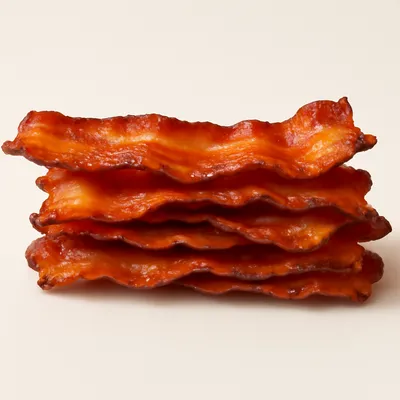
In a heavy braising pot, dice 200g smoked Bauchspeck (smoked pork belly) into 1cm cubes; cook over medium heat 8 min until fat is rendered and bacon is lightly crisp.
Watch outRender the diced bacon until the fat runs clear and the edges just crisp — that rendered fat is what the onions fry in.
- 49 min
Add 2 large finely chopped onions; sauté in the bacon fat 8 min until soft and golden.
- 56 min
Add the blanched and squeezed kale to the pot; stir to coat with bacon-onion mixture. Add 800ml hot beef broth (or kale-cooking liquid) + 1 bay leaf + 1 tsp salt + 1 tsp ground white pepper + 1/4 tsp ground allspice + 1/4 tsp ground caraway + 2 tbsp Dijon mustard.
- 63 min
Add 400g Kassler (smoked pork loin, cut into 4cm chunks) into the pot. Submerge as much as possible in the kale mixture.
- 792 min
Bring to a simmer; cover; reduce heat to low; braise 90 min, stirring occasionally. The kale should become very tender and dark green.
Watch outAfter 90 min the kale should be very tender and dark green with almost no free liquid pooling — if it's still soupy, cook uncovered longer.
- 832 min
Add 4-6 Pinkel sausages (the Bremen oat-and-pork sausage; substitute with grits sausage or Kassler-substitute if unavailable). Nestle them into the kale. Add 4 tbsp rolled oats to thicken (this is the Bremen secret — without oats the kale dish is too soupy). Cook 30 min more, uncovered, allowing the kale to thicken and the Pinkel to heat through.
- 922 min
Meanwhile, peel and boil 1.2kg waxy potatoes in salted water 20 min until tender. Drain.
- 108 min
Plate: ladle a generous portion of kale-stew on each warm plate. Place 1 Pinkel + 1-2 chunks of Kassler + a sliced piece of bacon on top of the kale. Arrange 4-5 boiled potatoes alongside. Serve with a small dish of Dijon mustard and Bremen Köm (caraway schnapps) — the canonical digestif. A glass of Pils beer is the canonical beer pairing. Eat slowly; this is winter celebration food. Some Bremen households serve it with a small extra dish of Bratkartoffeln (pan-fried potatoes) as additional carbohydrate.
Archive tool suggestions — not reviewed
These legacy suggestions have not been evidence-reviewed and are not presented as required tools.


