
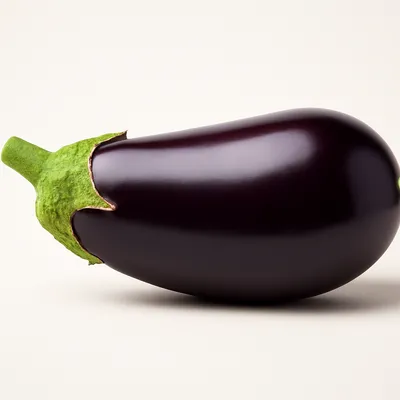
Bengali eggplant fritters — thin slices of eggplant (begun) dipped in a spiced gram-flour (besan) batter, often with a little rice flour for extra crunch, and deep-fried until crisp on the outside while the eggplant turns soft inside. Tinted with turmeric and traditionally fried in mustard oil. Served hot — with puffed rice (muri) and a slice of green chili during Iftar in Ramadan, or as a teatime snack.


Beguni takes its name straight from the Bengali word for eggplant (begun). It is a household snack across the Bengal region (today's Bangladesh and Indian West Bengal), in both Muslim and Hindu homes, eaten with tea or alongside rice and dal. Its real moment is Ramadan: after a day of fasting, the Iftar table leans on quick, easily-digested fried snacks, and beguni is a regular among them — served beside piyaju (onion-and-lentil fritters), chop (battered-and-fried croquettes), muri (puffed rice), dates, and sometimes khichuri. In Old Dhaka, street vendors keep the oil going through the Iftar evening, and home cooks often fry a double batch. Beguni belongs to the same family as the broader South Asian pakora, but differs in form: where a pakora typically folds chopped vegetables into a thick batter and fries them in clumps, beguni is specifically a single thin slice of eggplant in a smooth gram-flour coat. From the 19th century onward, migrants from the Sylhet region of northeastern Bengal carried beguni to Britain, where it appears on the menu of nearly every Bangladeshi-British restaurant.
Eaten hot, the thin crisp shell shatters first with a sharp crack, releasing the warm aroma of turmeric and spice; then the eggplant inside — cooked down to soft, almost melting, sweet, with a faint smokiness. The pleasure is in the contrast: a spiced crisp coat outside, a mellow sweet vegetable within. Eaten with muri, the puffed rice adds a textural lift and soaks up excess oil; a bite of fresh green chili adds heat, a squeeze of lemon brightens it. During Iftar in Old Dhaka, beguni is often the first thing to disappear from the table.
It all comes down to how the batter works with the oil. Gram flour has no gluten, so coated on the eggplant it fries into a crisp shell rather than turning chewy the way a wheat batter would; the small amount of rice flour often added makes that shell crisper and sturdier still. The batter seals the slice: dropped into hot oil, the coat quickly loses water, crisps and browns, while the eggplant inside steams soft and sweet under its protection. Slicing the eggplant thin lets inside and out finish at nearly the same time, so the coat doesn't scorch before the flesh is done. Turmeric both colours and scents the batter, with salt and chili for the base seasoning; frying in mustard oil adds a pungent edge. Some cooks pre-salt the cut slices to draw out some of the bitter juices for a sweeter result. The fried fritters should be spread out to drain, never piled up — trapped steam softens that crisp shell fast.
Variations
Recipes vary by region and household. The coat may be pure gram flour or cut with rice flour for crunch; beyond turmeric and chili, some cooks add a pinch of nigella seeds or fennel for aroma. The main ingredient isn't limited to eggplant either: potato slices make aloo beguni, and banana flower makes mochar beguni, by the same method. Regional touches differ — some favor more fennel, some add a few curry leaves. The dish itself contains no animal products and has always been vegetarian-friendly.
On the Palate
Where Beguni sits in the Bangladeshi flavor cloud
Slice the eggplant thin and even — about 4mm — so the gram-flour coat crisps and browns at the same moment the flesh inside turns soft and sweet; too thick and the shell scorches before the middle cooks.
Ingredients
Serves 4




How it's made
8 steps · 20 min active + 5 min waiting
- 111 min
Slice 1 medium eggplant into 4mm-thick rounds (or long ovals if using long Asian eggplant). Sprinkle with 1 tsp salt; let sit 10 min on a paper towel to draw out moisture.
- 24 min
Make batter: in a bowl whisk 100g rice flour + 50g chickpea flour (besan) + 1 tsp turmeric + 1/2 tsp red chili powder + 1/2 tsp nigella seeds (kalonji) + 1 tsp fennel seeds (crushed) + 1/2 tsp salt + 1/4 tsp baking soda + 150ml cold water + 1 tbsp lemon juice. Whisk to a thin pancake-batter consistency.
- 35 min
Pat eggplant slices dry. Sprinkle with 1/4 tsp turmeric + 1/4 tsp salt + 1/4 tsp red chili powder; let sit 5 min.
- 43 min
Heat 4cm vegetable oil in a wok or deep skillet to 175°C.
Watch outBring the oil to about 175°C — a cube of batter should sizzle up steadily, not sink or burn.
- 52 min
Dip each eggplant slice in the batter, ensuring full coverage. Let excess drip off.
- 66 min
Slide gently into the oil. Fry in batches (4-5 at a time) 2-3 min per side until deep golden and crispy. Don't crowd — they need space.
Watch outFry each side until deep golden and the bubbling around the slice slows — that's when the coat is fully crisp.
- 71 min
Remove with slotted spoon to a wire rack (NOT paper towels — paper traps steam and softens the crispness).
Watch outLift onto a wire rack, never paper — you want air underneath so the crust stays shattering-crisp.
- 82 min
Serve immediately: pile on a plate. Accompany with a small bowl of muri (puffed rice) + a sliced green chili + slices of red onion + a wedge of lemon. Optional: cucumber slices and tomato. Best eaten within 10 minutes of frying.
Archive tool suggestions — not reviewed
These legacy suggestions have not been evidence-reviewed and are not presented as required tools.

A heavy, single-piece cast iron pan, 25-30 cm across, weighing 1.5-2.5 kg. Once preheated, the thick mass holds 230°C+ even when a cold steak hits the surface — that's the secret to a deep crust. A well-seasoned skillet (multiple thin layers of polymerized oil baked into the iron) is essentially nonstick, gets better with use, and lasts a century. Lodge skillets from Tennessee have been in continuous production since 1896.

Hand-held wire loop tool for beating eggs, whipping cream, emulsifying dressings, and incorporating air into batters. Balloon whisks (large round head) for whipping cream and meringues; French whisks (narrow tear-drop) for sauces in pots; flat whisks (gravy) for pan sauces. Stainless steel is universal; silicone-coated for non-stick pans.


