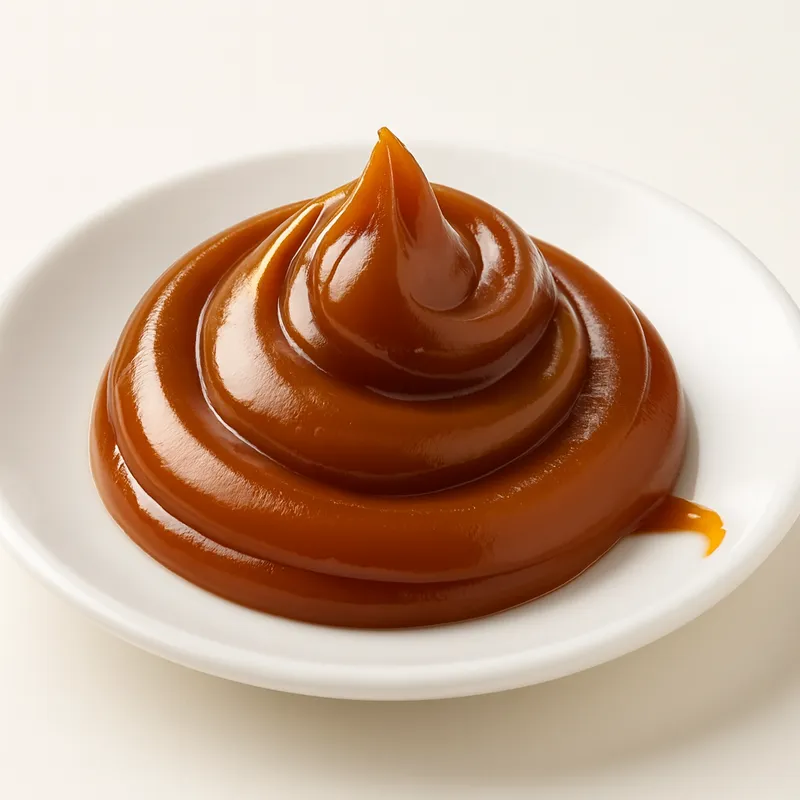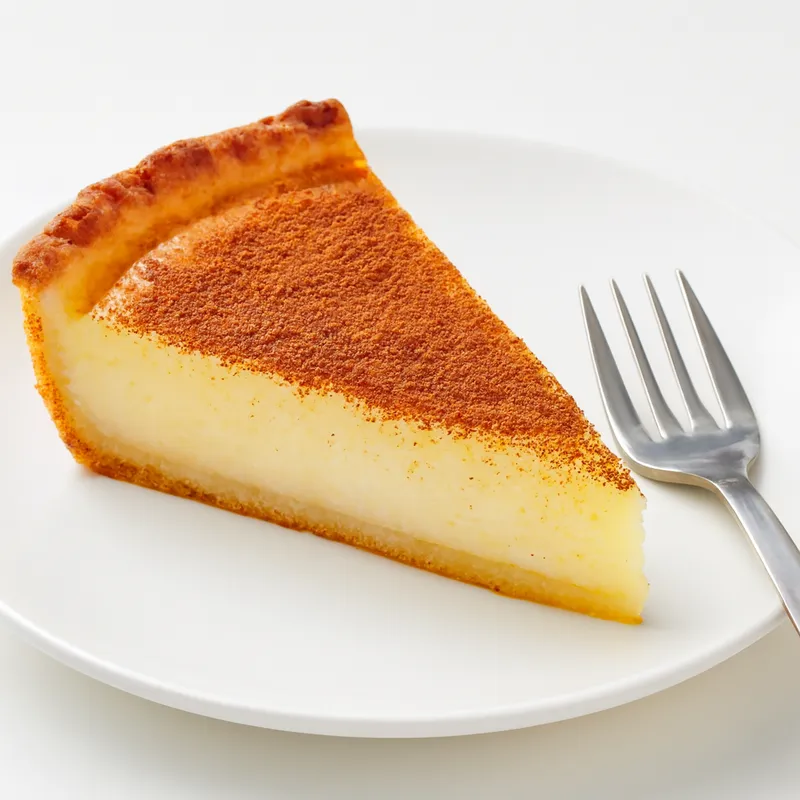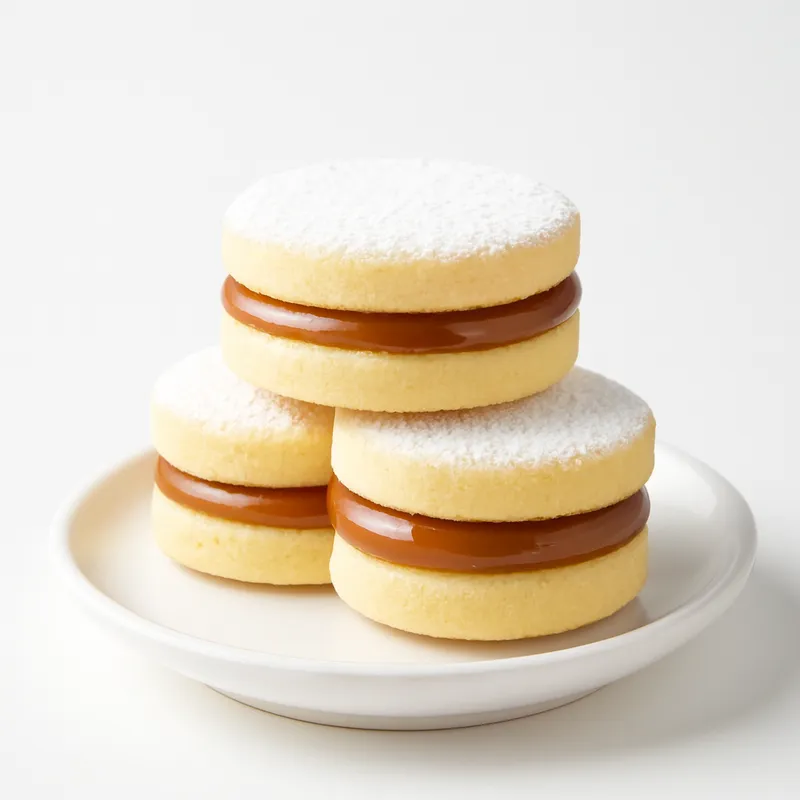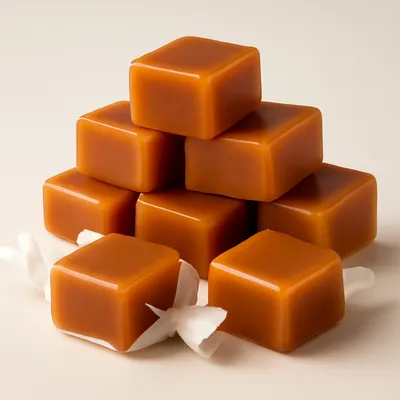
Flan itself is Roman in origin, brought to the Iberian Peninsula and then to the Americas by Spanish colonizers in the 16th century. The Argentine pairing with dulce de leche dates to the late 19th–early 20th century, when dulce de leche became domestic-pantry standard across the Río de la Plata region. The combination is now the default postre at any porteño parrilla.
Roman flan reached Latin America with 16th-century Spanish colonizers; the dulce-de-leche pairing is late-19th-century Río de la Plata. Two caramels at different stages — the flan's is cooked just past 170°C for clean bitterness; the dulce de leche stops short of bitter.
A pale custard the texture of set yogurt, sitting in its own thin amber caramel pool. Spooned over the top: a dollop of dulce de leche so thick it doesn't fully blend in. Two sweet systems on one plate — the flan's caramel is bittered from oven heat; the dulce de leche layer is cooler, thicker, more milk-forward. Often a spoon of whipped cream alongside.
Two caramels at different stages, layered for contrast — that's the whole move. Flan caramel is sugar cooked to the dark side, just past 170°C, so it carries a clean bitter edge that cuts the egg richness. Dulce de leche, by contrast, has the milk-Maillard depth but stops short of bitter. Putting them together gives the dish two distinct caramel readings in the same mouthful.
Variations
Flan mixto (with dulce de leche on top, the standard porteño postre); flan casero (homemade, often denser); Spanish flan de huevo is plainer and skips the dulce; Mexican flan napolitano adds cream cheese for density; Cuban flan often uses condensed milk in the custard itself.
On the Palate
Where Flan con Dulce de Leche sits in the Argentinian flavor cloud
Ingredients

How it's made
5 steps · 1 hour active + 20 min waiting
- 110 min
Preheat your oven to 300°F. In a small saucepan over medium-low heat, melt the sugar, stirring occasionally, until it turns a deep amber color. Quickly pour this caramel into flan molds, swirling to coat the bottoms evenly.
Watch outPour the caramel into the molds the instant it hits deep amber and swirl fast — it keeps darkening off the heat and sets hard in seconds.
- 25 min
In another saucepan, scald the milk over medium heat until it's just about to simmer. Stir in the dulce de leche until fully dissolved, then remove from heat.
- 35 min
While the milk mixture is cooling slightly, whisk together the eggs, yolks, and vanilla until they are pale yellow. Slowly drizzle the warm milk mixture into the eggs, whisking constantly to temper them without scrambling.
Watch outPour slowly and whisk continuously to avoid curdling the eggs.
- 435 min
Pour the custard mixture into the caramel-lined molds. Place the molds in a high-sided baking pan and pour hot water around them, reaching about an inch from the tops. Bake for 30-40 minutes until the flans are just set.
Watch outIt's done when the edges are set but the center still wobbles like jelly when you nudge the pan — it firms up fully as it chills.
- 55 min
Remove the flans from the water bath and allow them to cool on a wire rack for 20 minutes. Chill thoroughly before serving.
Watch outChill it thoroughly, several hours or overnight, before unmolding — warm flan tears and the caramel won't flow out clean.
Archive tool suggestions — not reviewed
These legacy suggestions have not been evidence-reviewed and are not presented as required tools.
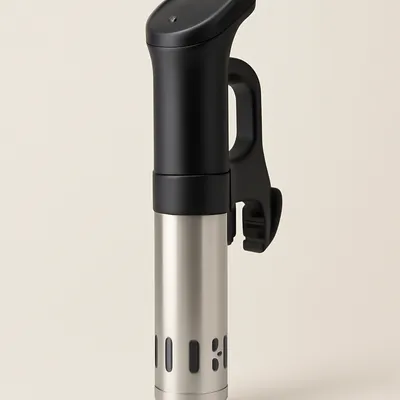
An electric immersion heater clipped to the side of a water bath, with a precise PID controller maintaining ±0.1°C accuracy. Vacuum-sealed proteins cook to a uniform internal temperature for hours without overshoot — a sous-vide steak is the same medium-rare from edge to centre, no gradient. Modern home circulators (Anova, Joule) cost under $200 and have replaced rare expensive water baths once exclusive to fine dining.

A heavy iron grate set 25-40 cm above a wood-or-charcoal fire, often with handle-cranked height adjustment to dial in the heat. The classic Argentinian asado parrilla cooks tira de asado (cross-cut short ribs), entraña (skirt steak), and chorizo over the embers of quebracho or hardwood — never gas. A real parrilla cooks for 2-3 hours; lifting the grate higher mid-cook is how the asador slows the meat for tougher cuts.