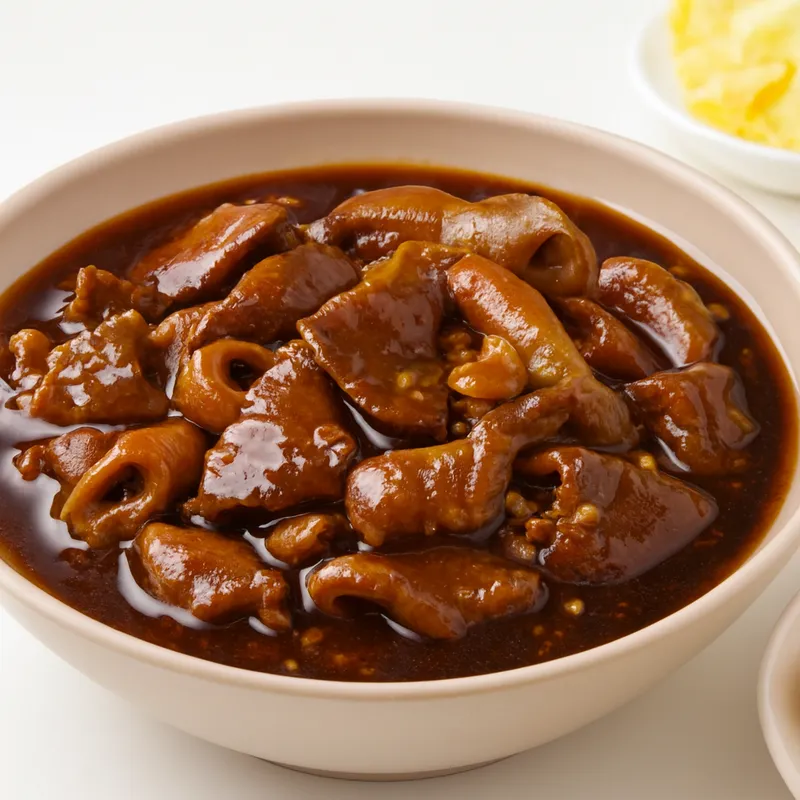
A Confucius-family (Kong-family) banquet sweet from Qufu, classed within Shandong cuisine. Shelled ginkgo nuts are peeled, blanched to draw off bitterness, simmered until tender, then candied in lard, sugar, honey and osmanthus into amber-glazed, tender-chewy nuts.




A dish of Kong-family banquet cuisine (孔府菜), the official-household branch of Shandong cuisine maintained by the descendants of Confucius at Qufu. Its name comes from the Hall of Poetry and Rites (诗礼堂) in the Confucius Temple, built by the 53rd-generation Yansheng Duke Kong Zhi; two ginkgo trees, said to date to the Song dynasty, stand before it, and the dish was made from their nuts. The name alludes to the Analects (季氏), where Confucius, meeting his son Kong Li crossing the courtyard, taught him that 'without studying the Odes one has nothing to speak with; without studying the Rites one has nothing to stand on' — the source of the Kong family's self-description as a 'household of poetry and rites' (诗礼传家). Its precise date of creation is not reliably documented.
Each nut is jade-amber and translucent, glazed glossy but not stiff. The bite is tender and faintly springy — chewy rather than crisp — releasing a clean, mild sweetness lifted by osmanthus fragrance, with the ginkgo's own slight, almost herbal bitter edge kept just in check beneath the honey. Served warm in a shallow dish, eaten a few at a time.
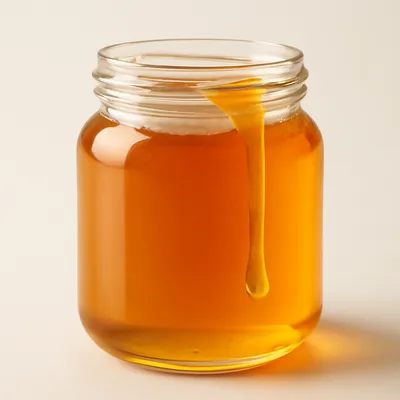
Three preparations precede the candying. The shelled nuts are soaked in mild alkaline (lye) water to strip the thin inner skin, then blanched in boiling water to leach the bitterness, then simmered until tender. The glaze is a honey-sauce (蜜汁) method, not hard-crack pulled sugar: sugar is fried in lard until it turns a reddish caramel, then water, more sugar, honey and osmanthus paste are added and reduced to a thick syrup that coats the nuts; a final spoon of lard is folded in for sheen, so the nuts stay tender-chewy rather than setting into glass. The heat must be watched closely at the reducing stage — the syrup should thicken without sticking or scorching, or a burnt-bitter note develops. Important: raw and undercooked ginkgo is mildly toxic. Its principal toxin, 4-methoxypyridoxine (ginkgotoxin, 4-甲氧基吡哆醇), resembles pyridoxine (vitamin B6) and interferes with the synthesis of the neurotransmitter GABA, which can trigger seizures; it is relatively heat-stable, so cooking removes heat-labile toxins such as cyanogenic glycosides but does not fully neutralize it. The nuts must be cooked and eaten in moderation.
Variations
Sources record the canonical Kong-family version as this honey-and-osmanthus glazed, tender-chewy dish in amber syrup. A separate Shandong sweet, pulled ginkgo (拔丝银杏), batters and deep-fries the nuts and coats them in hard-crack pulled sugar that draws threads and must be eaten piping hot — a crisper, glassier dish than the soft-glazed Confucian one. Some renderings finish the honey style with osmanthus syrup in place of osmanthus paste, or scatter candied-fruit and sesame as garnish.
On the Palate
Where Poetry-and-Rites Ginkgo sits in the Chinese flavor cloud
Ingredients
Serves 4How it's made
7 steps · 40 min
- 115 min
Shell the ginkgo nuts. Soak them in mild alkaline (lye) water until the thin inner skins loosen, then rub off and discard the skins; remove the bitter germ from the center if present.
Watch outSoak the shelled nuts in mild alkaline water until the thin inner skins loosen, then rub them off — leave any skin on and it stays bitter and tough.
- 23 min
Blanch the peeled nuts briefly in boiling water to draw off bitterness, then drain.
- 320 min
Simmer the nuts in fresh water until tender, then drain and set aside.
- 44 min
Heat a wok, melt the larger portion of lard, add sugar and stir over low-to-moderate heat until it turns a reddish caramel.
Watch outFry the sugar in lard only to a reddish caramel — this is a honey-glaze method, not hard crack, so take it dark but keep watching or it scorches.
- 52 min
Add water, the remaining sugar, honey and osmanthus paste; bring to a simmer.
- 66 min
Add the cooked ginkgo nuts and simmer, stirring gently, until the syrup reduces to a thick, glossy glaze that coats the nuts — watch closely so it does not stick or scorch.
Watch outReduce the syrup until it's thick, glossy, and clings to every nut — watch closely here; a moment unattended and it sticks and scorches on the bottom.
- 71 min
Fold in the reserved spoon of lard for sheen, then turn out into a shallow warm dish and serve, a few nuts per person.
Archive tool suggestions — not reviewed
These legacy suggestions have not been evidence-reviewed and are not presented as required tools.