Daming's legendary air-dried pork sausage, founded in 1821 by Wang Xiangyun of Jinan. Named 'Wubaiju'—Five Hundred Residence—for the 500-li distance between Daming and Jinan, it is seasoned with cardamom, cinnamon bark, and aged soy sauce, air-dried for 20 days, then gently steamed. One of Daming's celebrated Three Wonders, it resists spoilage even in high summer.





Wang Xiangyun, originally from Licheng County, Jinan, Shandong, learned meat-curing craft from his elder Wang Zhen and later worked as a cook in the Daming government compound. Seeing the town's commercial vitality—it stood at the confluence of Hebei, Shandong, and Henan trade routes—he opened a charcuterie shop on Dao Qian Street in the first year of the Daoguang reign (1821). Because Daming lay approximately 500 li from his native Jinan, he named the shop 'Wubaiju' (Five Hundred Residence). The sausage's secret spice blend, extended natural-drying method, and remarkable summer-proof shelf life made it a standard offering at provincial and county yamen banquets throughout the mid-Qing dynasty. In 1956 it was named one of Handan's Eight Famous Snacks; in 2003 one of Handan's Ten Famous Local Snacks.
Firm, dense slices with a satisfying snap from the natural casing; the flavour opens in layers—salt and aged soy first, then the warm herbaceous warmth of cardamom and cinnamon, with a sweet-savoury finish. The meat stays moist despite the long drying.
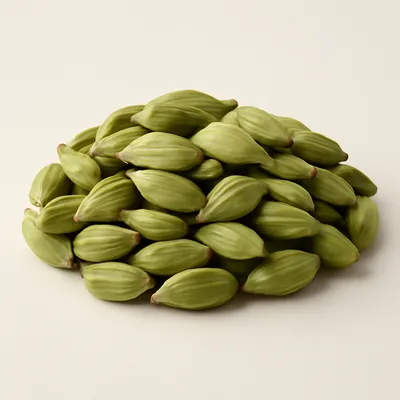
Twenty days of natural air-drying progressively reduces the sausage's water activity from around 0.95 to below 0.80, creating conditions inhospitable to most spoilage bacteria and pathogens. Traditional spices reinforce this: cardamom (砂仁) contains borneol acetate, a volatile terpenoid with documented antimicrobial activity; cinnamon-type bark (桂楠) contributes cinnamaldehyde, which disrupts bacterial cell membranes. Salt and aged soy sauce further suppress microbial growth via osmotic stress. The final 20-minute steam-cooking at around 80°C gels collagen in the natural casing without over-tightening myosin in the meat proteins, giving the sausage its characteristic snap without dryness.
Variations
All-lean version (全瘦型) with reduced fat ratio for modern preference; enhanced-spice version with increased Sichuan pepper and star anise; vacuum-sealed gift portions in 250g packages for long-distance gifting across the Hebei-Shandong-Henan region.
On the Palate
Where Daming Wubaiju Smoked Sausage sits in the Chinese flavor cloud
Ingredients
Serves 8

How it's made
7 steps · 1 hour
- 120 min
Trim and dice 1.5kg pork (60% lean, 40% fat) into 1–2 cm cubes; remove all bones and skin.
- 2180 min
Mix pork with salt, minced ginger, aged soy sauce, cardamom, cinnamon bark, and perilla seed (石落子); stir thoroughly and rest for 3 hours until spices penetrate the meat.
- 310 min
Rinse natural pork casings inside and out under running water; soak in clean water until pliable.
- 430 min
Pack spiced meat tightly into the prepared casings; tie with hemp rope every 14 cm as you go; continue until all casings are filled.
- 528800 min
Hang sausages in a cool, well-ventilated shaded space; air-dry naturally for 20 days.
Watch outAir-dry the sausages a full 20 days in cool shade — this dries the water activity down so they cure firm and keep, not just partway.
- 620 min
Steam the air-dried sausages over very gentle heat (around 80°C) for 20 minutes.
Watch outSteam gently at around 80°C for 20 minutes — too hot and the casing splits and the fat renders out.
- 710 min
Remove from steamer, cool to room temperature, slice thinly, and serve.
Archive tool suggestions — not reviewed
These legacy suggestions have not been evidence-reviewed and are not presented as required tools.


