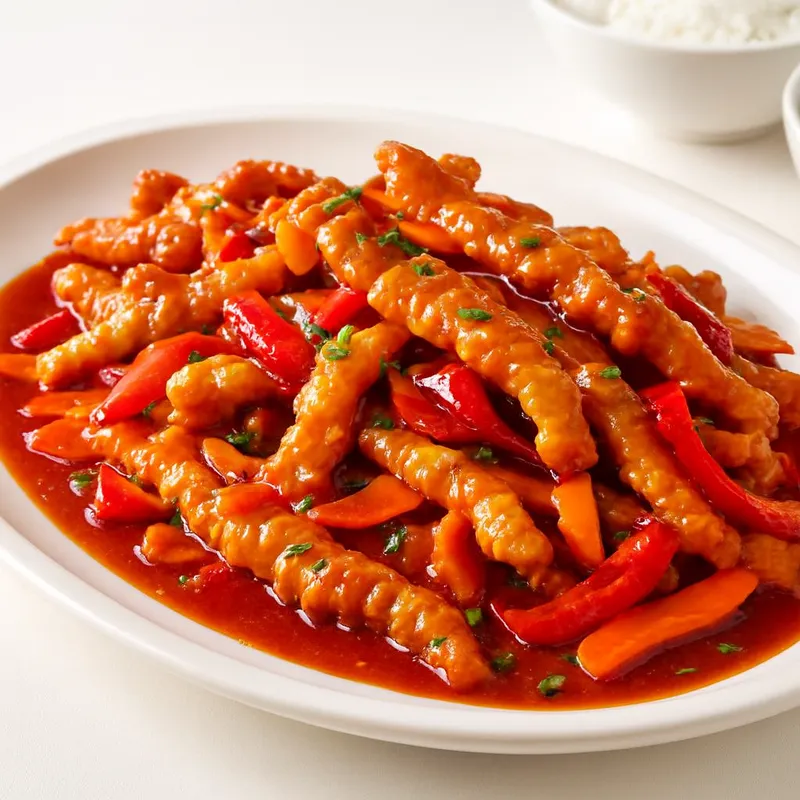
A signature Shanghai 本帮 stir-fry of about eight small-diced ingredients bound in a thick, reddish bean-sauce gravy. The classic mix runs to diced pork leg, chicken, duck gizzard, pork tripe, shrimp, dried shrimp, bamboo shoot, shiitake, plus extras like peanuts, dried tofu, edamame, or ginkgo. Everything is cut to even dice, stir-fried hard, and folded into a sweet-savory-spicy sauce built on broad-bean paste (豆瓣酱) and sweet flour paste (甜面酱); a 'cap' of plump stir-fried shrimp is mounded on top to finish. It eats as a rich rice-topper and is a fixture on Shanghai New Year tables, the 'eight treasures' being read as an auspicious number.

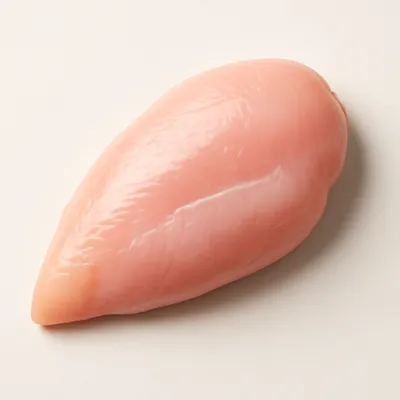


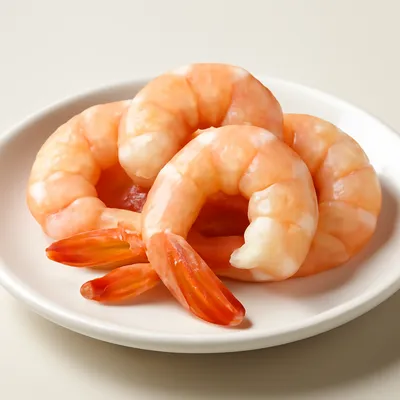
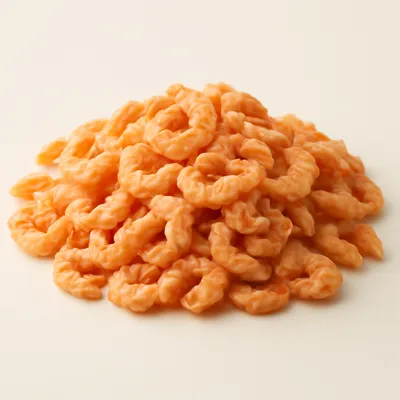
Eight-treasure spicy sauce grew out of an older, plainer Shanghai dish called 上海辣酱 (or 炒辣酱), a cheap rice-topper and noodle dressing of diced pork, dried tofu, and shiitake fried up with a hot bean paste. By accounts of its origin in the early 1940s, a cook at the 同龢 Jiangxi restaurant on Jiujiang Road dressed up the dish by mounding a 'cap' of stir-fried shrimp over it and expanding the plain mix to eight ingredients, naming it 八宝辣酱 to suit the southern fondness for the number eight; the exact cook is unrecorded. The original hot paste (辣火酱) is no longer made, and modern versions build the heat on broad-bean paste (豆瓣酱) instead. The count of 'eight' is loose and the ingredients vary by kitchen.
A spoonful is a jumble of small cubes in a glossy, clinging brown sauce — chewy duck gizzard and springy tripe against tender pork and chicken, the soft give of shiitake and the crunch of bamboo shoot and peanut, all carried by sweet shrimp on top. The flavor opens sweet and bean-savory from the two pastes, then a mild, rounded heat comes up behind it; despite the name 'spicy,' it is gentle, sweet-edged Shanghai heat, not a Sichuan burn. Done well the dice are uniform and each keeps its own texture under the thick sauce; done badly the cubes are ragged and unevenly cut, the sauce is thin and greasy or scorched bitter from over-fried paste, and everything tastes the same.
The dish is an exercise in matching cut and timing across very different ingredients. Each item is diced to roughly the same size so the gravy clings evenly and the pieces finish together, but the tougher ones — duck gizzard, tripe — are blanched or pre-cooked first so they turn tender in the time the pork and shrimp need only seconds. The sauce is the engine: broad-bean paste and sweet flour paste are fried in oil first to bloom them, the heat driving off raw rawness and developing the deep savory-sweet base through browning, but only to the point of fragrance — pushed too far the pastes scorch and turn bitter. The diced ingredients are then folded in and tossed so the thick paste, helped by a little starch and sugar, coats every cube in the 浓油赤酱 (heavy-oil, red-sauce) Shanghai style. The shrimp are stir-fried separately and laid on last so they stay plump and sweet rather than toughening in the sauce.
Variations
The dish descends from the plainer 上海辣酱 / 炒辣酱, which is still eaten as a cheap diced rice-topper and noodle dressing without the shrimp cap. The 'eight' is nominal: home and restaurant versions swap among diced pork, chicken, duck gizzard, tripe, shrimp, dried shrimp (开洋), shiitake, bamboo shoot, dried tofu, peanuts, edamame, and ginkgo, and some kitchens push the count higher. The heat is tuned with broad-bean paste in place of the lost 辣火酱, and the balance ranges from sweeter, milder house styles to more assertively spicy ones; a vegetarian 素辣酱 drops the meats entirely.
On the Palate
Where Eight-Treasure Spicy Sauce sits in the Chinese flavor cloud
Ingredients
Serves 4



How it's made
7 steps · 30 min active + 10 min waiting
- 115 min
Dice pork leg, chicken, duck gizzard, pork tripe, shiitake, bamboo shoot, and dried tofu into even small cubes; soak dried shrimp and rinse the gizzard and tripe.
- 26 min
Blanch the duck gizzard and tripe (and parboil the gizzard if very firm) until just tender, and quickly blanch the pork and bamboo shoot; drain everything well.
Watch outBlanch the tough gizzard and tripe until just tender first — they need a head start so they finish together with the pork and shrimp that cook in seconds.
- 32 min
Stir-fry the shrimp in hot oil for a few seconds until just pink and plump, then lift them out and set aside for the cap.
- 43 min
In the same wok, fry broad-bean paste and sweet flour paste in oil over medium heat until fragrant and the raw edge is gone, taking care not to scorch them.
Watch outFry the bean paste and sweet flour paste in oil just to fragrance — blooming builds the savory-sweet base, but push it too far and the pastes scorch bitter.
- 54 min
Add all the diced ingredients and the dried shrimp, raise the heat, and toss hard so the paste coats everything; season with a little sugar, soy sauce, and Shaoxing wine.
- 61 min
Thicken with a thin cornstarch slurry and toss until the sauce clings as a glossy, heavy coating.
Watch outThicken with a thin slurry and toss until the sauce clings as a glossy, heavy coat on every cube.
- 71 min
Turn out onto a plate and mound the reserved stir-fried shrimp on top as the cap; serve hot with rice.